

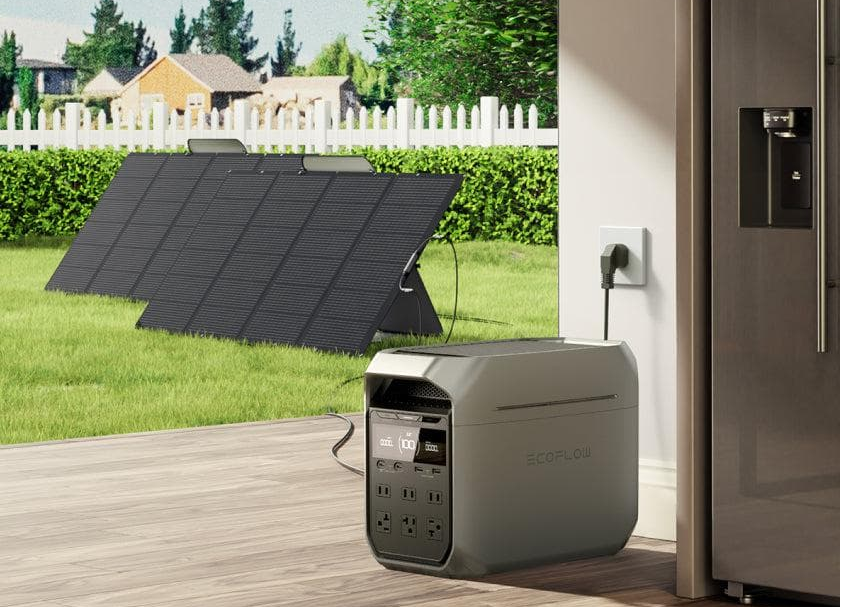
Backyard projects look simple until you start dragging tools, laptops, and lights across the yard. Outlets are far, breakers trip, and extension cords turn into a maze. A power station lets you treat the backyard like another room on your power map instead of an unreliable gray zone.
The mindset is less “one more gadget” and more “small, movable infrastructure”. You design around loads, distances, and safety.
The power station becomes a roaming node that joins your house wiring, not a random box you only remember when something stops working midway through a cut or test.
Why Backyard Projects Need Smarter Power?
Many people treat outdoor work like temporary chaos. A random cord from the nearest outlet, plus a multi-plug cube, somehow powers everything. That works until a saw starts, a pump kicks in, or a laptop charger adds one more spike and trips the breaker feeding your entire workspace.
A power station gives you a defined, measurable budget for backyard loads. Instead of guessing, you see real-time watts on a display, along with estimated runtime. That makes it easier to decide which tools run first, which wait, and when it is time to stop before everything dies together.
Mapping Your Loads Before You Buy Hardware
Before buying anything, list what you actually run outside. Separate “must have” from “nice to have”. A power station sized for essential tools and electronics is usually more effective than overspending on a giant unit that mostly idles between weekend jobs.
A simple way to map loads is to walk your yard and note where each device sits relative to the power station. Then assign rough watt numbers based on labels or online specs. You can refine later with meters, but even estimates help you see whether projects lean toward heavy motors, light electronics, or a mix of both.
- Identify essential loads such as lights, routers, or safety gear.
- Group high-draw tools that rarely run together.
- Mark where long cable runs might justify placing the power station closer to the work.
This load map becomes your planning baseline rather than a guess made in the hardware aisle.
AC, DC, and Battery Basics in Plain Terms
Backyard projects often mix old AC tools with newer DC devices. A power station hides conversion complexity behind outlets and ports, but understanding the basics keeps you from wasting runtime or overloading a single socket without noticing until something shuts off.
Battery capacity is measured in watt hours. Divide that number by your combined load in watts to get a ballpark runtime.
A power station with six hundred watt hours feeding a three hundred watt mix of tools, lights, and electronics will last roughly two hours, minus conversion losses and any future recharge you plan mid-project.
Where AC Still Makes Sense?
Legacy corded tools, chargers, and some test gear expect AC. For them, a power station behaves like a quiet generator with a digital gauge.
You still respect startup surges and cord limits, but you do not need to rethink every device in your workshop just to work outside.
When DC Becomes the Better Option?
Low-voltage lighting, battery chargers, and small electronics usually waste less energy when powered from DC outputs. If your power station supports DC rails, using them for these loads reduces inverter losses and leaves more runtime for heavy AC tools that truly need it.
Choosing the Right Core Power Node
Instead of scattering multiple small batteries around the yard, treat one power station as your core node. Everything else either feeds it or draws from it. That simplification makes monitoring easier and reduces the number of failure points hidden in the grass.
In many setups, the power station lives near the house side of the yard when charging, then rolls closer to heavier tools when work begins.
That keeps cable runs short and noticeable. You are less likely to drag cords across sharp edges or pathways when most connections radiate from one visible hub.
Using a Power Station Alongside Existing Circuits
A flexible system does not replace your house wiring. It augments it. Think of the backyard outlet as one leg of the setup and the power station as another. Some loads stay on fixed circuits, while mobile or surge-heavy tools connect to the portable node.
This split reduces the risk of a single overloaded breaker taking everything down. Light, steady draws like networking gear or audio can stay on house power.
High, intermittent loads such as saws or pumps can live on the power station, which expects fast changes and shows you exactly how hard they hit the system.
Extension Cords, Reels, and Cable Management
Cords feel boring until someone trips, a plug pulls halfway out, or a hidden knot overheats. A power station can help by letting you shorten the longest runs. Place it near the cluster of tools or lights, then run a single heavier feed back toward the house if needed.
Use proper outdoor-rated cords sized for the load. Undersized cables waste power as heat and sag voltage at the far end, making some tools behave erratically.
Label both ends for frequent setups so anyone on the project can see at a glance which cord runs back to the power station.
Outdoor Safety, Weather, and Ground Faults
Backyard work adds water, dirt, and unpredictable motion to the usual electrical risks. A power station does not magically remove those factors, but it centralizes them into a known device with defined protections and clear status indicators.
You still treat every connection as a failure point. Keep plugs off wet ground, avoid overloading multi-outlet strips, and respect any ground-fault protection already built into the system.
If the power station trips, treat that as diagnostic feedback, not an annoyance. Something in the chain pulled more than it should.
Monitoring, Meters, and Runtime Estimation
A big advantage of a modern power station is that it behaves like a live instrument. Instead of guessing from the hum of a motor or the warmth of a cable, you watch watt numbers rise and fall as tools start, stop, or stall.
- Note idle draw with just lights and electronics running.
- Start each major tool separately and record peak watts.
- Combine realistic tool sets and verify the total against what the power station claims it can sustain.
Over time, you build intuition. You will know that a given combination of tools consumes half your capacity per hour, while another barely nudges the gauge even during long sessions.
Iterating on Your Setup Over Time
The first version of your backyard system will not be perfect. That is fine. The important part is that the power path is visible and understandable.
A power station at the center makes iteration easier because you can swap cords, relocate loads, or add solar without rewiring the entire house.
After a few months, patterns emerge. You may discover that most sessions use the same subset of tools and only a fraction of capacity. Or you may hit limits regularly and decide to reorganize loads between house circuits and the power station to avoid nuisance shutdowns.
Treat each project as another data point. With time, your backyard stops being a sketchy extension-cord jungle, and the power station setup starts acting like a small, well-instrumented lab where electricity is just another tool, not a constant source of friction.
