

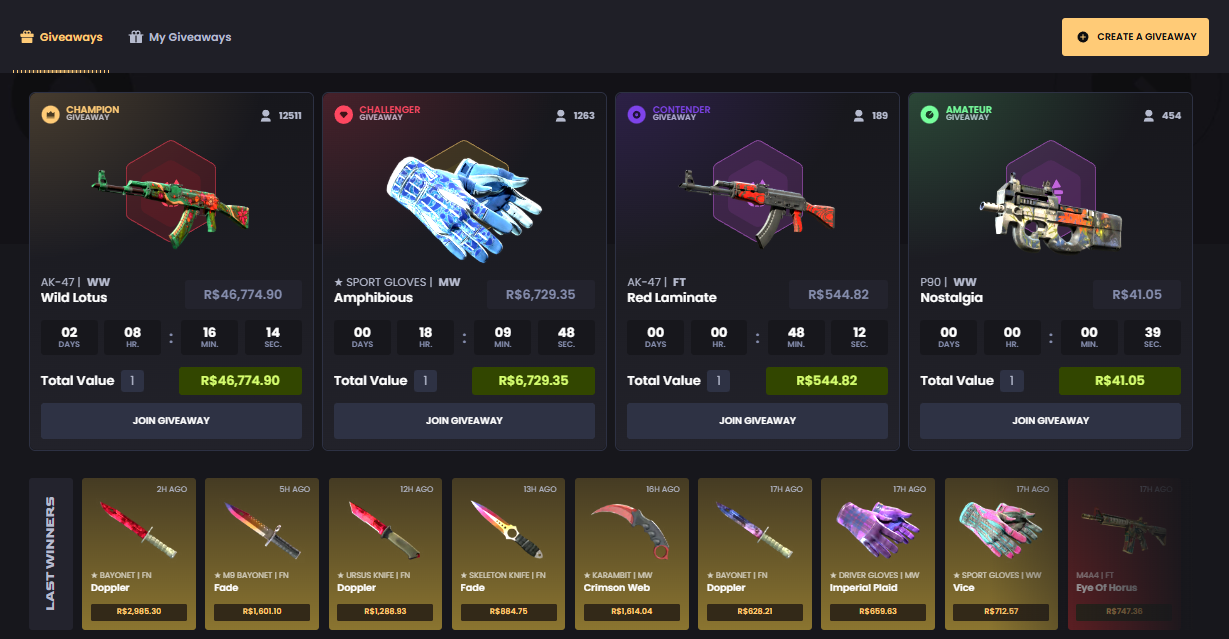
The modern ecosystem around CS2 (CS:GO) case battle key-drop.com is no longer fragmented. In 2026, platforms are evolving toward unified environments where users can open cases, upgrade skins, and join battles without switching between tools. This shift is less about adding features and more about creating a seamless workflow.
Key-Drop fits directly into this trend. Instead of offering isolated functions, it connects them into a single, continuous system.
Why unified platforms matter more now?
A few years ago, it was common to use separate sites for different actions: one for opening cases, another for trading, and a third for upgrades or battles. That approach created friction.
Switching between platforms means:
- losing time between actions
- breaking session momentum
- managing inventory across multiple systems
In contrast, unified platforms eliminate these gaps. Everything happens within one interface, which changes how decisions are made.
Case opening as the starting point
Case opening remains the entry layer of the system. It’s where inventory is generated and where most sessions begin.
On Key-Drop, this process is designed to be immediate. There are no unnecessary steps between selecting a case and seeing the result. This speed matters because it defines the rhythm of the entire session.
More importantly, the output of case opening doesn’t stay isolated—it feeds directly into other features.
Upgrader as a control layer
After opening cases, results often need adjustment. This is where the upgrader becomes relevant.
Instead of relying entirely on random outcomes, users can:
- select skins from their inventory
- choose a higher-value target
- define the level of risk
This introduces a structured decision point. The system doesn’t remove uncertainty, but it allows users to shape it.
The upgrader effectively turns raw results into something more intentional.
Case battle as an interactive layer
Case battle adds a completely different dynamic. It transforms individual actions into competitive ones.
Multiple users open the same cases, and results are compared in real time. The focus shifts from building inventory to outperforming others within a defined structure.
This creates:
- immediate feedback on outcomes
- a more engaging session flow
- variability based on both chance and timing
Within a unified platform, case battle becomes a natural extension of case opening rather than a separate activity.
How these systems connect?
The real strength of Key-Drop isn’t in each feature individually—it’s in how they interact.
A typical flow might look like this:
- open cases to generate inventory
- upgrade selected skins to adjust value
- enter a case battle using those results
Each step builds on the previous one. There’s no need to stop, transfer items, or rethink the process from scratch.
This continuity creates a smoother and more controlled experience.
What makes the experience efficient?
Not every platform with multiple features achieves this level of integration. Efficiency depends on how quickly and clearly users can move between actions.
On platforms like Key-Drop, efficiency comes from:
- minimal delay between steps
- clear presentation of options before confirming actions
- consistent interface across all features
When these elements are aligned, the system feels predictable even in a variable environment.
Common mistakes when using all-in-one platforms
Even with a well-structured system, user behavior still plays a major role.
One common issue is using features randomly. Jumping from case opening to upgrades to battles without a clear goal reduces consistency.
Another mistake is focusing only on individual outcomes. Without considering how each step fits into a broader session, decisions become reactive.
There’s also a tendency to overlook how timing affects results, especially in case battles where available formats change constantly.
A more structured way to approach it
Using a unified platform effectively doesn’t require complex strategies, but it does require clarity.
Before starting a session, it helps to define a purpose:
- building inventory through case opening
- refining results via upgrades
- testing outcomes in case battles
With that structure in place, each feature becomes part of a larger process rather than an isolated action.
Where platforms are heading next?
The direction is clear: deeper integration and faster interaction. Platforms are competing not just on what they offer, but on how smoothly everything works together.
Users now expect:
- instant transitions between features
- consistent performance across sessions
- transparency in every step
Any delay or inconsistency becomes more noticeable in this environment.
A system built around continuity
Key-Drop reflects a broader shift in how users interact with CS2 systems. It’s not just a site for opening cases or joining battles—it’s a connected environment where each action leads naturally to the next.
In 2026, the advantage isn’t simply having access to multiple tools. It’s having them work together in a way that supports faster, clearer, and more structured decision-making.
