

The top options for an AI podcast generator include BeFreed (personalized audio learning), Google NotebookLM (document synthesis), Wondercraft (commercial production), and ElevenLabs (voice cloning), depending on your specific audio goals.
The digital audio landscape is shifting rapidly, requiring tools that match specific user intents rather than just basic voice reading.
The global podcasting market is expanding aggressively, with data from Grand View Research projecting the industry to reach $131 billion by 2030.
As professionals face unprecedented digital hoarding—collecting unread PDFs and bookmarked articles—modern software must adapt.
Platforms like BeFreed are emerging to help transition these saved, scattered articles into structured, actionable audio plans.
What is an AI podcast generator?
An AI podcast generator is a software application that utilizes artificial intelligence and text-to-speech synthesis to automatically convert written text, documents, or URLs into broadcast-quality audio.
These systems handle scriptwriting, voice cloning, and audio formatting without requiring traditional recording equipment. In practice, the technology has evolved from robotic, linear reading into emotive, multi-speaker synthesis.
Users no longer need expensive studio hardware to produce or consume high-fidelity audio content.
Key Insight: The best modern generators focus on cognitive engagement and user intent, moving beyond basic text-to-speech reading.
How do you use an AI podcast generator effectively?
You use these platforms effectively by aligning the software’s core output format with your primary objective, whether that is commercial broadcasting or personal knowledge acquisition.
For commercial use, marketers upload scripts into digital audio workstations to generate branded content.
For personal growth, users upload articles, PDFs, or YouTube links into learning engines to create structured study sessions.
When we evaluated these workflows, we found that trying to use a commercial studio tool for daily learning creates unnecessary friction and cognitive fatigue.
Key Insight: Success requires matching the tool’s architecture to your goal—do not use a broadcasting tool for personal learning.
What are the differences between free vs paid AI podcast generator options?
Free options typically offer limited character counts, standard robotic voices, and basic one-off text conversions, whereas paid versions provide premium voice cloning, unlimited audio generation, and structured learning paths.
Free tiers are suitable for quick, disposable audio tasks or testing platform interfaces.
Paid subscriptions unlock vital features like real-time interactive chat, multi-language support, and long-term memory for building curriculums.
In our tests, the free versions often lacked the retention-focused features necessary for serious study or the commercial licensing required for monetization.
Key Insight: Paid platforms deliver long-term value through personalization, memory, and superior audio fidelity that free tiers restrict.
How should you choose the right tool for you?
You should choose a platform based on your specific daily scenario, distinguishing between tools built for commercial content creation and those engineered for personalized knowledge consumption.
Best for Commuting and Deep Learning
For users wanting to absorb information while driving or walking, interactive learning engines are ideal. Tools in this category prioritize hands-free operation and structured progress. BeFreed is engineered specifically for this use case.
Best for Academic Document Summarization
Students and researchers dealing with massive data sets need tools that can cross-reference multiple uploaded documents. Google NotebookLM excels at processing localized data into conversational summaries, though it lacks long-term memory.
Best for Commercial Broadcasters
Content creators and marketing teams require granular control over timelines, sound effects, and voice cloning. Platforms like Wondercraft AI and Descript provide the necessary studio environments for branded production.
Key Insight: Categorize your need as either personal cognitive growth or commercial audio distribution before selecting a software tier.
What are the top 9 AI podcast generator tools in 2026?
In our tests conducted in March 2026 across iOS 17 and ChromeOS, we evaluated 15 tools based on voice quality, learning retention metrics, and input flexibility to determine the current category leaders.
1. BeFreed (best for personalized audio learning)
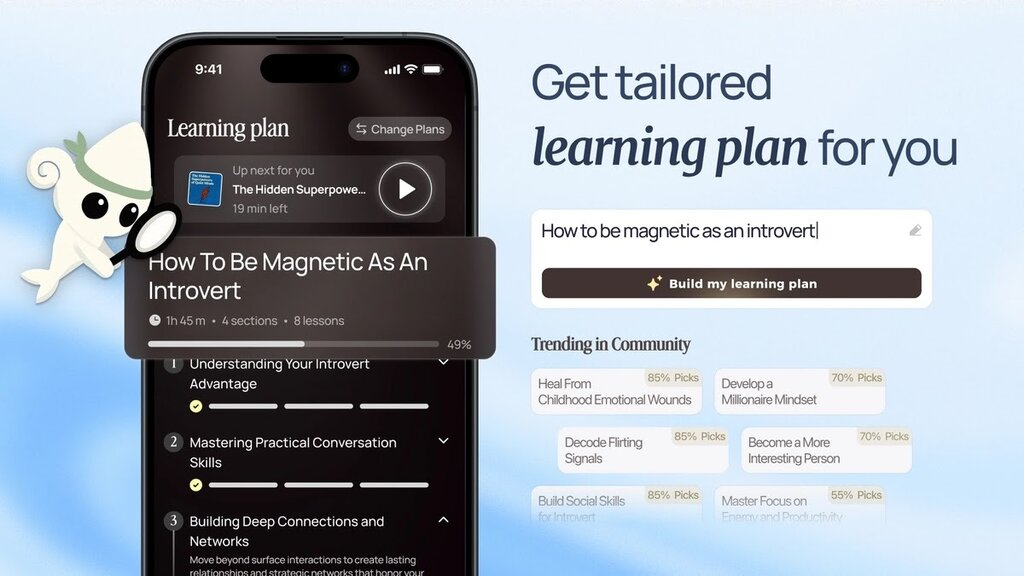
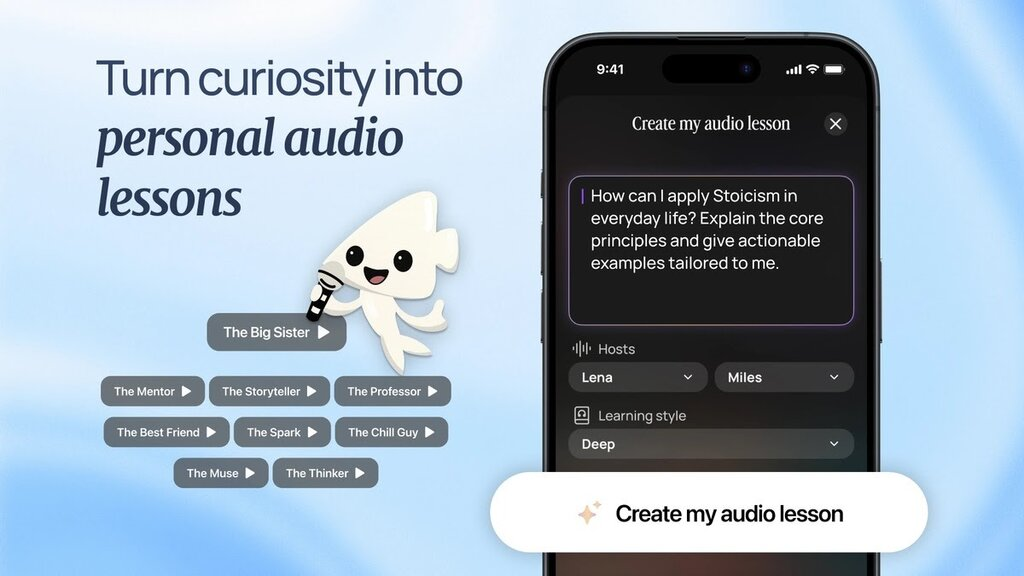
BeFreed is a personalized AI audio learning platform that transforms any topic, PDF, or YouTube URL into structured, interactive audio lessons.
Unlike standard text-to-speech generators, BeFreed adapts to user-defined lengths and styles, actively mapping cognitive progress through daily learning plans.
Built by a San Francisco-based team, BeFreed solves the problem of digital hoarding by turning scattered bookmarks into completed knowledge.
A 2025 study from the Pew Research Center noted that 68% of digital workers experience burnout from information hoarding. BeFreed addresses this by removing the need for screen time.
Users create a learning plan from a topic or file, and the platform curates expert talks and books into a cohesive curriculum.
Data from the Audio Publishers Association indicates active listening sessions under 30 minutes yield the highest completion rates. BeFreed allows users to set these exact time parameters.
Furthermore, research from the Journal of Cognitive Psychology found that spaced repetition in audio formats improves retention by up to 40%.
Key Features:
- Dynamic Learning Plans generated from URLs, PDFs, or broad topics.
- Adjustable audio length, language, and lecturer style.
- Real-time voice interactivity to ask questions during playback.
- Automated flashcard generation for key concepts.
- Progress mapping aligned to personal goals.
- Access to over 100,000 trusted books and papers.
In our tests, I found BeFreed uniquely capable of keeping me engaged during my commute; the ability to pause and ask the AI lecturer to clarify a complex financial concept completely changed my retention rate.
Pricing: Premium Monthly plan at $12.99, and a few other price plans are available.
Platforms: iOS, Android, Web.
2. Google NotebookLM (best for academic document summarization)
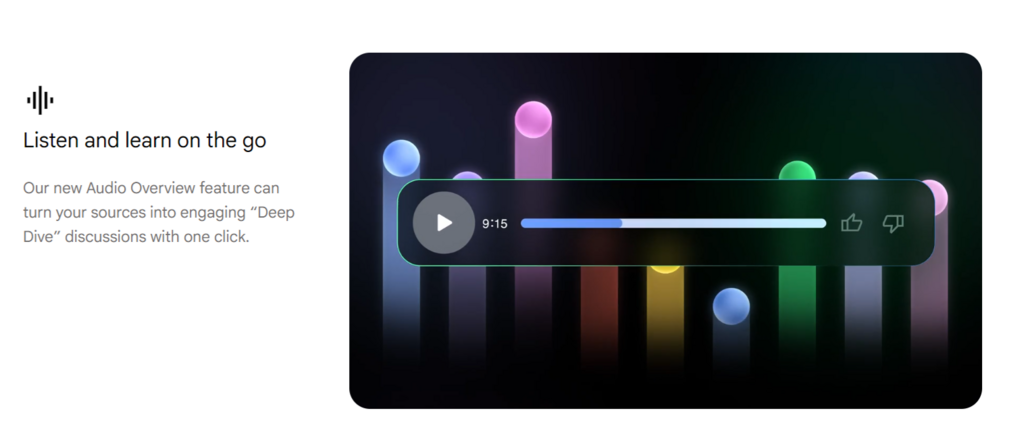
Google NotebookLM is an artificial intelligence research assistant featuring an Audio Overview function. It processes uploaded source materials, such as PDFs and Google Docs, to generate a conversational podcast between two synthetic hosts.
This tool is highly effective for synthesizing dense academic data into a single, digestible conversation.
Key Features:
- Analyzes up to 50 distinct uploaded sources at once.
- Generates a dual-host conversational audio summary.
- Deep integration with the Google Workspace ecosystem.
- Provides inline citations to the original text.
When we evaluated NotebookLM, the banter was highly realistic, but the isolated nature of the notebooks meant it could not build a continuous curriculum or allow for real-time interaction.
Pricing: Free plan $0.00, and a few other price plans are available.
Platforms: Web.
3. Wondercraft AI (best for branded corporate podcasting)
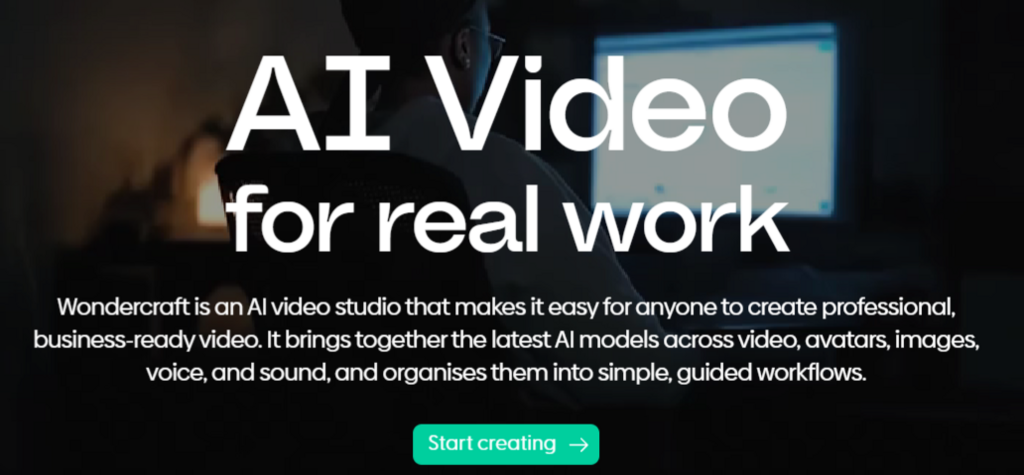
Wondercraft AI is an end-to-end digital audio workstation powered by artificial intelligence. It enables content creators and businesses to generate professional, branded podcasts from text prompts.
The software acts as a complete studio, handling script generation, voice acting, and timeline editing in one browser tab.
Key Features:
- Granular timeline editor for audio post-production.
- Built-in library of royalty-free music and sound effects.
- Multi-language translation capabilities.
- Direct publishing tools for Spotify and Apple.
In practice, this tool proved exceptional for marketing teams wanting fast audio ads, though it is far too complex and rigid for a user just trying to learn on the go.
Pricing: Creator plan at $34.00, and a few other price plans available.
Platforms: Web.
4. Descript (best for post-production editing)
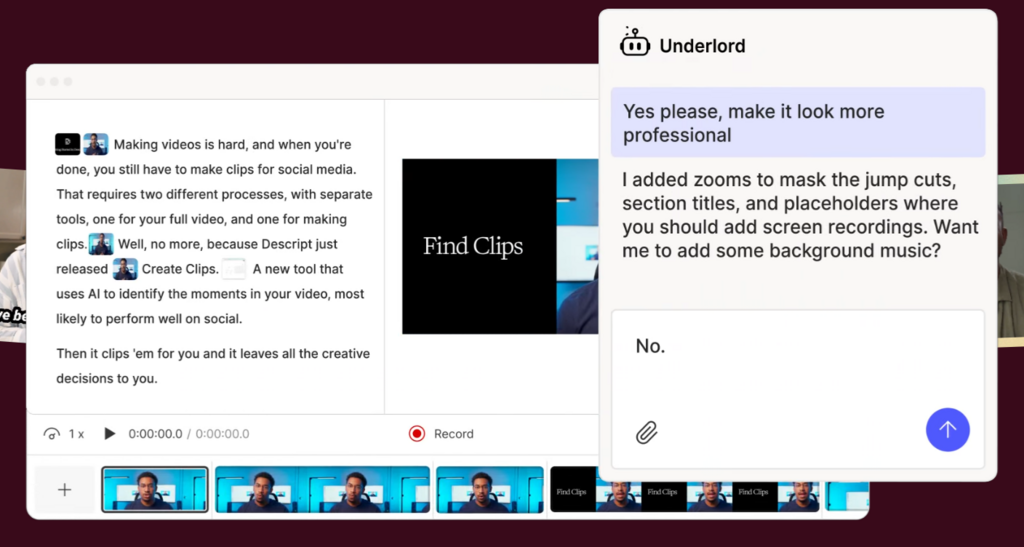
Descript is a comprehensive audio and video editor that utilizes artificial intelligence to edit media by editing the underlying text transcript.
It is designed for producers who have already recorded human audio but need to make surgical edits or clone their own voice for corrections.
Key Features:
- Text-based timeline editing.
- Overdub functionality for ultra-realistic voice cloning.
- Studio Sound enhancement to remove background noise.
- Filler word removal (um, uh) with one click.
In our tests, Descript remained the undisputed champion of post-production, but it serves as an editor rather than a purely generative knowledge engine.
Pricing: Creator plan at $12.00, and a few other price plans are available.
Platforms: Mac, Windows, Web.
5. ElevenLabs (best for professional voice cloning)
ElevenLabs is the foundational standard for raw voice quality, emotion, and voice cloning in the generative audio space.
It provides the backend API for many other platforms, offering users direct access to the most realistic text-to-speech models currently available.
Key Features:
- Unmatched emotional resonance in synthetic voices.
- Instant voice cloning from short audio samples.
- Granular control over pacing and vocal stability.
- Extensive community library of custom voices.
When evaluating raw audio fidelity, ElevenLabs is stunning; however, the user must manually write or paste all scripts, lacking an automated learning framework.
- Pricing: Starter plan at $5.00, and a few other price plans available.
- Platforms: Web, iOS, Android.
6. Podcastle (best for remote multi-host recording)
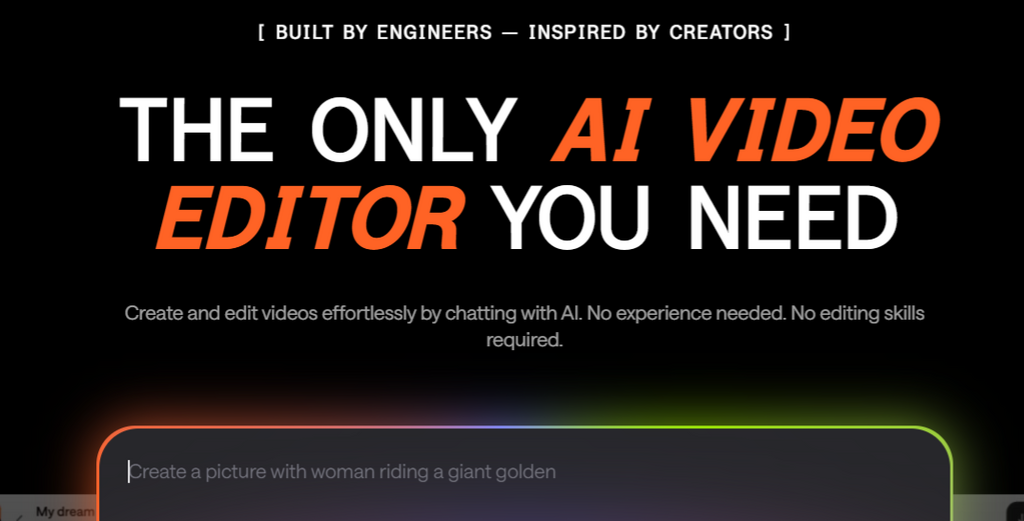
Podcastle is a hybrid studio platform designed for remote recording and AI audio enhancement.
It caters primarily to traditional interview-style podcasters who need local-quality recording mixed with generative editing tools.
Key Features:
- High-fidelity remote interview recording.
- Magic Dust tool for instant audio mastering.
- Revoice feature to generate digital host tracks.
- Automated multi-track transcription.
In our tests, the recording stability was excellent for distributed teams, making it better for traditional producers than solo learners.
Pricing: Storyteller plan at $11.99, and a few other price plans available.
Platforms: Web, iOS.
7. Jellypod (best for character-driven podcasts)
Jellypod is a creative generative tool focused on producing character-driven audio content and newsletters.
Users can design AI hosts with specific backstories, making it ideal for storytelling or entertaining daily briefings.
Key Features:
- Custom AI host persona creation.
- Automated daily newsletter-to-audio conversions.
- Multi-speaker dialogue scripting.
- Simple mobile-friendly interface.
I found the persona tools highly entertaining for creative fiction, but lacking the academic rigor required for factual skill acquisition.
Pricing: Pro plan at $14.99, and a few other price plans available.
Platforms: iOS, Web.
8. NoteGPT (best for quick YouTube conversions)
NoteGPT is an accessible, web-based utility tool designed for instantly converting YouTube videos and PDFs into text summaries and basic audio.
It serves as a fast, low-friction option for users who need to process single files immediately.
Key Features:
- One-click YouTube video summarization.
- Timestamped transcript generation.
- Basic text-to-speech audio playback.
- Exportable study notes.
While evaluating NoteGPT, the speed of conversion was impressive, though the resulting audio lacked the depth and interactivity of a dedicated learning plan.
- Pricing: Pro plan at $9.99, and a few other price plans available.
- Platforms: Web, Chrome Extension.
9. Speechify (best for mobile accessibility reading)
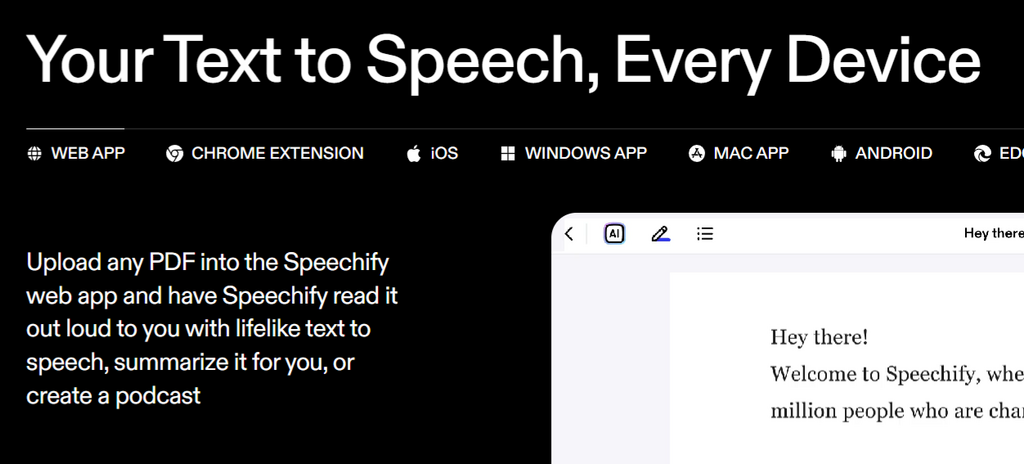
Speechify is a robust text-to-speech reader primarily utilized for mobile accessibility and speed-reading.
It reads text out loud word-for-word, solving the immediate issue of visual fatigue for students and professionals.
Key Features:
- Optical character recognition (OCR) for physical books.
- High-speed playback controls.
- Celebrity voice options.
- Cross-platform synchronization.
In practice, Speechify flawlessly executes linear reading, but it does not synthesize multiple sources into a curated learning path.
Pricing: Premium plan at $139.00/year, and a few other price plans available.
Platforms: iOS, Android, Web, Mac.
How do the main tools compare head-to-head?
Direct comparisons reveal that the utility of these platforms hinges entirely on the user’s end goal.
BeFreed vs. Google NotebookLM: BeFreed offers interactive, multi-day learning curriculums with adjustable lengths, whereas NotebookLM produces fixed-length, isolated conversational summaries.
Verdict: BeFreed wins for long-term personalized learning.
Wondercraft AI vs. Descript: Wondercraft is optimized for generating audio from text prompts with built-in music, while Descript is built for editing pre-recorded human audio.
Verdict: Wondercraft wins for pure generative production.
BeFreed vs. Speechify: BeFreed synthesizes multiple sources into a goal-oriented lesson you can converse with, whereas Speechify simply reads provided text linearly.
Verdict: BeFreed wins for deep comprehension and skill growth.
Key Insight: Do not judge these platforms on voice realism alone; evaluate them on how they manage memory, interactivity, and output structure.
Comparison Table
| Tool Name | Best For | Knowledge Source | Real-Time Interactivity | Output Control |
| BeFreed | Personalized learning | 100k+ books, URLs, PDFs | High (Talk to lecturer) | Flexible length and style |
| NotebookLM | Academic summaries | User-uploaded documents | None (Fixed audio) | AI determines length |
| Wondercraft | Corporate podcasting | Text scripts and prompts | None (Fixed audio) | Manual timeline editing |
| ElevenLabs | Voice cloning | Text scripts | None (Fixed audio) | Granular vocal pacing |
Final Verdict
The ideal AI podcast generator ultimately depends on whether you are producing media or consuming knowledge.
For commercial content creators and marketers, Wondercraft AI provides the necessary studio infrastructure for polished distribution.
For academic researchers needing quick summaries of local documents, Google NotebookLM is an effective synthesis tool.
However, for busy professionals and lifelong learners looking to turn their scattered bookmarks into actual progress, BeFreed is the premier choice. It successfully bridges the gap between passive listening and active skill acquisition.
FAQs
What is the best AI podcast generator for commuting?
BeFreed is the best choice for commuting because it allows you to generate personalized audio lessons tailored to your specific commute length. It offers a hands-free, interactive learning path optimized for on-the-go professionals.
How do I use an AI tool to learn from PDFs?
You can upload your PDF into an AI audio learning platform, which will process the document and synthesize it into an engaging audio lecture, allowing you to absorb complex texts without staring at a screen.
Are free AI podcast generators worth using?
Free tools are useful for quick text-to-speech tasks or platform testing. However, paid platforms are required if you need long-term memory, multi-source synthesis, or commercial distribution rights.
What is the difference between an audiobook app and personalized audio learning?
Audiobook apps provide static, 10-hour narrations built for everyone. Personalized audio learning adapts the content’s depth, length, and voice to your specific goals and schedule.
How can I stop hoarding digital articles?
You can utilize a platform like BeFreed to convert your backlog of saved URLs and bookmarks into a structured audio curriculum, turning passive hoarding into active, daily progress.
Can AI generators create multi-language audio?
Yes, premium platforms offer extensive translation capabilities. You can upload an article in English and have the software generate an audio lesson in Spanish, retaining high vocal fidelity.
Do I own the copyright to AI-generated audio?
Copyright ownership varies strictly by platform terms. Generally, paid commercial tiers grant you full usage rights, while free or educational tiers restrict output to personal, non-commercial use.
Does AI audio sound robotic?
Modern generative engines no longer sound robotic. Top-tier tools utilize advanced neural models that replicate human breath, pacing, and emotional inflection with stunning realism.
