

Office design has grown smarter over the years. Lighting adjusts automatically, meeting rooms connect remote teams in seconds, and furniture is becoming more flexible as work habits change. Yet one familiar workplace problem remains surprisingly difficult to manage: sound.
Open spaces, hard surfaces, video calls, and everyday conversations can all make offices feel noisier and more distracting. Rather than treating acoustics as something to add after a room is built, new manufacturing methods are making sound control part of the materials and furniture already in the space.
That shift could make quieter workplaces easier to design without filling walls and ceilings with obvious acoustic treatments.
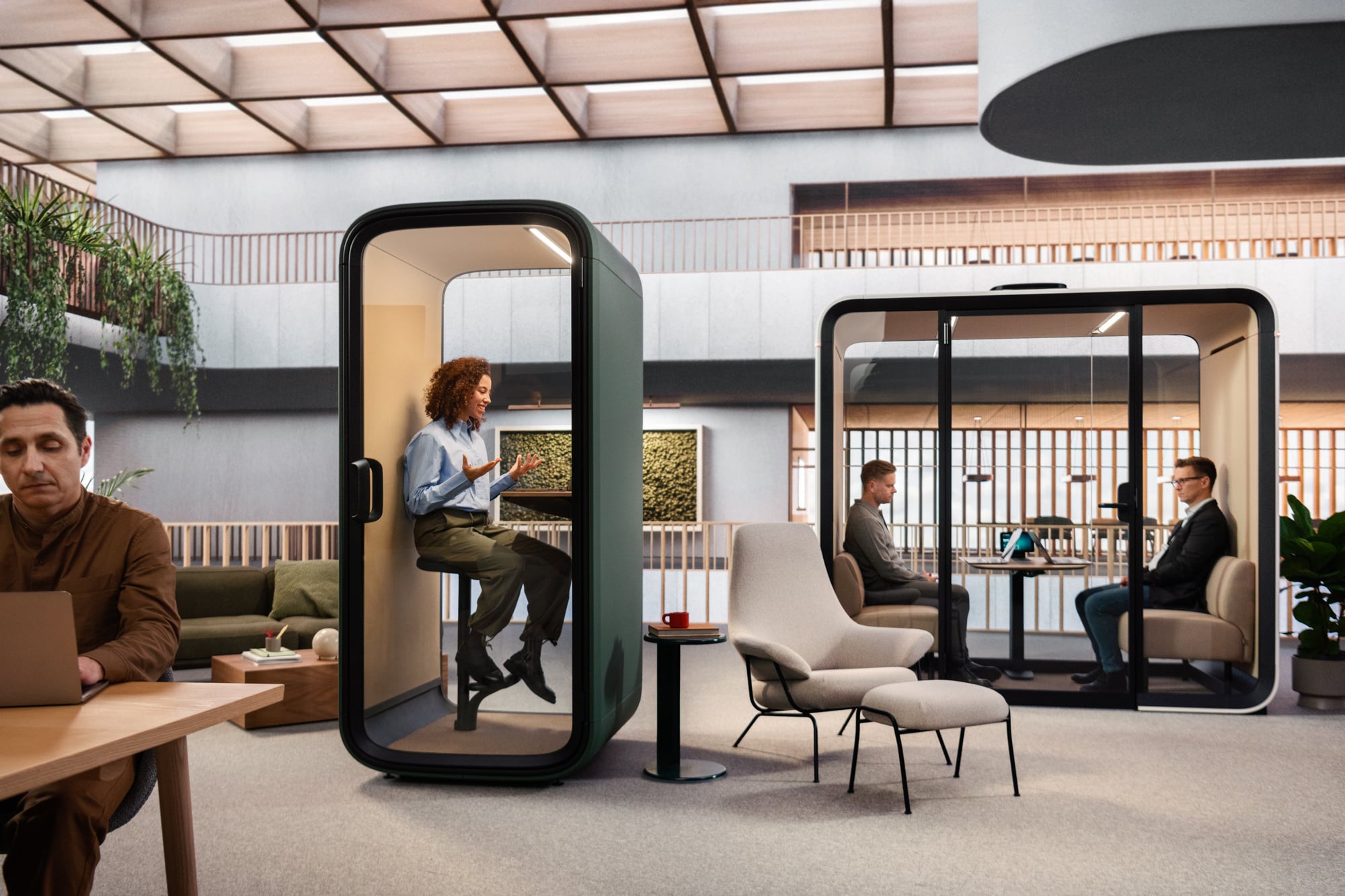
Acoustic Performance Is Moving Into the Furniture
Traditional acoustic design often depends on separate products such as fabric-covered wall panels, hanging baffles, ceiling treatments, and freestanding screens. These tools still play an important role, but they can require extra space and affect an office’s visual character.
Newer office acoustic solutions take a different approach. Acoustic performance can now be engineered into desks, cabinets, partitions, and other furniture components that already serve a practical purpose.
The concept is particularly useful in modern offices where wood, glass, metal, and other hard materials are common. Hard surfaces tend to reflect sound rather than absorb it.
When many reflective surfaces are concentrated in the same space, sound can continue bouncing around the room instead of quickly losing energy.
Furniture offers a large and often overlooked surface area for addressing that issue. Desk panels, cabinet doors, table components, and vertical furniture surfaces are distributed throughout a workplace. Giving some of those surfaces sound-absorbing properties lets designers distribute acoustic treatment throughout the room.
That creates an opportunity to approach acoustics as part of furniture specification rather than as a separate design layer.
Laser Technology Can Change How Wood Handles Sound
Wood illustrates the possibilities created by more precise manufacturing.
Its appearance makes it a popular choice for offices that want a warm, natural feel. Acoustically, though, untreated wood surfaces are generally reflective. Covering them with a soft material could improve absorption, but it would defeat much of the reason designers chose wood in the first place.
Laser microperforation offers another option.
SoniQ technology, for example, uses lasers to create microperforations measuring 0.4 millimeters across in veneered wood surfaces.
The openings are designed to be difficult to see under normal viewing conditions, allowing the finished surface to retain the appearance of traditional wood furniture.
The acoustic change occurs beneath that visual simplicity. Instead of encountering an uninterrupted reflective face, sound interacts with thousands of tiny openings and the acoustic structure behind them. Air movement through the perforations creates resistance that helps dissipate acoustic energy.
The underlying principle is well established in acoustic research. Studies published in the Journal of the Acoustical Society of America show that microperforated panels can absorb sound, with factors such as panel configuration and the cavity behind the surface influencing how effectively different frequencies are absorbed.
Precision matters. Making holes in wood is not enough to create an effective acoustic material. Hole diameter, spacing, panel construction, backing conditions, and other design variables influence how the finished system behaves at different frequencies.
Modern laser manufacturing provides the control needed to make those characteristics repeatable at production scale.
Manufacturing Advances Give Designers More Freedom
Integrated acoustics can change more than an office’s sound. They can also give architects and workplace designers more freedom.
Acoustic treatments have traditionally created visual trade-offs. A room may need more absorption, while the design concept calls for clean walls, natural materials, minimal ornamentation, or a particular architectural finish. Solving the sound problem can mean introducing another visible material into the space.
Manufacturing technology is reducing that conflict.
When acoustic function is built directly into furniture or architectural materials, the same surface can do more than one job.
A cabinet can provide storage while absorbing sound. A workstation panel can organize a desk system while helping manage reflected sound. A wood surface can preserve its natural visual character while behaving differently from conventional wood.
This approach also fits a broader trend toward performance-driven materials. Office products are increasingly expected to do more than look attractive or serve one basic function.
Materials can now be selected and engineered around durability, cleanability, sustainability goals, flexibility, acoustics, and other performance requirements.
For organizations updating existing workplaces, integrated products may also create opportunities to improve acoustics as furniture is replaced or layouts change. Rather than viewing every acoustic improvement as a construction project, some performance can become part of normal furniture planning.
The result is not the disappearance of wall panels, ceiling absorbers, or professional acoustic planning. A room’s sound depends on its complete design, including its size, geometry, materials, occupancy, and intended use. Integrated furniture simply gives designers another surface to work with.
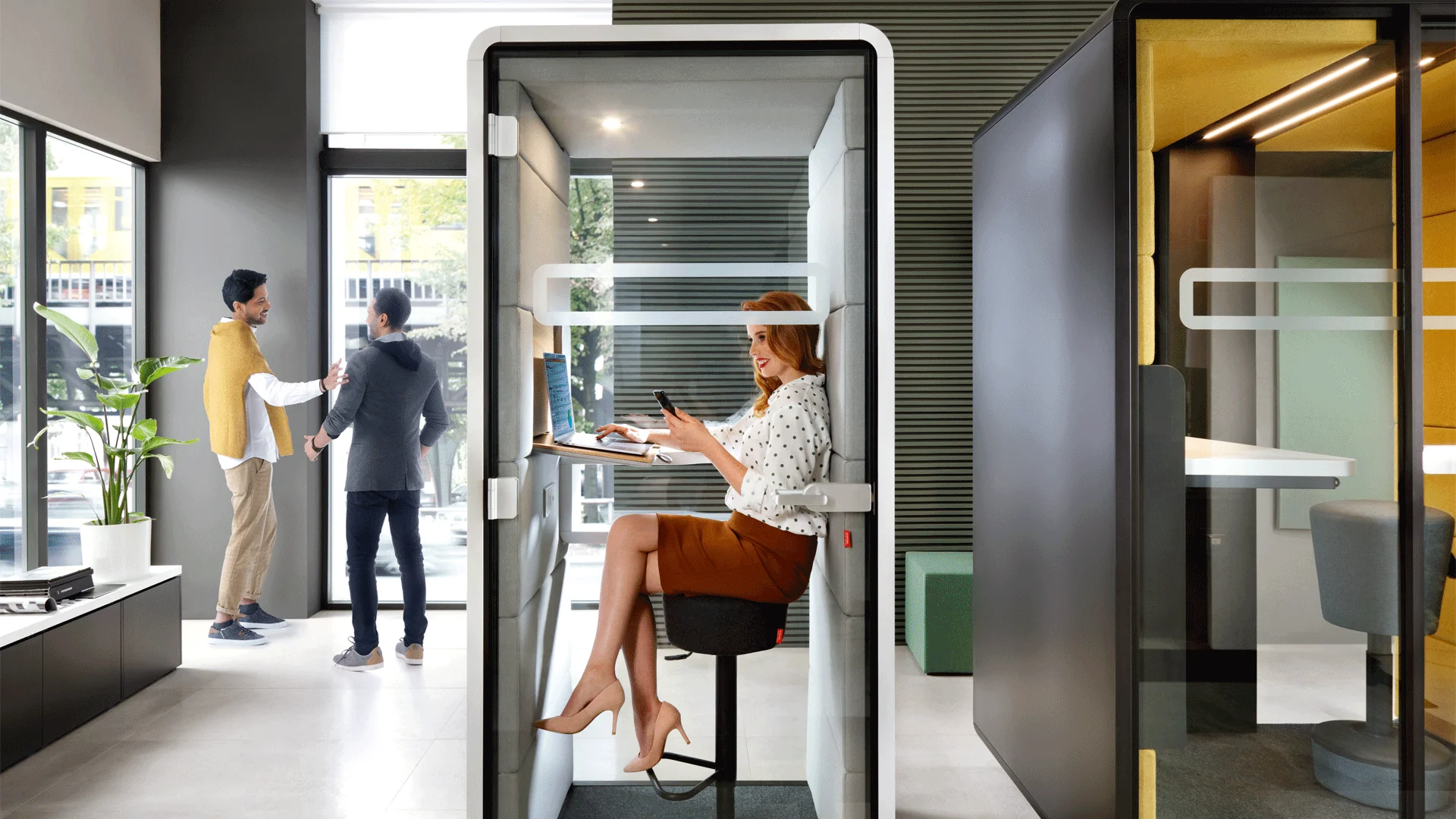
The Quiet Office May Look Surprisingly Ordinary
Some of the most useful workplace technology is becoming less visible.
That idea is especially relevant to acoustics. Employees do not necessarily need to see a room full of specialized products to experience a more controlled sound environment.
Advances in material engineering and precision manufacturing are making it possible for familiar objects to take on acoustic functions while keeping the appearance people expect.
Laser-microperforated wood is a clear example. What appears to be an ordinary desk, cabinet, or panel can contain thousands of carefully engineered openings designed to change the way sound interacts with the surface.
As these technologies mature, office acoustics may become less about adding treatments and more about choosing materials that perform from the start. Furniture will still need to support work, storage, collaboration, and comfort. It can also help shape the sound of the workplace.
For modern offices, that represents a meaningful design shift: better acoustic performance no longer has to announce itself visually.
