

The path of a football match is meandering. A team can control possession for long durations only to lose shape with a single, unexpected, penetrating pass.
There are established means to compile data for analysis. Chaos theory poses an intriguing question: in a match, what can be considered an insignificant incident that, however, determines the outcome? Unraveling the answers can assist in understanding the results of matches.

Estonia can be considered an appropriate context for applying chaos theory to football. Football spectators are adept at correlating matches with live odds. The same interest in probability extends beyond this sport to Estonia’s wider digital entertainment scene.
For example, an online casino Estonia offers games where chance plays a central role, much like unexpected moments can influence a match. Sports analytics helps estimate possible outcomes, although football always leaves room for surprises.
Why Small Changes Matter?
Chaos theory is concerned with systems whose behavior is highly dependent upon initial conditions. The classic example is the butterfly effect.
Small, seemingly insignificant differences in events may cause large differences over time. In sports, players make decisions based on the decisions of their opponents. An early pressing decision may impact where an opponent passes the ball.
Making that pass may impact where an opponent moves. Predicting the final outcome of a sequence of decisions may be impossible.
An example of this is a defender moving to intercept a pass. If that defender moves too early, space may be left available behind them.
In the Estonian first division, defensive decisions impact team behavior. To fully analyze defensive actions, it is important to take into account the positioning of other teammates.
| Analytical focus | What it reveals |
| Player positions | How space opens or closes |
| Passing sequences | How decisions influence later options |
| Defensive pressure | When a stable formation becomes vulnerable |
| Match context | How fatigue or score changes behavior |
Finding Patterns Inside Uncertainty
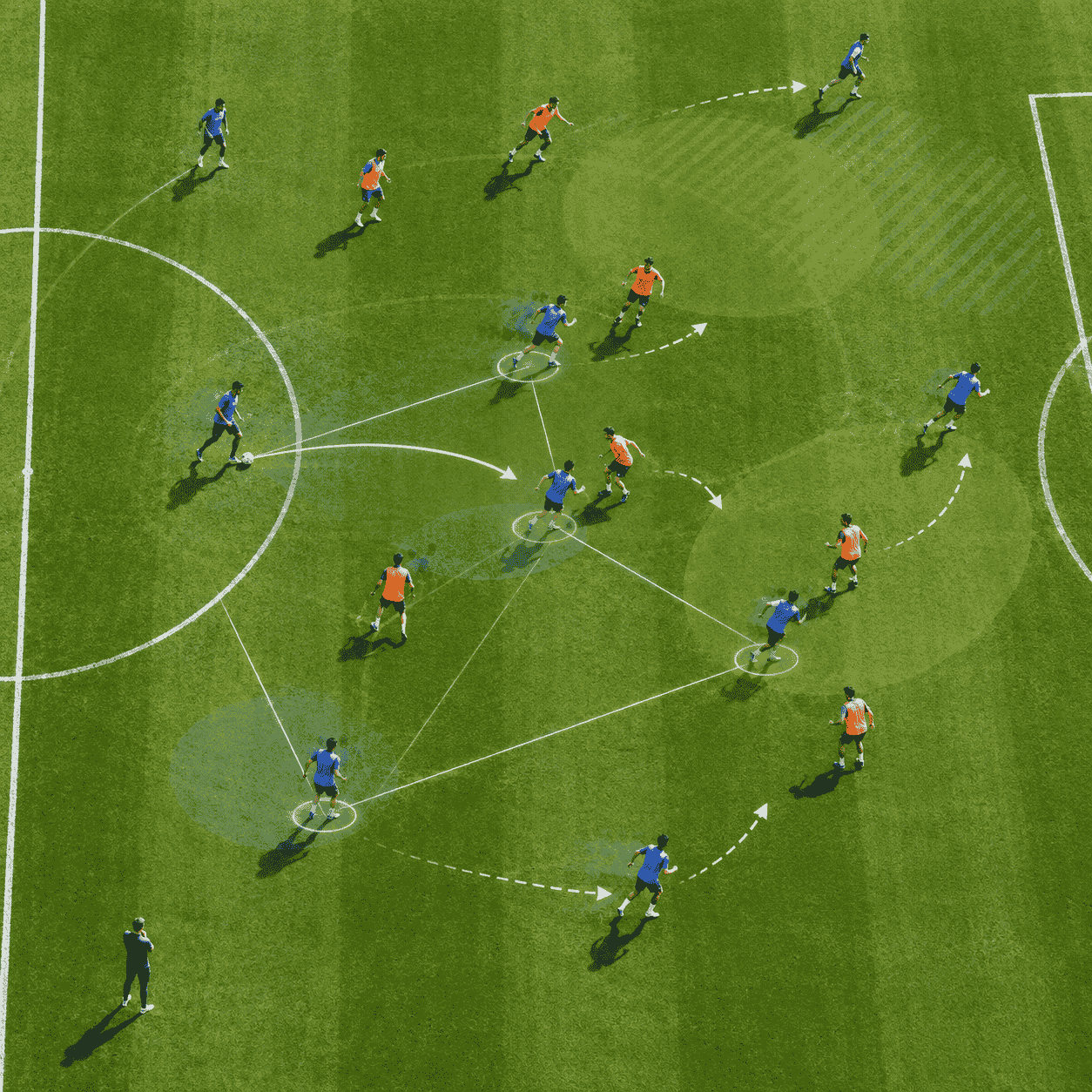
Great midfielders can only do so much. The playing environment is constantly changing based on the movements of teammates and the decisions of opponents.
Analysts can track the distance between teammates to identify the farthest points of a formation. Often, a seemingly disconnected group of players is actually working together to shut down a passing lane.
There is a body of work that considers the game of football as a complex system, and particular focus is placed on the analysis of rapidly evolving phases of play that create goal-scoring opportunities.
By incorporating run restrictions and considering the overall balance of players on offense and defense, the reasons for the inconsistent nature of goal scoring in football become evident.
Some questions that help analysts gain insight into opposing teams during the review of competitive footage are:
- Which action stretched the defense?
- What was the spacing and positioning of teammates in relation to a particular action?
- Was a similar opportunity created in previous matches?
- Which options and passes were available after the defense adjusted?
Test More Than One Possible Future
Analysts will make more accurate forecasts if they consider that a possible outcome may follow multiple pathways.
Through simulation, analysts may evaluate the impact of differing lineups, presses, and substitutions on expected outcomes. Providing coaches with different scenarios allows them to determine advanced tactics before a match.
A model can tell coaches and analysts that employing a high press against a specific team may lead to numerous goal-scoring opportunities against that team.
However, that same press may lead to goals being scored against that team. Coaches and analysts must consider all possibilities when evaluating models.
Turning Complexity Into Practical Decisions
These ideas are straightforward for coaches to implement. Changes in training drills can modify the size of the playing area or the number of options available for passing. Recognizing opportunities and acting on them in conjunction with teammates is essential for flexibility.
One way to review a match is to:
- Find a pivotal moment in the match where the momentum shifted.
- Show where the players were positioned just before that moment.
- Determine the coaching and/or player decisions that brought about that shift in momentum.
- Make a training drill to help the players learn how to respond to that shift in a different manner.
Measure What Changes Over Time
Average statistics often fail to capture pertinent information regarding how a given team competes. For example, in basketball, two teams may cover similar distances; however, one may push in short bursts while the other may fail to create passing lanes.
High efficiency and purposeful movement should be differentiated from wasted effort. Time-activity data may be useful in differentiating the two.
The best scouting reports integrate data and video, and are refined with the experience and instinct of a coach. Data and video scouting reports assist in answering the right questions and in preparing to counter an opponent’s tendencies. The best reports encourage adaptability and adjustment.
The Value of an Unfinished Prediction
Because not every factor that influences the outcome of a sporting event can be accounted for, sports analysts can use Chaos theory to study the formation of unexpected and seemingly random events.
Analysts can gain additional insight by focusing on pivotal moments of a game, evaluating the connections between players, and using their analysis to inform the strategies a team should employ to be successful.
