

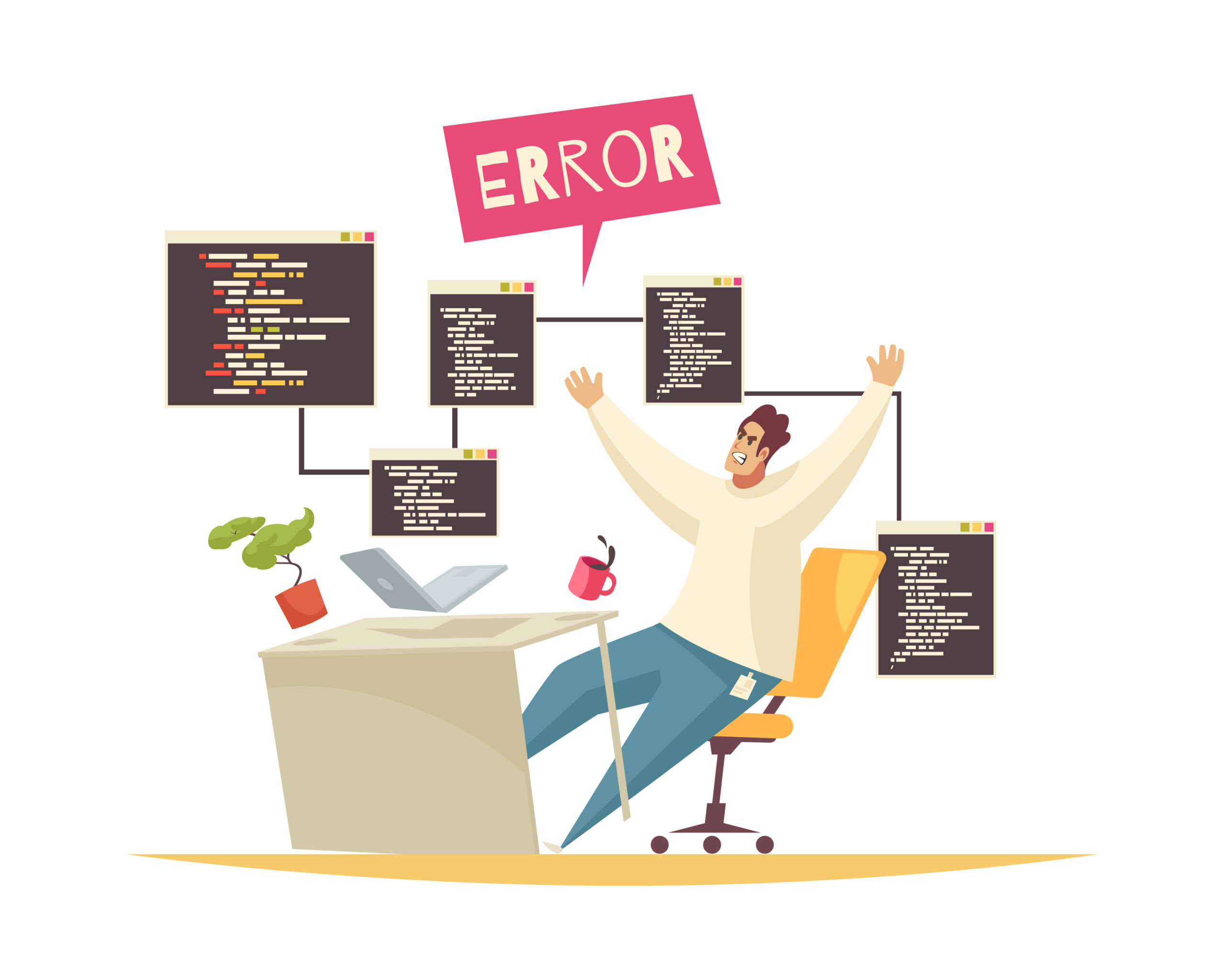
Overengineering is a quietly persuasive temptation in online technology. Teams imagine tomorrow’s requirements and build architectures that can, in theory, cope with any future demand. The resulting systems look impressive on paper, packed with separation of concerns, modular services and elaborate deployment pipelines.
Yet in practice those very qualities can amplify the smallest of mistakes into major incidents. This article examines why this happens, how simple errors propagate inside complex systems, and how organisations can stay ambitious without courting fragility.
The myth of future proofing
There is an alluring idea that if you design for everything you will not need to revisit architecture later. That logic sounds sensible, but it misreads uncertainty. The future rarely arrives exactly as predicted.
Across industries products evolve in ways that differ from initial guesses and customer patterns shift unexpectedly. No one foresaw physical formats such as CDs and DVDs giving way to music and video streaming apps.
Likewise, some consumers have shifted from land-based venues and strictly UKGC-licensed platforms to non gamstop casinos that prioritise flexible and innovative engineering in offering modern games, larger and more frequent bonuses, higher limits and newer payment methods. Audiences also respond more to influencer and affiliate marketing than to some traditional channels.
These examples underline a careful distinction that matters for engineering. It is wise to design for adaptability rather than for every imagined scenario. Lightweight flexibility, clear interfaces and deliberately chosen extension points allow systems to change without accumulating needless parts.
By contrast, overengineering through accretion fills the architecture with rarely used features and configuration paths, increasing the surface area for error and making everyday operation harder.
How small errors find leverage in large systems?
A single misconfigured environment setting or a trivial mismatch between library versions can be insignificant in a small codebase. In a distributed system that same mistake can queue up through services, regions and caches, becoming difficult to diagnose and simple to miss during testing.
Complex routing, multiple data stores and conditional feature flags all act as amplifiers. What begins as a tiny discrepancy can turn into inconsistent behaviour for customers, partial outages or data divergence. The technical architecture merely reveals the core problem: complexity turns mundane oversights into systemic risks.
Complexity carries significant costs for businesses that go far beyond the obvious engineering overhead, affecting everything from productivity and budgeting to strategic agility. It slows decision-making because changes require more checks and cross-team coordination.
It increases the cognitive load for engineers who must keep multiple interactions and potential failure modes in mind. It complicates onboarding for new team members and raises the bar for effective incident response.
From a business perspective, these operational frictions translate into slower time to market, higher maintenance costs and reduced capacity to experiment. A system that is difficult to understand is difficult to improve.
Clarity as the counterbalance to complexity
When complexity cannot be avoided, visibility must increase to match it. Observability is not just an operational advantage but the foundation that makes systems understandable under pressure.
Logs, metrics and tracing should reveal how changes ripple across components, while alerts focus on meaningful symptoms rather than raw noise.
Dashboards work best when they reflect business outcomes instead of only technical metrics. Strong visibility shortens the gap between mistake and detection, often turning potential incidents into brief interruptions.
Designing for adaptability is equally vital. Evolvability favours architectures that can change easily in response to real needs, rather than trying to anticipate every future possibility. A pragmatic culture accepts refactoring as routine and values gradual improvement over speculative perfection.
Clear modular boundaries, defined contracts and automated integration tests help keep complexity contained. These practices do not eliminate risk, but they ensure it remains manageable and visible instead of buried in the system.
Culture shapes technical risk
Engineering practices are only as effective as the culture that supports them. Organisations that reward speed without balancing discipline tend to accumulate complexity. Teams that encourage shared ownership, peer review and post-incident learning create conditions where small mistakes are caught and understood.
Encouraging proactive system monitoring is also important in reducing downtimes, so engineers can raise concerns before they turn into outages. Equally necessary is the humility to question architectural decisions and the willingness to prune or simplify when a design no longer serves the product.
A measured way forward
Ambition and restraint need not be opposed. It is possible to pursue scale, resilience and rich capabilities while keeping systems comprehensible. The guiding principle is to avoid complexity for its own sake and to design with the expectation that human error will occur.
That expectation leads to practical decisions: keep configurations explicit and auditable, invest in observability that maps to user impact, prefer small and reversible changes, and create feedback loops that surface issues early.
With these disciplines, teams can enjoy the benefits of modern online architectures without exposing themselves to the disproportionate consequences of simple mistakes.
