

In today’s fast-moving digital age, organizations generate vast amounts of data through various systems, departments, and digital channels.
According to Statista, the total amount of data generated, captured, copied, and consumed worldwide reached approximately 149 zettabytes in 2024. What once was a challenge of merely collecting data has now evolved into one of making sense of it – breaking it down, analyzing it, and transforming it into actionable insights.
As organizations shift toward AI-driven decision-making, traditional reporting and analytics tools are proving insufficient for delivering timely and relevant insights.
This is where data discovery comes in. It enables teams to explore complex data landscapes, uncover what’s really happening behind the numbers, and accelerate the path from raw information to strategic insight – transforming how companies make real-time business decisions.

What is Data Discovery?
Data discovery is the process of collecting, analyzing, and visualizing data from multiple sources to generate meaningful insights.
Organizations use advanced analytics tools, interactive dashboards, and machine learning models to help data and business professionals identify relationships and trends within large data ecosystems.
Unlike static reports, data discovery allows users to interact dynamically with datasets, perform ad hoc analyses, and explore information in real time.
It serves as a bridge between technical data analysis and strategic decision-making, providing a visual, intuitive way for both technical and non-technical users to extract relevant insights efficiently.
Key Components of an Effective Data Discovery Framework
A successful data discovery process depends on several interconnected elements that ensure data is accessible, accurate, and actionable across the organization:
- Unified Data Access: Bring together data from different sources, such as cloud, on-premises, and APIs, into a single, searchable environment to remove silos and improve visibility.
- Metadata Management: Maintain an organized catalog of data assets, including ownership, lineage, and classification, to make discovery fast and reliable.
- Data Quality and Cleansing: Ensure accuracy and consistency by identifying and resolving errors, missing values, and format mismatches before analysis.
- Visualization and Exploration Tools: Equip users with intuitive dashboards, search interfaces, and visualization layers to interact dynamically with datasets.
- Automation and AI Assistance: Use AI to detect relationships, suggest queries, and highlight anomalies or outliers for faster insight generation.
- Governance and Security Controls: Apply role-based access, audit trails, and compliance policies to safeguard sensitive information while keeping data discoverable.
What is the Value of Data Discovery for Organizations?
Modern organizations operate in fast-changing environments where decisions must be made quickly and confidently.
In this context, data discovery democratizes analytics by expanding access to insights. Rather than depending on data engineers or analysts to generate reports, business users can directly access data through easy-to-use discovery platforms.
This self-service approach empowers teams to react faster to change, uncover new opportunities, and identify risks early.
Additionally, data discovery enhances governance by simplifying the tracking of data lineage and improving quality across systems. When properly implemented, it supports compliance by providing visibility into data ownership, transformation, and usage throughout the organization.
Main Aspects of the Data Discovery Process
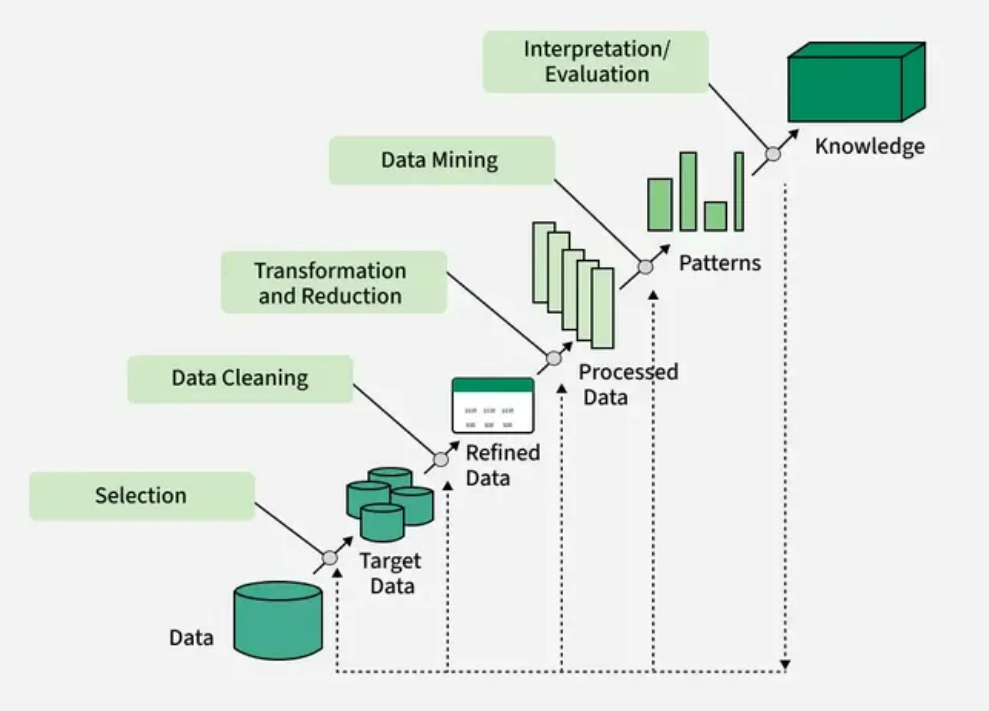
A structured approach to data discovery ensures consistency and accuracy across analytics initiatives. While specific methods may vary between organizations, most frameworks include the following key steps:
- Data Collection and Integration: Data is gathered from multiple sources, including databases, cloud storage, APIs, and third-party platforms. Integration into a unified environment enables the seamless analysis of structured, semi-structured, and unstructured data.
- Data Preparation and Cleansing: Before analysis, data must be cleaned and standardized. This includes identifying and correcting errors, handling missing values, and ensuring consistent formatting across datasets.
- Exploration and Visualization: Analysts leverage visual tools, dashboards, and machine learning algorithms to explore datasets interactively. This process helps uncover trends, relationships, and anomalies that traditional reports might overlook.
- Insight Generation and Reporting: The results of the analysis are translated into actionable business insights that inform decision-making across marketing, operations, finance, and strategy functions.
What is the Difference Between Data Discovery and Traditional Data Analysis?
Traditional data analysis typically relies on pre-defined questions and static reports – a time-consuming process that limits flexibility and exploration. Analysts often need to know exactly what they’re looking for, which restricts innovation and reduces the potential for uncovering unexpected insights.
Modern data discovery, on the other hand, supports user-driven exploration. Instead of waiting for IT teams to generate reports, users can explore data directly through drag-and-drop interfaces and natural language queries.
Machine learning and AI can automatically detect patterns, anomalies, and correlations that might otherwise go unnoticed.
This shift from reactive analysis to proactive discovery represents a major step forward in how businesses use data for competitive advantage.
Best Practices of the Data Discovery Process in Data Analytics Projects
Achieving success in data discovery requires a strategic and systematic approach. The following best practices can help organizations maximize the value of their analytics initiatives:
- Develop a Strong Data Foundation: Document, clean, and standardize all data sources at the beginning of the discovery process. Establish robust data governance policies to ensure trust and accuracy.
- Leverage Automation and AI: Automate routine tasks such as data cleaning and integration. Use discovery tools that apply AI to identify key relationships and highlight relevant data attributes for deeper exploration.
- Build Interdepartmental Collaboration: Encourage collaboration among business, IT, and data science teams. Shared dashboards and collaborative platforms increase transparency and organizational alignment.
- Invest in Scalable Platforms: Choose analytics and visualization tools that can scale with growing data volumes and support multiple data formats, including structured and unstructured data.
- Secure Data and Compliance: Implement strong access controls and encryption to safeguard sensitive data. Organizations should conduct regular audits to ensure and demonstrate compliance with regulations such as GDPR and CCPA.
- Create a Data-Driven Culture: Beyond technology, success depends on people. Companies should establish training programs and workshops to improve data literacy, empowering every team member to use data effectively in decision-making.
Conclusion
Data analytics continues to redefine how organizations use their information assets. By enabling users to interact with data in real time and extract actionable insights, data discovery bridges the gap between large-scale data systems and practical business outcomes.
As analytics technologies evolve, organizations must focus on developing the capability to uncover, understand, and operationalize data effectively.
Through strong governance, cross-functional collaboration, and a commitment to continuous innovation, businesses can transform data discovery from a technical exercise into a strategic advantage, powering the next generation of intelligent analytics.
