

If you’re reading this, you’ve probably already Googled “is RiseGuide legit” or scrolled through reviews trying to figure out if this app is worth your time. I did the same thing before downloading it.
The problem with most app reviews is that they’re either overly promotional or written by someone who used it for two days and moved on.
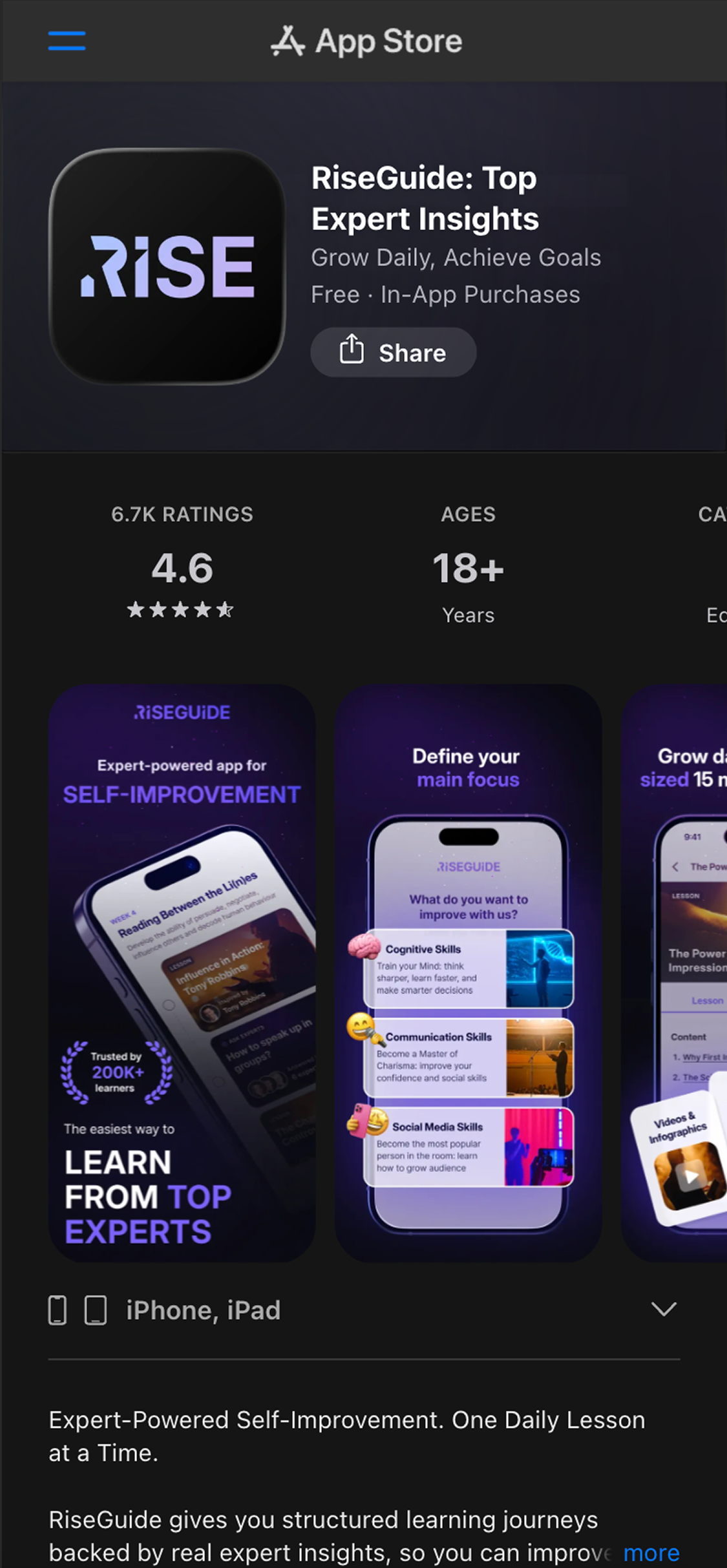
I wanted something more honest, so I committed to a full week and tracked what actually changed – not what I hoped would change.
Many people are asking if RiseGuide is a scam and want to understand whether the app offers real value or is just another motivational framework.
Here’s what changed for me and what didn’t after seven days with RiseGuide, so you can judge if it fits your personal growth goals.
Disclosure & methodology
To keep this review practical and transparent, here’s the setup I followed.
- App tested: RiseGuide
- Test period: 7 consecutive days
- Daily time spent: 10–15 minutes.
- Chosen journey: Intelligence training plan
- Goal: build a simple personal growth plan focused on memory, focus, and mental clarity
I didn’t measure results with productivity hacks or external tools. As a self-development app, RiseGuide claims to focus on habit-building rather than intensive theory. So instead, I tracked consistency, ease of use, mental effort, and whether RiseGuide felt sustainable as a daily habit.
What RiseGuide Is (30-second overview)
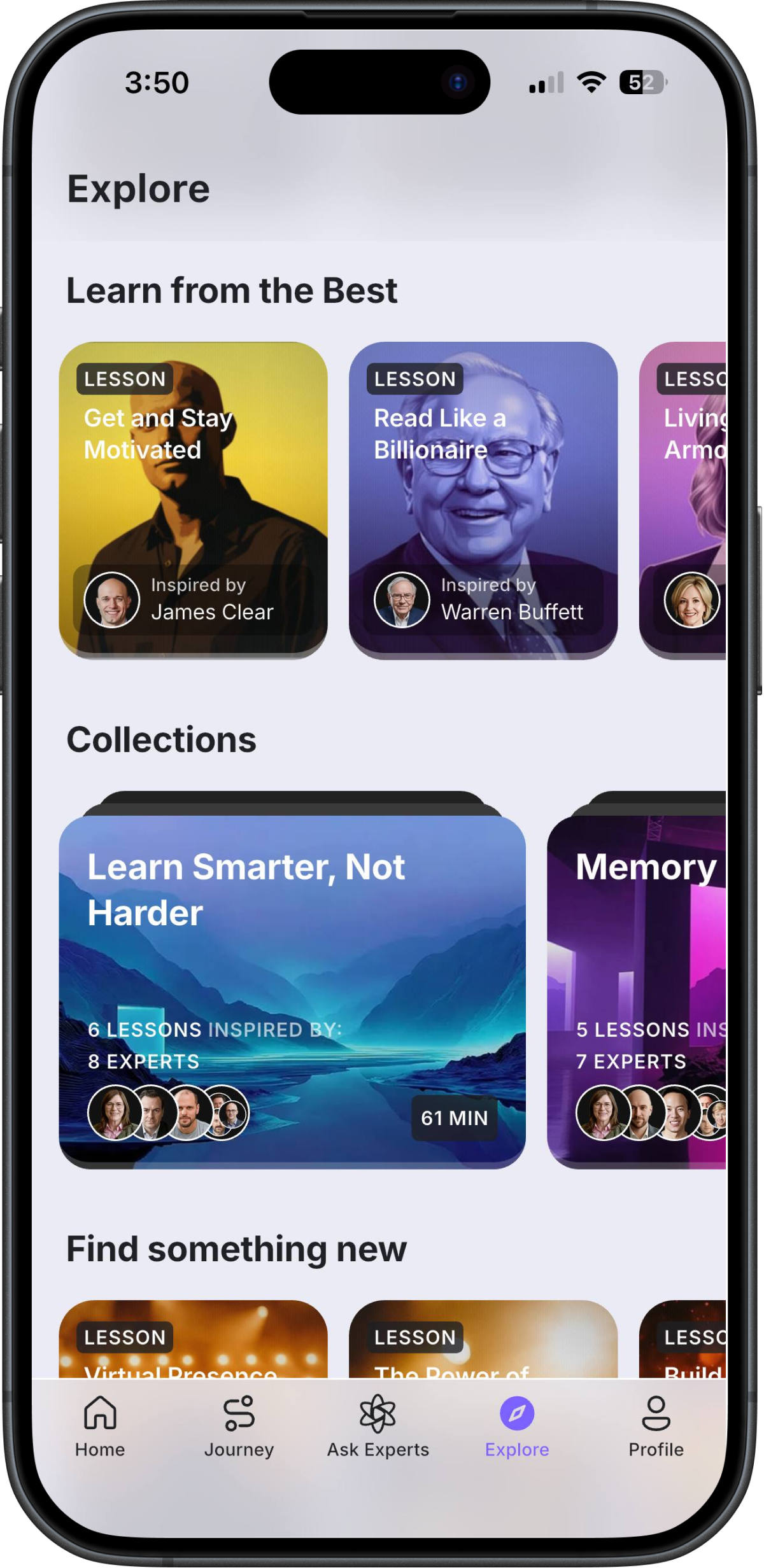
RiseGuide is a self-development app built around short, structured learning sessions. Its core idea is daily micro-learning: instead of long courses or heavy theory, users complete short lessons that fit into everyday routines.
The app positions itself as a guided personal growth plan, where users select a learning journey and follow daily steps that take only a few minutes. Topics focus on mindset, intelligence, habits, and learning fundamentals rather than narrow professional skills.
Unlike traditional online courses, RiseGuide emphasizes consistency over depth. The app developers do state that it isn’t trying to replace coaching, therapy, or formal education. Its goal is to make self-improvement easier to start (for all of us quitting our New Year’s resolutions 2 weeks later) and harder to abandon.
RiseGuide is organized around learning journeys. Each journey follows a predefined structure, with daily lessons released in steps.
What stood out during the test:
- Lessons are short and focused.
- Each day has a clear start and finish.
- There’s minimal decision-making involved.
From an app experience perspective, this makes RiseGuide feel structured and predictable. Content is delivered in small portions, supporting the micro-learning approach and reducing cognitive overload.
This structure is especially relevant for users who struggle more with consistency than with motivation.
The 7-day plan I followed
For this test, I chose the intelligence training plan with a simple goal: improve my focus during short thinking tasks.
I tried to fit the sessions into my “dead time” to see if it was actually doable. Most days, I opened the app right after my lunch break or just before brushing my teeth at night.
Each session followed a rhythm I quickly got used to:
- One short lesson.
- A brief explanation or example.
- A reflection or mental exercise.
I noticed my sessions rarely exceeded 15 minutes. Because I knew exactly how little time it would take, I didn’t feel that usual dread of starting a task.
It was easy to integrate into my routine because I didn’t have to plan for it – I just opened the app when I had a spare moment.
Day-by-day notes (Days 1–7)
Days 1–2: I was pleasantly surprised by the onboarding. I expected a long, tedious setup, but I found the instructions clear, and the expectations were set early. The content felt introductory but not empty. My biggest takeaway early on was simply clarity – I had zero confusion about what I needed to do or how long it would take, which is usually where I drop off with other apps.
Days 3–4: By midweek, opening RiseGuide started to feel more like a habit than a task I had to do. I caught myself opening the app in my free time instead of doomscrolling on social media. I really liked the repetition – mostly because it helped me reinforce ideas without feeling forced. The bite-sized lessons were perfect for my short attention span – I didn’t have time to get bored before the lesson was over.
Days 5–7: Towards the end of the week, I noticed a subtle shift. I wasn’t transformed into a genius overnight, but I felt more intentional with my downtime. On Day 6, I appreciated that the app recapped a concept from Day 2, which helped me actually retain the information rather than letting it slip away. By Day 7, I realized I hadn’t missed a single day – something I rarely achieve with self-help tools.
What was easy, what was hard, what surprised me?
What was easy:
- Showing up daily.
- Completing lessons without mental fatigue.
- Understanding the structure.
What was hard:
- Staying fully present during reflection tasks.
- Avoiding the urge to rush through content.
What surprised me: RiseGuide doesn’t rely heavily on motivation tricks. Instead, it focuses on knowledge, routine, and predictability. For users who value structure, this can feel refreshing compared to more gamified apps.
What improved after a week?
After seven days, I noticed subtle but real shifts in my routine:
- Better awareness of focus patterns.
- Less resistance to short learning sessions.
- A clearer daily routine.
The first week helped me establish a rhythm. I realized that consistency matters more than intensity when I’m trying to build a new habit. I didn’t experience a dramatic IQ boost overnight, of course – real mental changes take longer than a week. But I finally felt like I was moving forward rather than standing still.
Overall, my vision of a learning app aligns with what RiseGuide can realistically deliver in just one week. There were no dramatic breakthroughs for me, but what I liked was forward momentum – and before that was often the hardest part for me to achieve.
What didn’t change (yet?)
It’s important to keep expectations realistic.
After one week:
- No deep cognitive transformation occurred.
- Long-term habits are still forming.
- Advanced skills require more time.
While I believe RiseGuide supports learning consistency, it doesn’t condense long-term development into a few days, so I suggest not setting unrealistic expectations for yourself. Improvements in areas such as critical thinking, emotional regulation, and complex problem-solving typically take weeks or months of deliberate practice.
It’s also important to note that apps like RiseGuide and similar ones can’t replace therapy, coaching, or deep professional training.
The app works best as a supporting tool – something that helps you stay engaged and structured, rather than as a standalone solution for major life changes.
Is RiseGuide legit?
Search queries like “is RiseGuide legit” or “is RiseGuide a scam” usually show a mix of satisfied and cautious users who want reassurance before committing time or money.
Based on direct use, my experience has been:
- The app delivers the type of content it describes.
- There are no miracle claims or instant-result promises.
- Progress depends heavily on consistency.
The structure, content pacing, and messaging suggest a real product for a specific audience. From this experience, RiseGuide functions as a legitimate self-improvement app.
Whether it feels valuable depends largely on user expectations. Those looking for structure and habit support are more likely to benefit than users expecting rapid or dramatic results.
Complaints & red flags to watch for
Many RiseGuide reviews complain that they are related to expectations rather than technical issues. While searching, I noticed that some RiseGuide reviews online tend to follow common patterns seen across many online learning platforms:
- Expecting advanced material too quickly.
- Wanting personalization from day one.
- Assuming short lessons mean shallow value.
These complaints often stem from a mismatch between expectations and the app’s micro-learning format rather than from functional issues.
What to do if concerns arise:
- Review official help or FAQ pages.
- Contact support for clarification.
- Manage subscriptions carefully and review renewal terms.
These points aren’t unique red flags but common issues users face with subscription-based apps.
Pricing & is it worth it?
Questions about RiseGuide cost usually depend on how often the app is used rather than on features alone. But it also means that the return on value increases when the app becomes part of a daily or near-daily habit, even if sessions are short.
It may be a good fit if you:
- Want a guided personal growth plan.
- Prefer short daily sessions.
- Struggle with consistency.
It may not be ideal if you:
- Want deep theory immediately.
- Prefer long-form courses.
- Expect fast, visible transformations.
When comparing RiseGuide to larger courses or coaching programs, the key difference lies between depth and sustainability.
A micro-learning app like RiseGuide prioritizes steady engagement and small habit formation over intensive learning. For some people, that trade-off is exactly what makes it valuable.
Who I’d recommend it to (and who should skip)
Recommended for:
- Busy professionals,
- Beginners in self-development,
- Users rebuilding learning habits.
Not ideal for:
- Advanced learners seeking specialization,
- Users who dislike structured guidance,
- Anyone expecting immediate results.
RiseGuide can work better when expectations match its format. For people who value consistency, structure, and gradual progress, the app can be a useful long-term support tool. For those looking for fast or highly technical results, other learning formats may be a better fit.
Conclusion
After seven days, I can say RiseGuide proved to be a structured, legitimate tool focused on consistency rather than hype. It didn’t change everything for me in a week, but it helped me build a daily learning habit without the overwhelm.
If you’re unsure, the most reliable approach is simple: Run your own 7-day test with one specific personal goal. Give it a week, and see if RiseGuide fits your routine and expectations.
