

Two German farmers using smaXtec reduced severe disease progression by 80% and hit zero animal losses from disease.
That’s the difference IoT makes: catching problems before they cascade into outbreaks. The livestock monitoring market hit $5.18 billion in 2024 and is projected to $14.82 billion by 2033 at a 12.6% CAGR.
In this article, we’ll look into all the other ways one can benefit from IoT application development services in farming.
1. Real-Time Health Monitoring with Wearable Sensors
CowMonitor’s deployment data and their results show 90% disease detection accuracy before symptoms become visible to farmers.
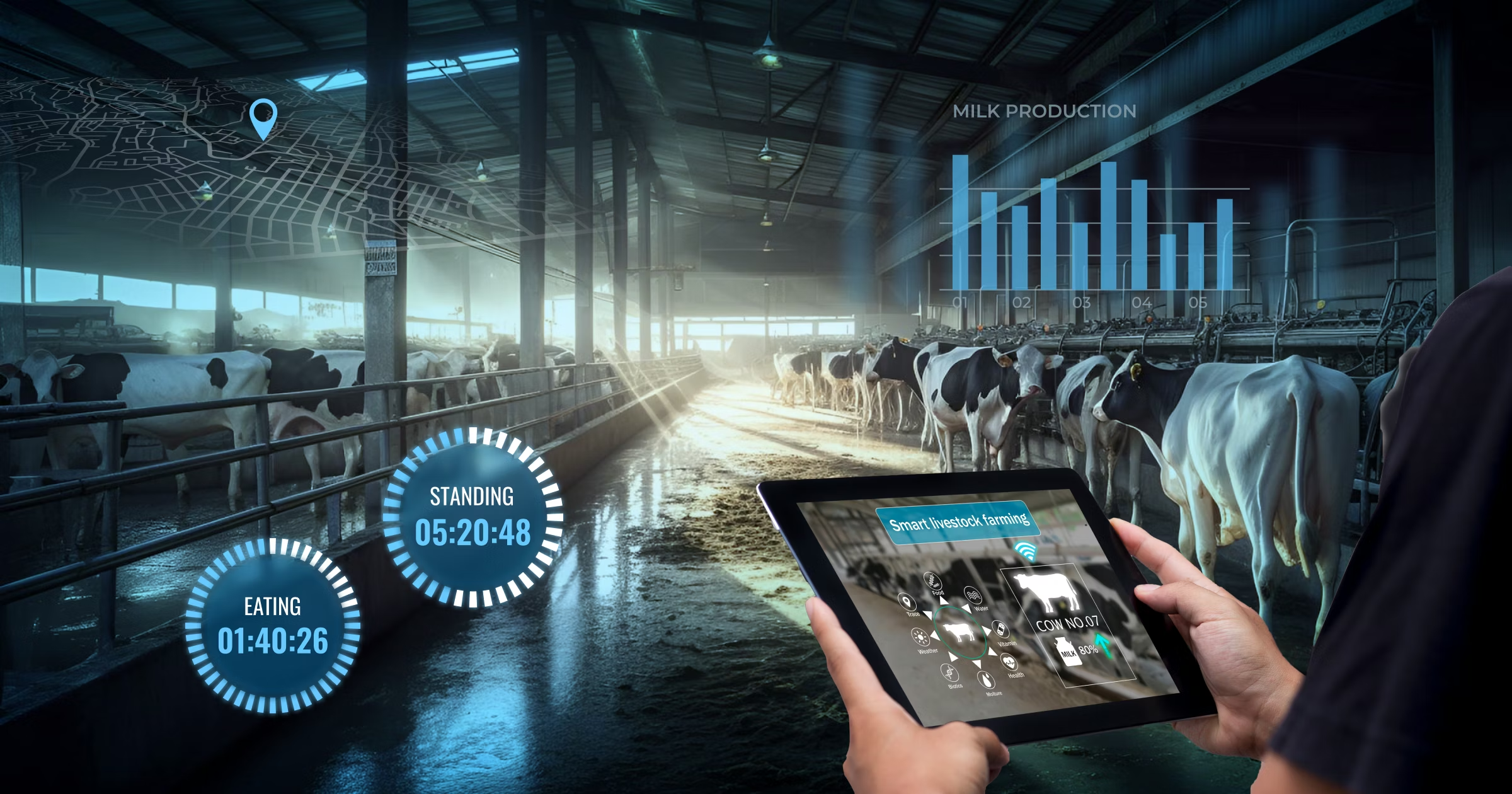
Here’s how wearable sensors work in practice: smart collars track temperature, heart rate, rumination patterns, and activity levels continuously.
When CowMonitor detected mastitis in cow 208, rumination dropped sharply. The system alerted the vet before the farmer spotted any physical symptoms.
After initial treatment failed, the real-time data showed two sequential relapses, allowing immediate treatment adjustment.
What exactly these systems measure:
- Body temperature fluctuations indicating infection or heat stress;
- Rumination decreases that signal digestive issues or systemic illness;
- Activity pattern changes revealing pain, lameness, or reproductive cycles;
- Heart rate variability showing stress or cardiovascular problems.
According to Springer’s 2026 research, IoT-based neck collars with machine learning algorithms enable early disease detection that reduces cow morbidity and mortality while boosting milk production.
The UK’s DETECT project integrated sensors into automated feeding systems, catching respiratory disease early through breathing pattern analysis. This, in turn, cut manual interventions and antibiotic use.
2. Environmental Monitoring for Disease Prevention
Light intensity, humidity, CO2, ammonia, and temperature directly affect growth rates, feed consumption, egg quality, and disease susceptibility.
Environmental sensors provide automated control of ventilation and lighting systems based on real-time conditions.
When ammonia levels spike, the system adjusts airflow before respiratory issues emerge. When humidity climbs, it prevents the moist conditions that breed pathogens.
Critical environmental parameters these systems track:
- Ammonia concentration – high levels cause respiratory distress.
- Humidity levels – excess moisture enables bacterial and fungal growth.
- Temperature variations – heat stress reduces productivity and increases mortality.
- CO2 buildup – indicates inadequate ventilation that stresses animals.
- Light intensity – affects poultry egg production and circadian rhythms.
Belgium and the Netherlands are leading in environmental monitoring adoption because ammonia emissions are regulated.
Farmers track grazing hours to calculate and reduce emissions: environmental compliance drives IoT adoption in these markets.
3. AI-Powered Predictive Analytics for Outbreak Prevention
According to a 2024 systematic review, only 33% of IoT livestock systems employ prediction techniques on collected data.
Most farms collect data but don’t use it predictively. Companies like Connecterra and MSD Animal Health deploy AI-driven platforms that analyze behavioral patterns, identify anomalies, and forecast disease probability.
How AI prediction actually works:
- Machine learning models trained on thousands of health records recognize disease patterns.
- Algorithms detect subtle behavioral changes humans miss, reduced feeding, altered movement, social isolation.
- Predictive models flag high-risk animals days before clinical symptoms appear.
- Automated alerts recommend preventive interventions: isolation, examination, treatment.
A 2024 ScienceDirect study on Lumpy Skin Disease demonstrated this in action. Wearable sensors collected temperature, heart rate, and 3-axis motion data. AI analyzed deviations from baseline parameters to identify potential LSD infection early. This enables immediate isolation before the disease spreads through the herd.
The Economics Behind IoT Adoption
According to IoT Now’s 2024 report, livestock losses from preventable disease cost farmers significant money. Early detection cuts these losses dramatically.
Real ROI drivers:
- Reduced antibiotic costs through early intervention.
- Lower mortality rates preserve livestock investment.
- Higher milk production from healthier herds.
- Improved breeding efficiency through reproductive cycle monitoring.
- Decreased labor costs as automation replaces manual monitoring.
India’s milk production reached 230.58 million tonnes in 2022-2023. It’s a 22.81% increase over five years, according to the Press Information Bureau.
Meat production hit 9.77 million tonnes. That scale demands automated monitoring. Manual observation can’t scale to operations producing hundreds of millions of tonnes annually.
In January 2026, the Andhra Pradesh government ran a livestock health push covering 12,200 communities with vaccination camps and awareness programs. Government support accelerates adoption because disease control is a public health concern.
What Works on Real Farms?
Upfront costs remain significant for small operations. Battery life requires management. Rural internet connectivity can be spotty. Learning curve exists for data interpretation.
What successful implementers do differently:
- Start small. Equip high-value breeding stock first. Use environmental sensors before individual wearables. Join co-op purchasing programs.
- Focus on actionable insights. One farmer watches three metrics: temperature, rumination, and activity level. That’s enough to catch 90% of issues.
- Integrate with existing farm management software. The collar data feeds directly in. No separate login, no duplicate entry.
The Adoption Timeline That Makes Sense
If you’re managing livestock and wondering where to start, here’s a practical phased approach:
- Phase 1 (Months 1-3): Environmental monitoring in barns first. Biggest impact, lowest per-animal cost.
- Phase 2 (Months 4-6): High-value animal wearables. Breeding stock or previous health issues. Learn the system where monitoring provides a clear ROI.
- Phase 3 (Months 7-12): Scale to full herd as budget allows and as you’ve proven value.
This keeps initial investment manageable while building expertise gradually.
The Bottom Line
IoT changes your relationship with your herd from reactive to proactive. When you catch mastitis before symptoms appear or prevent respiratory outbreaks by auto-adjusting barn ventilation, you’re saving individual animals while protecting your entire operation.
Implementation Checklist:
- Assess current disease/mortality costs (establish baseline ROI).
- Evaluate internet connectivity in barn locations.
- Start with environmental sensors or high-value animals.
- Choose subscription vs. purchase model based on cash flow.
- Integrate with existing farm management software.
- Train staff on alert interpretation and response protocols.
- Review data weekly initially, adjust monitoring parameters as needed.
