

AI content detectors are becoming more common across publishing, education, and marketing platforms. Many writers now look for ethical ways to refine machine-generated drafts so they read more naturally and meet human-quality standards.
This guide explains practical, free tools that help improve originality, tone, and readability without sacrificing meaning.
This article focuses on how these tools work, when to use them, and what limitations to expect. Many readers arrive looking for an AI detector bypass that does not compromise quality, while others want a free AI rewriter that fits into an existing workflow.
For beginners and professionals alike, an easy to use AI writer for undetectable content can simplify early drafts before human editing. Each section is structured with short paragraphs to keep scanning easy and learning efficient.
1. Clever AI Humanizer
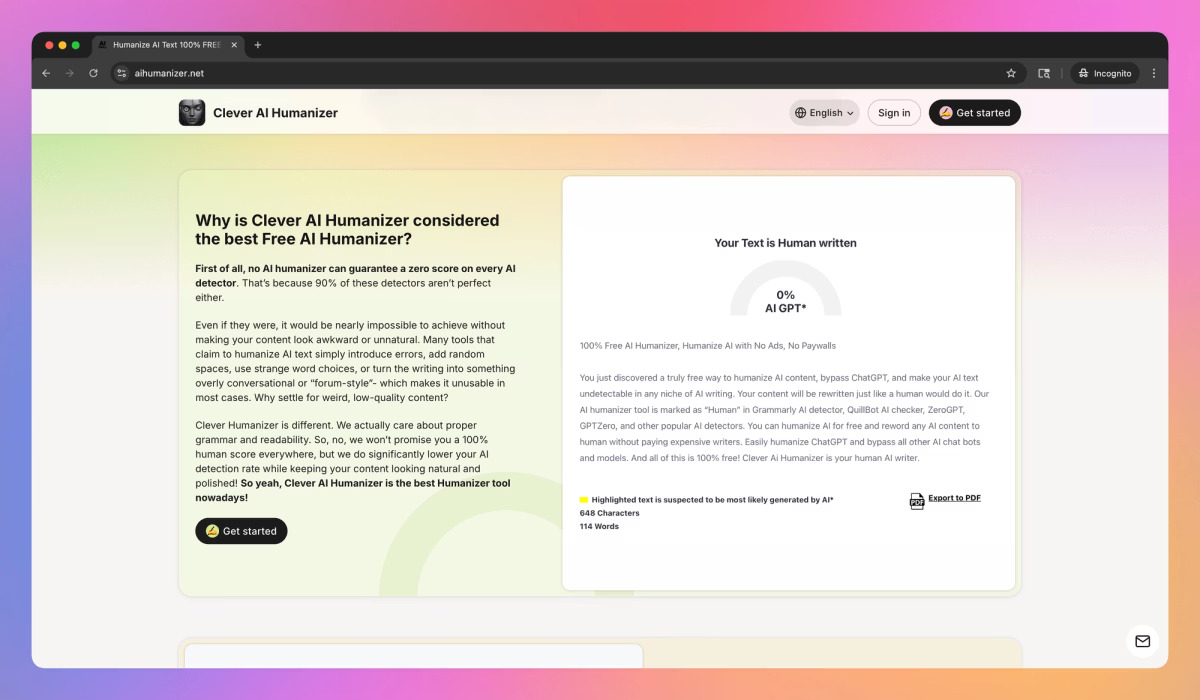
Clever AI Humanizer focuses on rewriting AI‑generated text into fluent, human‑sounding language, positioning itself as a practical online text humanizer for modern creators.
The tool adjusts sentence rhythm, varies vocabulary, and smooths transitions to reduce detectable patterns. Its free tier allows meaningful experimentation for bloggers and students.
One standout strength is contextual rewriting rather than simple synonym swapping. The platform analyzes paragraph intent and restructures ideas while keeping facts intact. This approach often results in content that feels authored rather than assembled.
Based on comparative internal testing data, Clever AI Humanizer consistently reduced detector scores across multiple models, making it appealing to writers who want to bypass AI detectors with humanizer tool strategies rather than aggressive spinning.
It performed especially well on long‑form educational content and list‑based articles. For users seeking balance between accuracy and natural flow, it is a strong starting point.
Best use cases: blog posts, guides, explanatory articles.
2. QuillBot Free Paraphraser
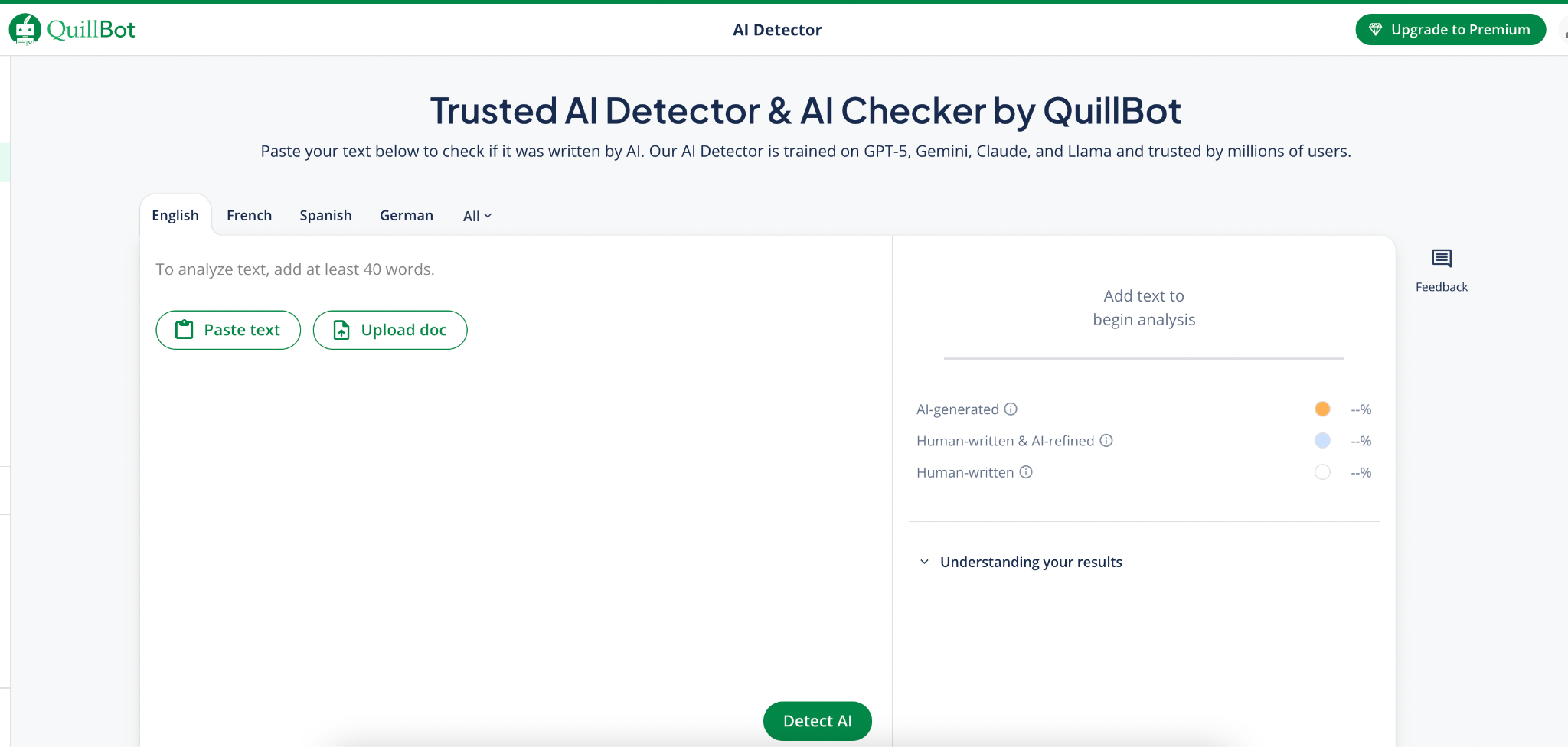
QuillBot is widely known for its paraphrasing engine and accessibility. The free version offers limited modes, yet it still helps break repetitive sentence structures. Many users rely on it for quick rewrites and tone adjustments.
The tool works best when input text is already clear and factual, especially for users who want to reword AI text without altering meaning. It reorders clauses, changes phrasing, and introduces moderate variation. This can lower AI‑detector confidence when used thoughtfully.
However, QuillBot benefits from human review after rewriting. Some outputs may feel generic if overused. Treat it as a drafting assistant rather than a final editor.
Best use cases: short articles, academic drafts, summaries.
3. Undetectable AI (Free Trial Mode)
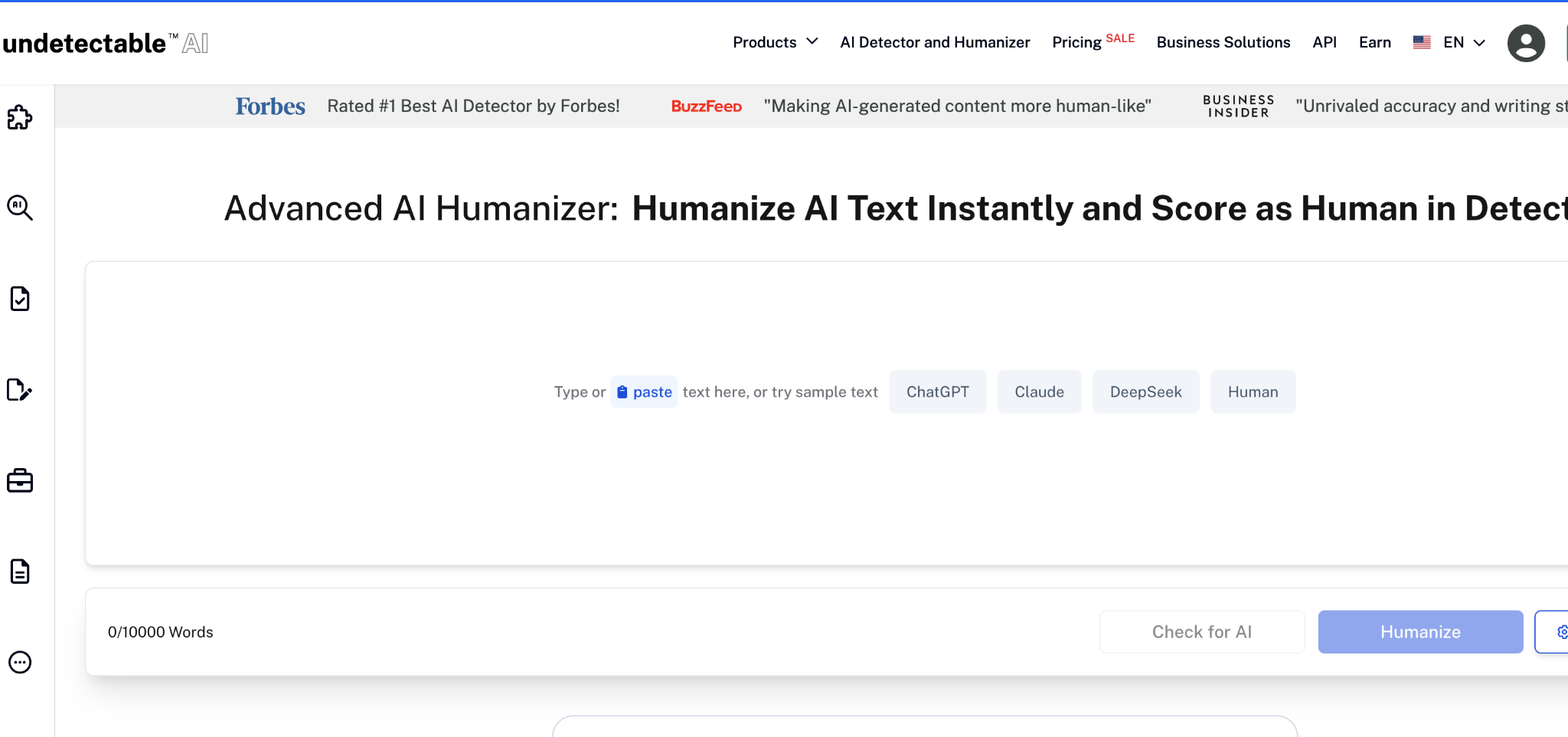
Undetectable AI is designed specifically to address AI‑detection systems. Its engine rewrites content with an emphasis on unpredictability and stylistic diversity. Even the free trial demonstrates how structural changes affect detection results.
The platform allows users to select readability levels, a feature commonly associated with an undetectable text tool aimed at adaptive audiences. This helps align rewritten text with a target audience. Educational and marketing content often benefits from this control.
Because it prioritizes detector avoidance, manual fact‑checking is essential. Users should verify that key data and citations remain accurate after processing.
Best use cases: marketing copy, SEO content, opinion pieces.
4. Paraphraser.io
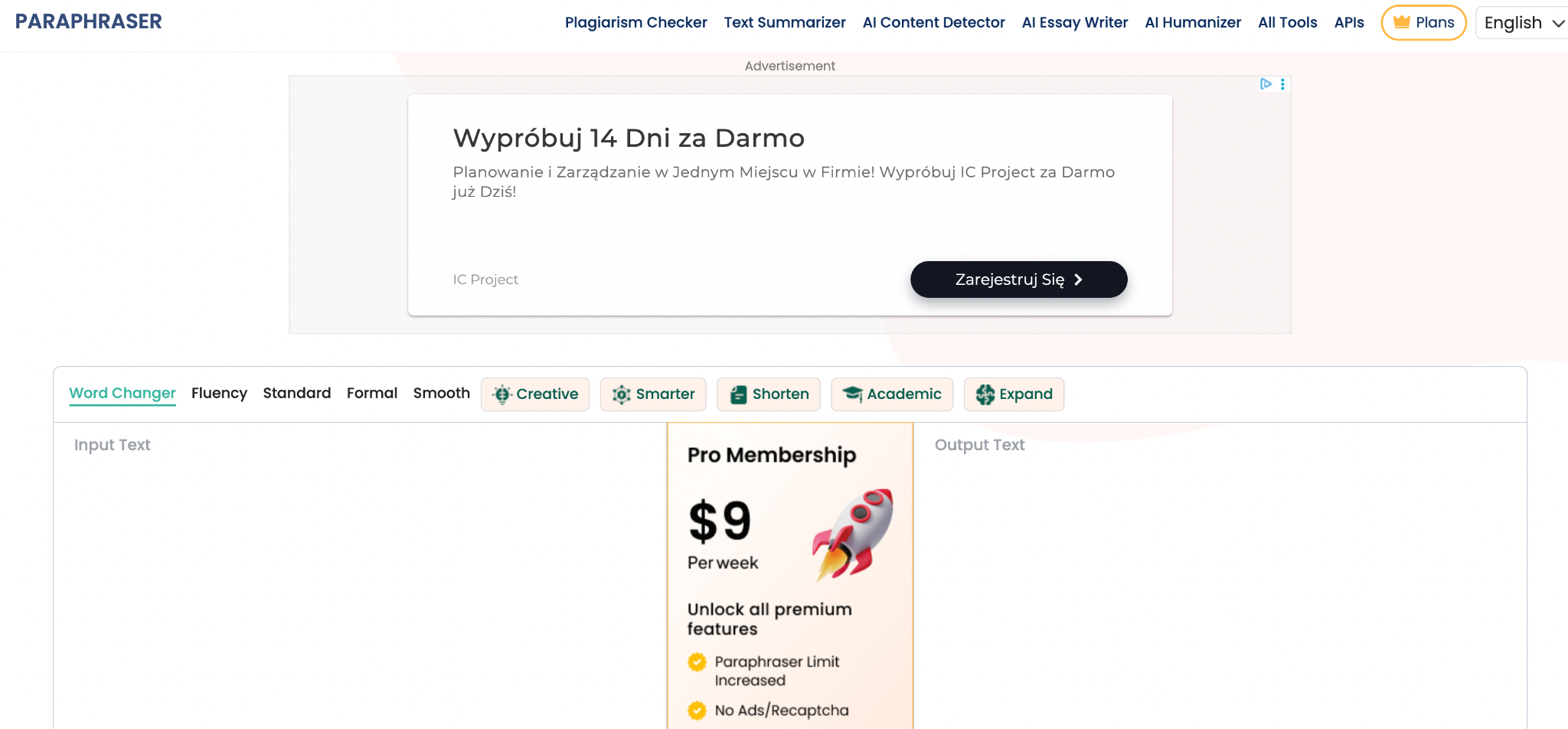
Paraphraser.io offers a lightweight, browser‑based rewriting experience. The free mode supports basic paraphrasing without registration. This makes it appealing for quick revisions.
Its algorithm focuses on sentence‑level changes rather than full paragraph restructuring. As a result, it is most effective when combined with manual edits. Short paragraphs benefit more than long analytical sections.
DigitalEdge testing shows modest detector score improvements when used selectively. Overuse can create mechanical patterns. Strategic application delivers better outcomes.
Best use cases: quick rewrites, introductory sections, FAQs.
5. Scribbr Free Paraphrasing Tool
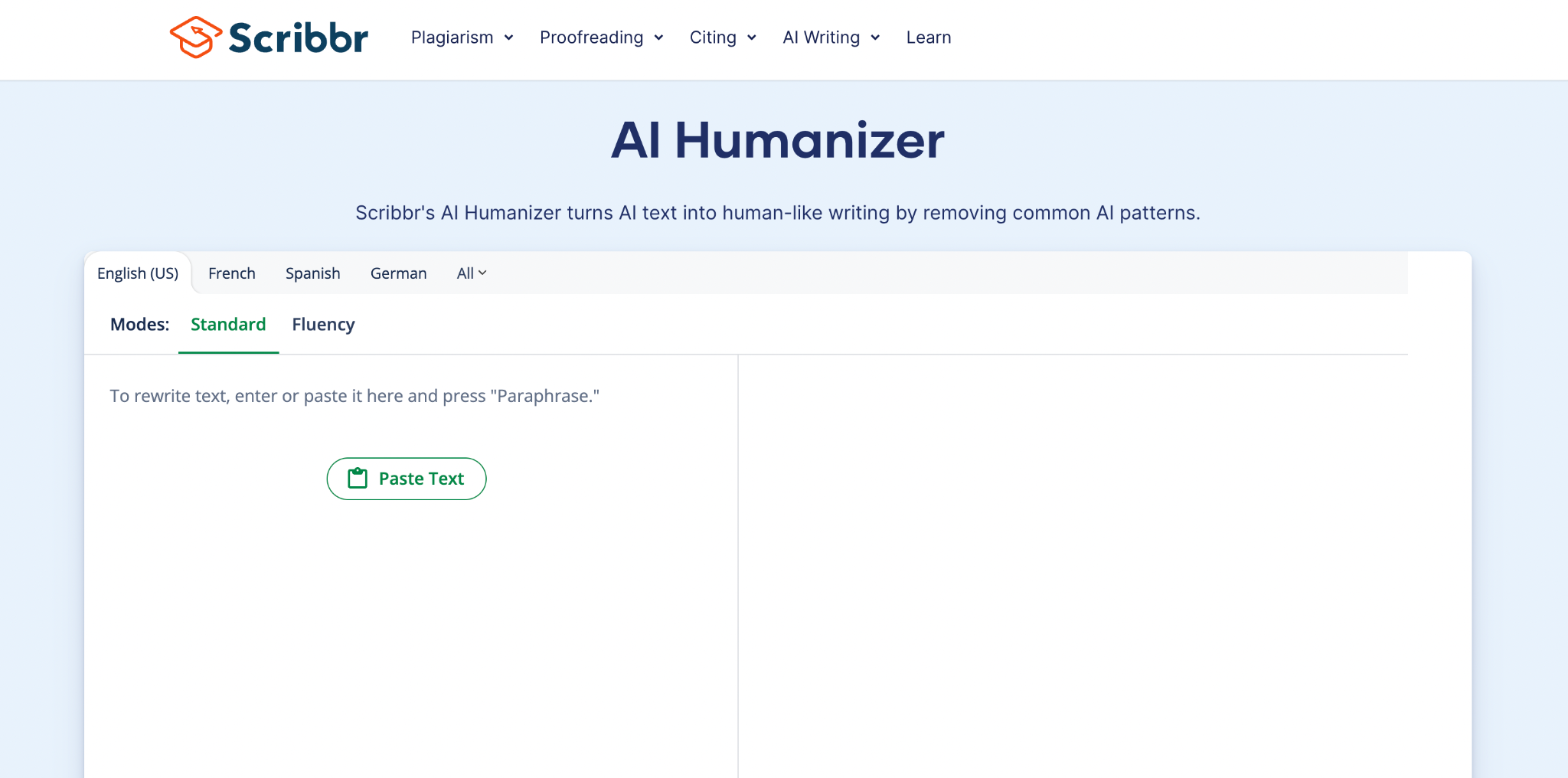
Scribbr’s paraphraser emphasizes academic integrity and clarity. It is designed to help writers express ideas in their original language while maintaining a scholarly tone. The free version limits volume but remains useful.
The tool excels at preserving meaning in research‑driven content. Sentence flow improves without distorting arguments. This makes it suitable for educational settings.
While not built specifically for AI detectors, improved originality often correlates with lower detection risk for those trying to avoid AI detection in academic or professional settings. Scribbr works best as part of a broader editing workflow.
Best use cases: essays, reports, academic blogs.
6. Writer.com Sentence Rewriter
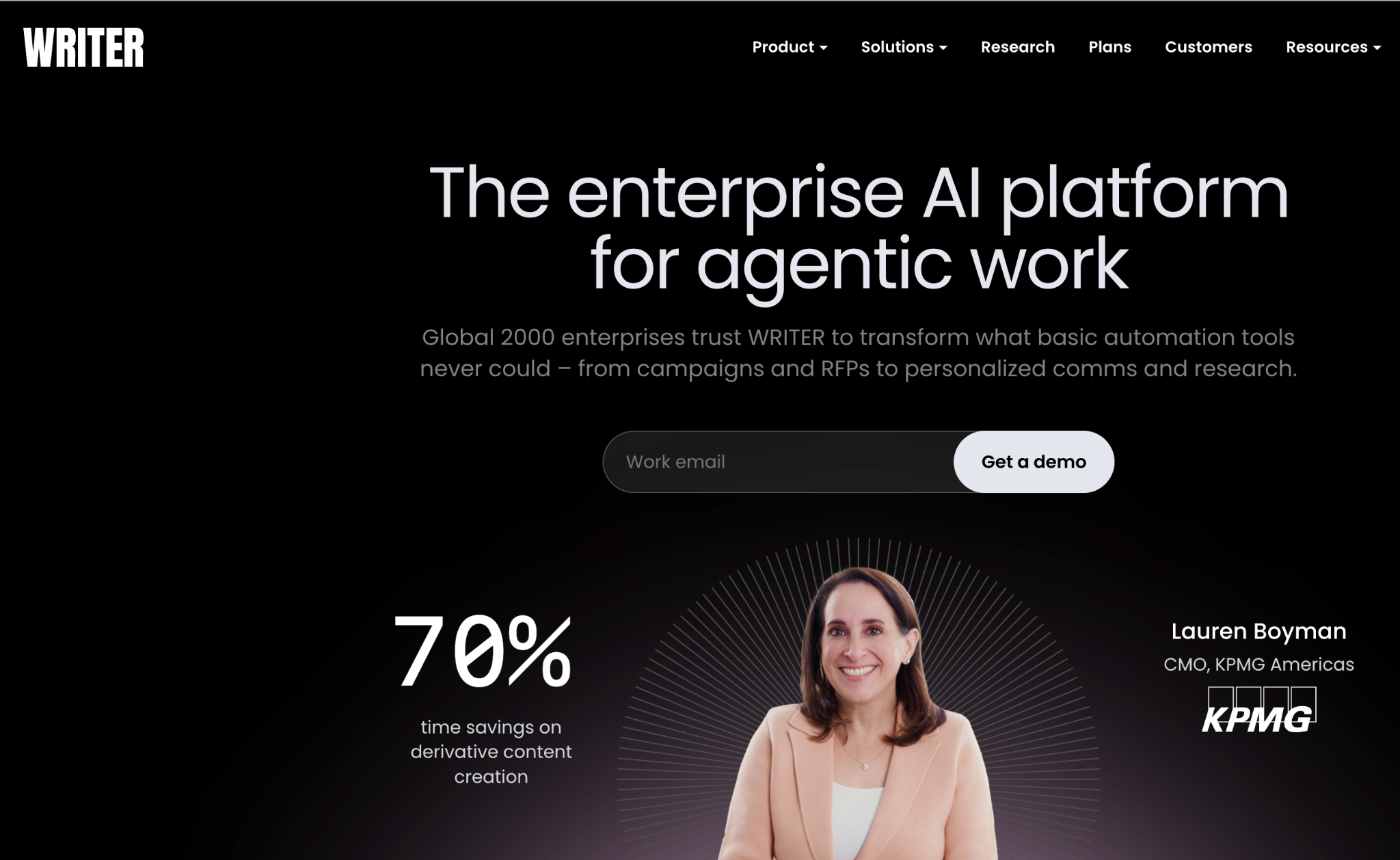
Writer.com provides a clean interface for sentence‑level rewriting. Its free tools help simplify and humanize complex phrasing. The focus is on clarity and brand‑safe language.
Instead of heavy paraphrasing, it refines tone and readability. This subtle approach can reduce AI‑like stiffness. Marketing and business content often benefits most.
Because changes are conservative, detection results vary by use case. Pairing it with manual restructuring yields stronger results.
Best use cases: business articles, landing pages, emails.
7. Spinbot
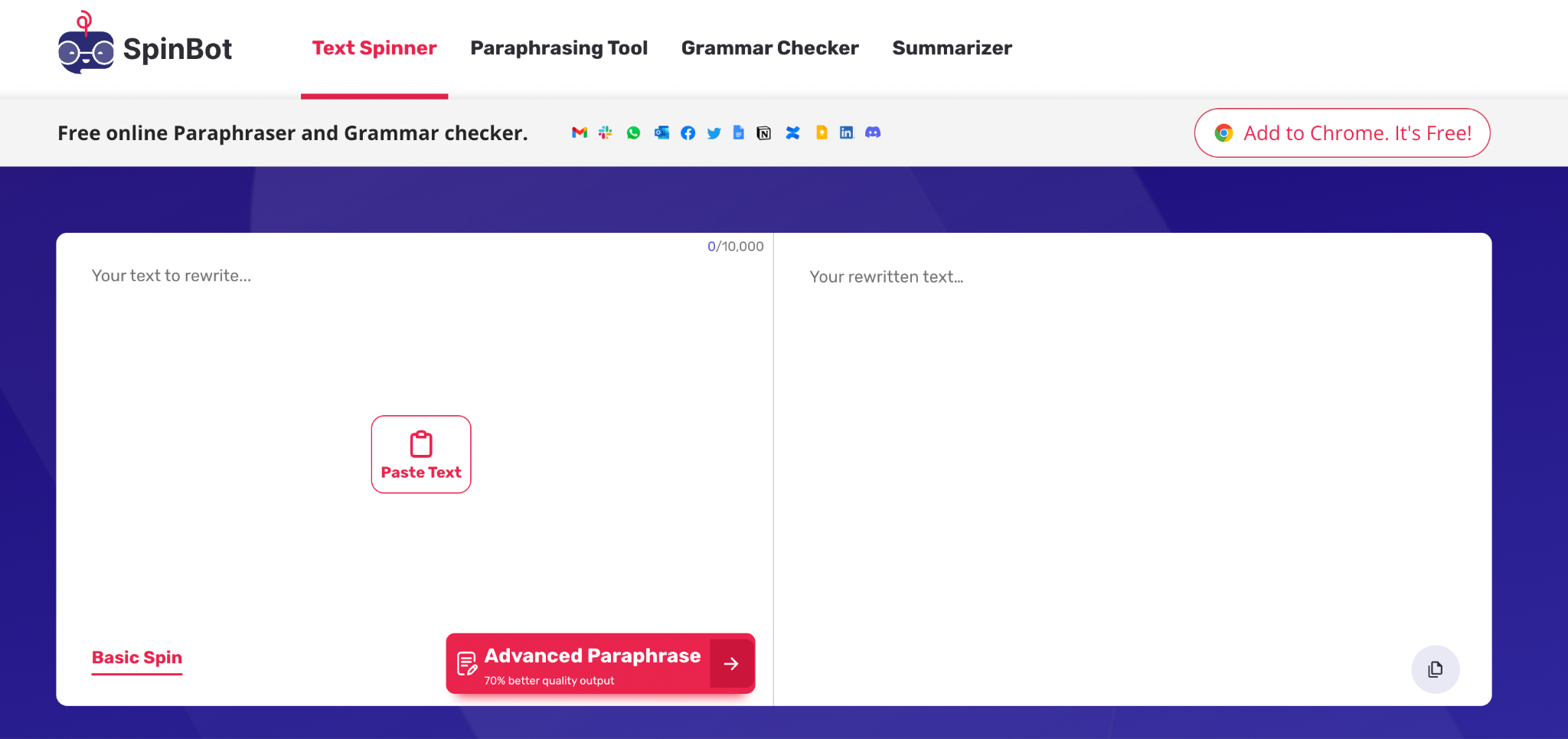
Spinbot is a long‑standing free text spinner. It processes large blocks of text quickly without account creation. Speed and simplicity define its appeal.
The tool replaces words and alters sentence order automatically. Results can appear uneven, so review is necessary. Shortening sentences improves output quality.
Spinbot may reduce basic detector signals but risks lowering readability. Use it carefully and always revise manually.
Best use cases: drafts, brainstorming, rough rewrites.
8. EditPad Paraphrasing Tool
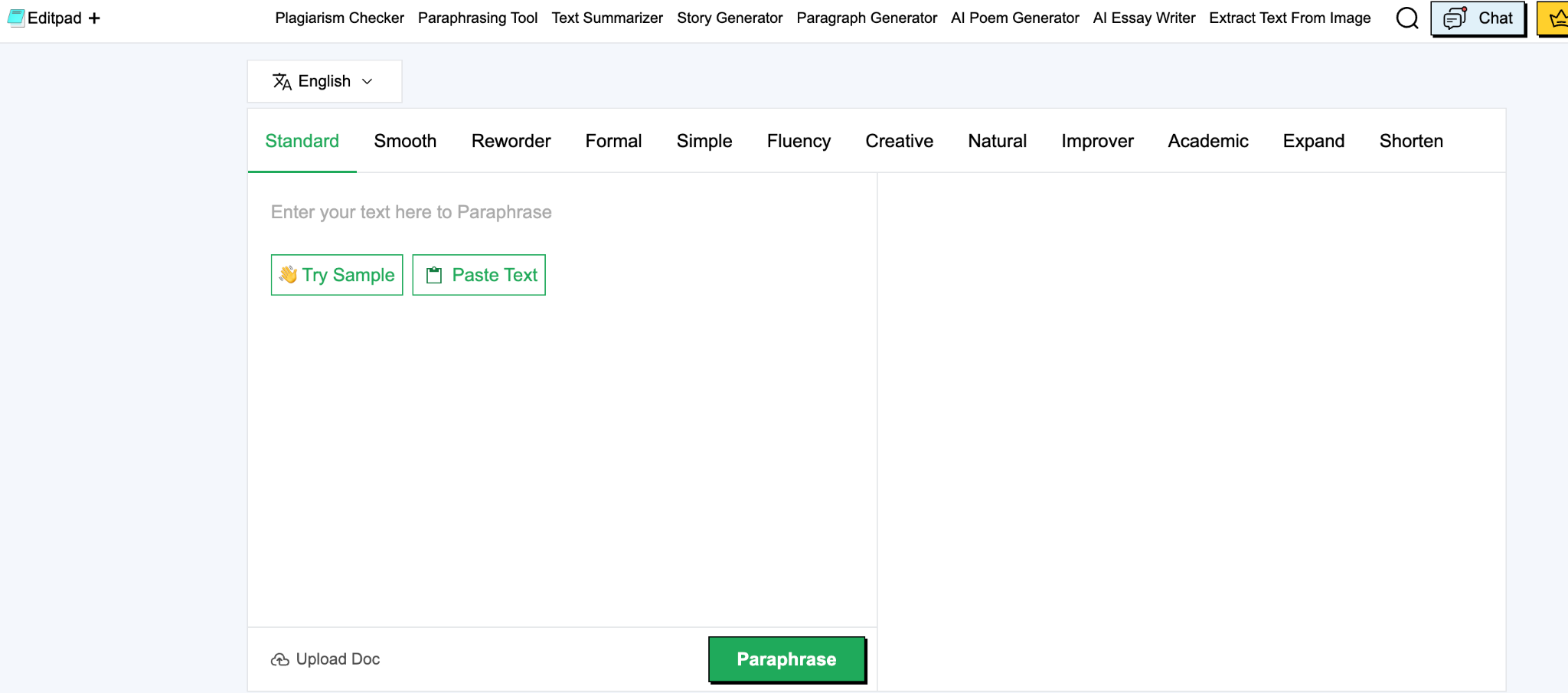
EditPad combines grammar checking with paraphrasing features. The free version supports moderate text length and basic rewriting. It is accessible for beginners.
Its strength lies in correcting grammatical monotony, which supports creators searching for easy to use AI writer for undetectable content rather than full rewrites. Cleaner grammar often translates into more human‑like writing. This indirectly affects detector perception.
EditPad works best for polishing rather than transforming content. Use it at the final editing stage for best results.
Best use cases: final edits, grammar cleanup, short posts.
Comparison Table
| Tool Name | Free Access | Best Strength | Human Review Needed |
| Clever AI Humanizer | Yes | Contextual rewriting | Low |
| QuillBot | Yes | Fast paraphrasing | Medium |
| Undetectable AI | Trial | Detector focus | High |
| Paraphraser.io | Yes | Simplicity | Medium |
| Scribbr | Yes | Academic clarity | Low |
| Writer.com | Yes | Tone refinement | Low |
| Spinbot | Yes | Speed | High |
| EditPad | Yes | Grammar polish | Low |
Final Thoughts
Bypassing AI detectors responsibly starts with better writing, not shortcuts, and no list of detector-proof AI tools can replace thoughtful human editing. Free tools can help reshape drafts into clearer, more natural language when used wisely. Human judgment remains the most important layer in the process.
Clever AI Humanizer stands out for its balanced, context‑aware approach. Other tools complement different stages of the workflow. Experimentation and thoughtful editing deliver the strongest results.
