

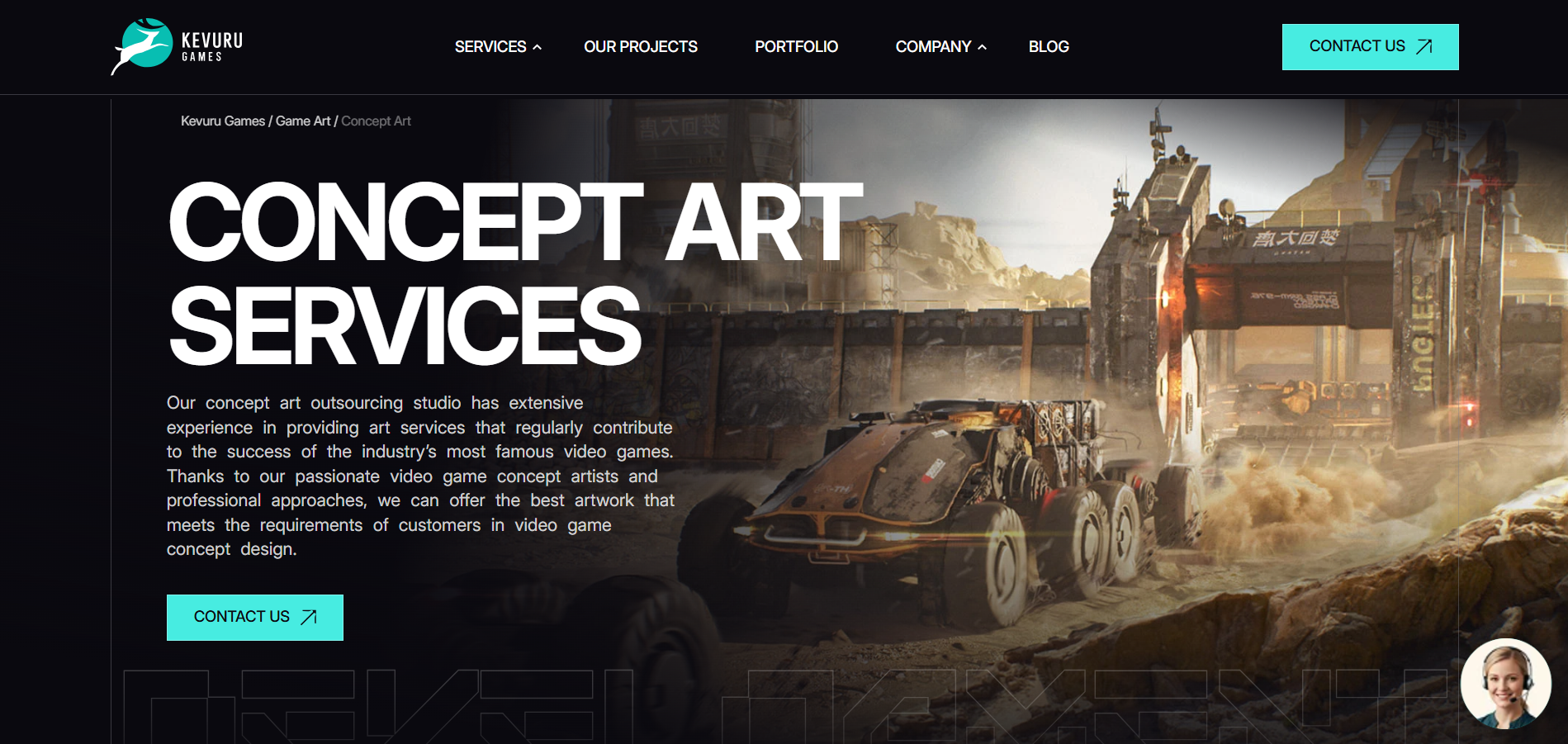
Game development rarely starts with something polished. More often, it begins with fragments. A designer sketches a rough creature in the corner of a notebook. Someone else describes a ruined city with glowing machines buried in sand.
A producer says the world should feel “ancient but futuristic,” which sounds exciting until everyone realizes they’re picturing completely different things.
That’s why many studios bring in a professional concept art company early, simply to turn scattered ideas into visuals everyone can actually agree on.
Once those early images exist, something interesting happens. Conversations become clearer. Designers stop explaining things in paragraphs and just point to a piece of art. Artists across the team start building toward the same vision. The project feels less abstract and far more real.
And in game development, that shift can save an incredible amount of time later.
Why concept art services matter so much at the start?
The earliest phase of a project often looks chaotic from the outside. Ideas evolve daily, characters change roles, and even locations may get redesigned after a single playtest.
That’s exactly why concept art services exist.
Concept artists don’t just “draw the final look” of something. Their real role is exploration. They test dozens of variations that might never appear in the final game. Different armor shapes, lighting moods, architectural styles, creature anatomy—everything is up for experimentation.
Sometimes the right design appears quickly. Other times, it takes many iterations before the visual identity starts making sense. But once it does, the entire team benefits.
Environment artists finally know what materials to model. Character artists understand proportions and costume layers. Animators see how characters might move. Even programmers gain context about the scale and feel of the world they’re building.
Without that stage, teams often spend months building assets that eventually get replaced.
How a concept art studio improves workflow?
Inside many development teams, artists are already busy handling textures, assets, or UI work. Asking them to simultaneously explore dozens of visual directions can stretch them thin. Concept work requires time, experimentation, and sometimes the freedom to throw away half the ideas along the way.
That’s where an external studio helps. Instead of juggling responsibilities, a dedicated concept team focuses entirely on visual development.
They start with fast sketches—sometimes rough, sometimes messy—simply to test directions. Over time, those sketches evolve into refined pieces that guide the rest of the production.
A studio environment also means multiple artists can work on different areas at once. One team might explore character designs while another experiments with environments or creatures. Instead of waiting weeks between iterations, developers see progress much faster.
That momentum makes early production feel far less frustrating.
Concept artist for hire vs outsourcing a studio
Hiring a concept artist for hire is still a common option, especially for smaller projects. Freelancers often bring impressive portfolios and unique styles. For indie developers creating a handful of characters or environments, a single artist can be more than enough.
The challenge appears when the project grows.
Game worlds rarely stay small for long. Suddenly, there are vehicles to design, enemy variations, props scattered throughout levels, architectural structures, and sometimes entire ecosystems.
One artist can’t realistically explore all those ideas at the same speed as a team.
A studio offers something different: collaboration and scale. Multiple artists contribute while art directors maintain visual consistency. The result usually feels more cohesive, especially when a project requires hundreds of concept pieces before production begins.
Why studios prefer a game concept art studio?
Working with a professional game concept art studio offers several practical advantages.
Faster exploration of ideas
Studios can generate multiple visual directions quickly, allowing developers to compare styles before committing.
Access to specialized artists
Different artists focus on characters, environments, creatures, or technology design.
Resource management
A concept art outsourcing studio helps studios manage resources more effectively. It allows developers to access experienced artists without permanently expanding their team and avoid extra expenses.
Creative perspective
External artists often approach projects with fresh ideas because they are not deeply embedded in the project’s internal assumptions. That outside viewpoint can lead to more original characters and environments.
Stronger art direction
Internal art directors maintain consistency across all concept pieces.
Flexible production scale
Studios can increase or reduce output depending on project needs.
Comparing leading concept art studios
Studios looking for external concept art support usually discover something interesting pretty quickly: every art studio works a little differently. Because of that, the “best” studio often depends on the kind of game being built.
Here’s how several well-known studios approach concept art work.
Kevuru Games
Kevuru Games has gradually become a familiar name for developers who need concept work that fits directly into production pipelines.
Its artists handle everything from character ideation to large environment explorations, and the studio is used to supporting projects that move quickly.
One thing teams often notice when working with Kevuru is how involved the artists are during feedback cycles. Concepts rarely arrive as a single finished piece. Instead, the process usually moves through sketches, revisions, and discussions until the direction feels right for the game.
Pros
- Large art team capable of scaling quickly
- Strong experience across multiple game genres
- Close collaboration with development teams
- Smooth transition from concept art to full asset production
Cons
- Because of demand, projects may need to be scheduled in advance
Art bully productions
Art Bully has spent years quietly supporting some very large game productions. Its artists are comfortable jumping into complicated pipelines where concept work and asset creation often overlap.
Because of that experience, many developers bring them in when they need an art partner who can adapt to fast-moving production environments.
Pros
- Reliable AAA production experience
- Broad art pipeline capabilities
Cons
- Stronger focus on asset creation than visual exploration
SixMoreVodka
SixMoreVodka is recognized for stylized illustrations and distinctive fantasy designs.
Pros
- Unique artistic identity
- Excellent character design
Cons
- Stylized approach may not fit every project style
Atomhawk
Atomhawk is the kind of studio many people recognize the moment they see the artwork.
Its portfolio leans toward cinematic visuals — the kind of dramatic scenes that feel like they belong on a movie poster or a major game reveal.
Pros
- Highly polished visual storytelling
- Experienced art direction
Cons
- Premium pricing structure
- Limited capacity compared with larger studios
Why Kevuru Games is a leading concept art studio?
There’s a moment every game team hits during early production when the question stops being “what could this world look like?” and becomes “who can actually help us figure it out?” That’s where experience starts to matter more than flashy portfolio pieces.
Kevuru Games has been around long enough to understand how messy early development can get. Ideas shift. Characters evolve halfway through exploration. Entire locations get redesigned after a single meeting.
Instead of treating concept art like finished gallery pieces, Kevuru’s artists approach it more like a working process.
Rough sketches appear early and feedback happens often. Things change, get redrawn, adjusted, simplified, or pushed further depending on what the project needs.
Another reason developers keep coming back is consistency. Deadlines in game production don’t politely move when art takes longer than expected. Teams need partners who can keep up when the schedule tightens. Kevuru’s structure helps with that.
Multiple artists can tackle different parts of the world at the same time—characters, environments, props, creatures—without the project slowing down.
Conclusion
Every game starts somewhere small. A sketch on a tablet, a loose description in a design document, or even a conversation where half the team imagines something completely different from the other half.
Concept art is what pulls those scattered ideas into something real. It gives everyone a picture to build from.
Outsourcing that stage isn’t about handing work away. It’s about bringing in people who spend their entire careers shaping visual worlds. And when developers want that process to move quickly without turning into chaos, having the right art partner makes a huge difference.
That’s why many studios end up working with Kevuru Games. The team doesn’t just produce concept art—it helps turn uncertain early ideas into worlds that teams can actually build.
