

For most of its short public life, AI image generation was a toy for tech enthusiasts. You’d type a prompt, watch something surreal appear, screenshot it, maybe post it, then move on.
That’s changing fast, and the shift says something interesting about where consumer AI is actually headed.
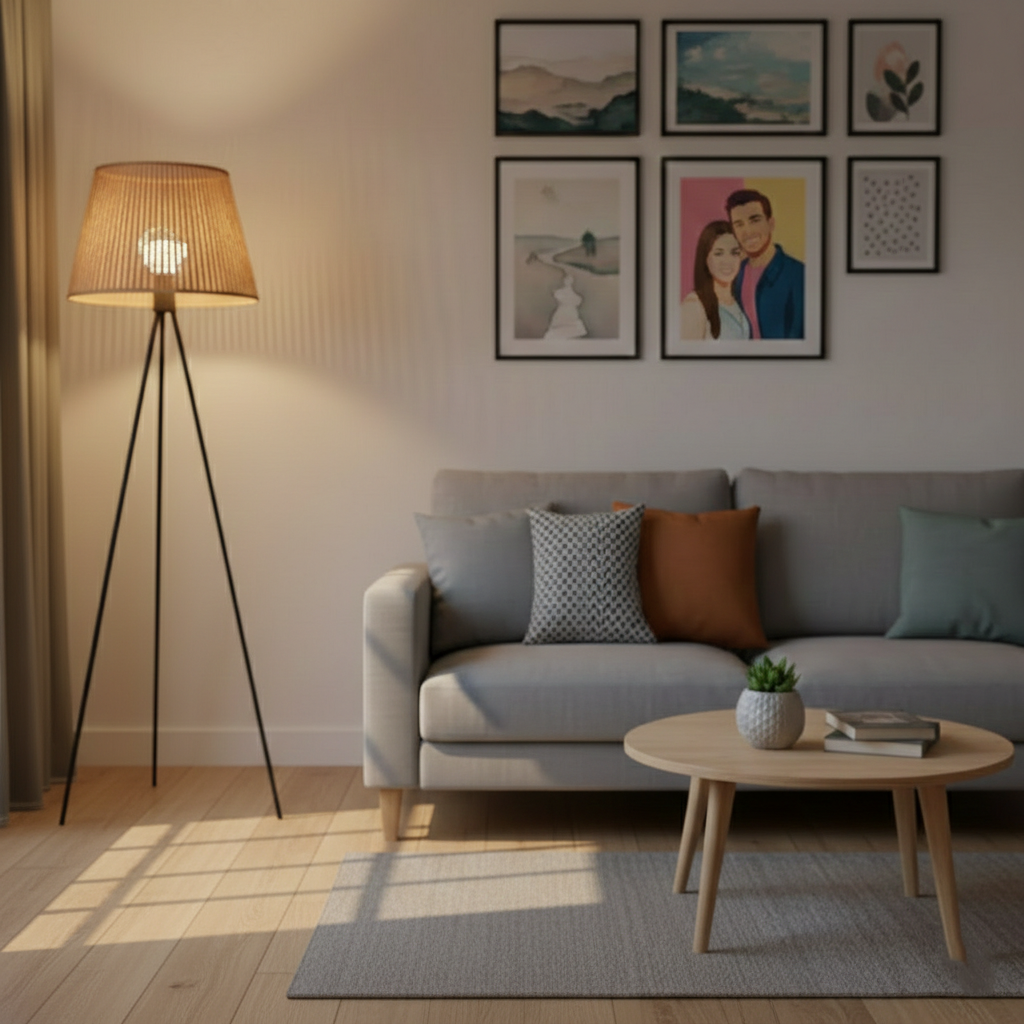
A growing number of platforms are closing the loop between AI-generated art and physical products, turning what used to be a digital novelty into something people hang on their walls.
The numbers back it up: the global AI image and video generator market was valued at approximately $8.7 billion in 2024 and is projected to surpass $60 billion by 2030, according to MarketsandMarkets.
From Screen to Wall: The Physical Product Turn
The first wave of AI art tools (Midjourney, DALL·E, Stable Diffusion) was generation-focused. They answered the question: Can AI make something that looks like art? The answer, clearly, was yes.
The second wave is answering a different question: can AI make something personal enough that someone would want to own it physically?
This is where consumer behavior gets interesting. Personalization has always driven the highest-intent purchases in the print and home décor categories. People pay more, convert faster, and return more often when a product is specifically theirs.
Combine that psychology with AI’s ability to transform an ordinary smartphone photo into a stylized painting, and you have a product that didn’t exist five years ago and is now genuinely in demand.
The categories driving this are predictable once you think about it: pet portraits, couple portraits, family portraits, and pattern-based designs built from a single uploaded photo.
These aren’t abstract AI art pieces; they’re recognizable, emotionally resonant images of things people already love, rendered in a style that elevates them.
How the Technology Actually Works at the Consumer Level?
The underlying technology varies by platform, but the consumer-facing flow has converged on something remarkably simple: upload a photo, choose a style, receive an AI-transformed image, order a physical print.
What’s happening under the hood typically involves a combination of neural style transfer, diffusion model processing, and increasingly, fine-tuned models trained specifically in artistic styles: oil painting, watercolor, comic illustration, and pattern art.
The quality gap between early consumer AI portrait tools and current ones is significant. Early versions produced faces with the telltale uncanny distortions that made AI images easy to spot.
Current fine-tuned models, especially those trained on specific subject types like animals or people, produce outputs that hold up at print resolution.
The Pet Portrait Niche: Why It’s Leading the Category
Of all the AI-to-physical-product segments, custom pet portraits have emerged as the clearest early winner, and it’s not hard to understand why.
Pet owners are, statistically, among the most emotionally motivated buyers in any consumer category. The US pet industry was valued at $157 billion in 2025, and spending in the category is notably recession-resistant: surveys consistently show that the majority of pet owners maintain or increase spending during economic uncertainty.
That emotional intensity translates directly into a willingness to purchase something that commemorates or celebrates their animal.
The AI portrait format suits pets particularly well. A painterly, stylized rendering of a dog or cat is inherently more gift-able than a standard photo print; it has the feeling of a commissioned portrait without the commissioned portrait price point or waiting time.
The “reveal moment” when someone sees their pet transformed into a painted-style image drives strong organic sharing on social platforms, which in turn drives discovery.
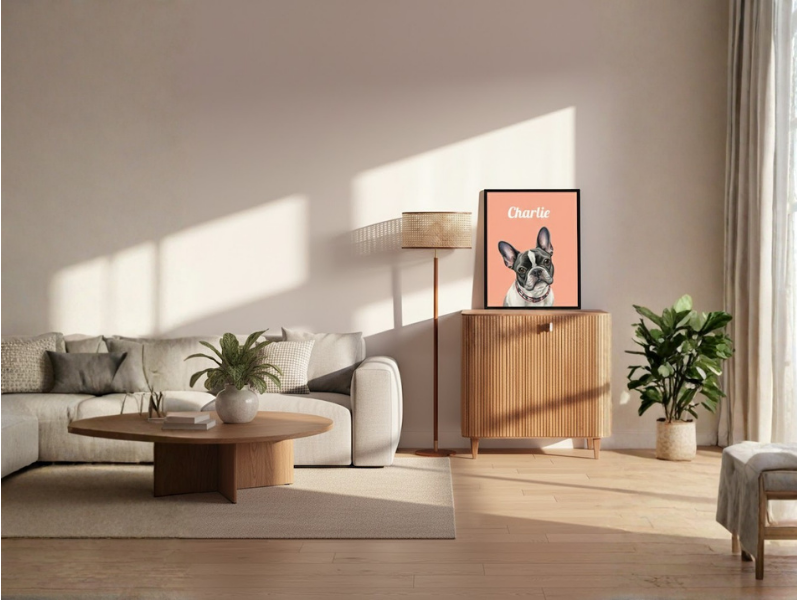
Platforms that have connected AI portrait generation directly to print fulfillment are capturing this demand efficiently. CANVASDISCOUNT, a US-based print-on-demand company, is one example. Their AI portrait generator allows customers to upload a photo and order custom pet portraits as printed canvases
The combination of AI transformation and same-country fulfillment addresses the two friction points that most drop-ship competitors cannot: output quality at print scale and delivery speed.
The Broader E-Commerce Implication
The AI-to-physical-product trend is worth watching beyond the pet portrait niche, because it represents a structural shift in how personalized products get made and sold.
Traditional personalized print products require the customer to do the creative work: choose a layout, arrange photos, and select fonts.
AI removes that friction entirely. The customer uploads one photo; the AI handles the transformation; the platform handles the printing. The cognitive load on the buyer collapses to near zero, which is exactly what drives conversion in e-commerce.
Based on Precedence Research’s article, this matters for the broader print-on-demand industry, which was already on a strong growth trajectory (projected CAGR of 23–26% toward a $100B+ market by 2034).
AI is accelerating the personalization layer of that market by making high-quality custom outputs accessible to customers who would never have engaged with traditional design-your-own tools.
It also creates an interesting competitive dynamic. The AI generation layer itself is becoming commoditized; the models are increasingly open-source or cheaply licensable.
The differentiation is shifting downstream, to print quality, production speed, fulfillment reliability, and customer trust signals.
Brands that have the manufacturing infrastructure and the customer trust to back up the AI-generated product are better positioned than those using AI as a pure front-end gimmick over outsourced overseas printing.
What’s Next for Consumer AI Art?
A few developments worth tracking:
- Style diversity is expanding. Early AI portrait tools offered one or two style options. Current platforms offer pop art, watercolor, oil painting, comic book, pattern portraits, and more, and the list is growing.
- Multi-subject generation is improving. Couple portraits and family portraits are technically harder than single-subject pet portraits. Maintaining likeness across multiple faces while applying consistent artistic styling is a harder problem. The models handling this are getting noticeably better in the 2025–2026 period.
- Physical format expansion. Canvas is the dominant print format for AI portraits today, but the category is expanding into blankets, pillows, and other home goods. The emotional use case (commemorating a pet or family member) translates across any physical format, not just wall art.
The Takeaway
AI image generation went from tech demo to consumer product faster than most predicted, but the more interesting story is what happens when those generated images leave the screen.
The platforms connecting AI transformation to physical fulfillment are building a product category that genuinely didn’t exist five years ago: personalized, AI-styled art that a non-technical person can order in under three minutes and receive within a week.
For the print and home décor industry, that’s a meaningful structural change. For consumers, it’s a cheaper, faster, and more accessible path to something that used to require either a commissioned artist or a significant DIY effort.
And for the AI space more broadly, it’s a reminder that the most durable consumer applications aren’t the ones that generate the most impressive outputs; they’re the ones that turn those outputs into something people actually want to own.
