

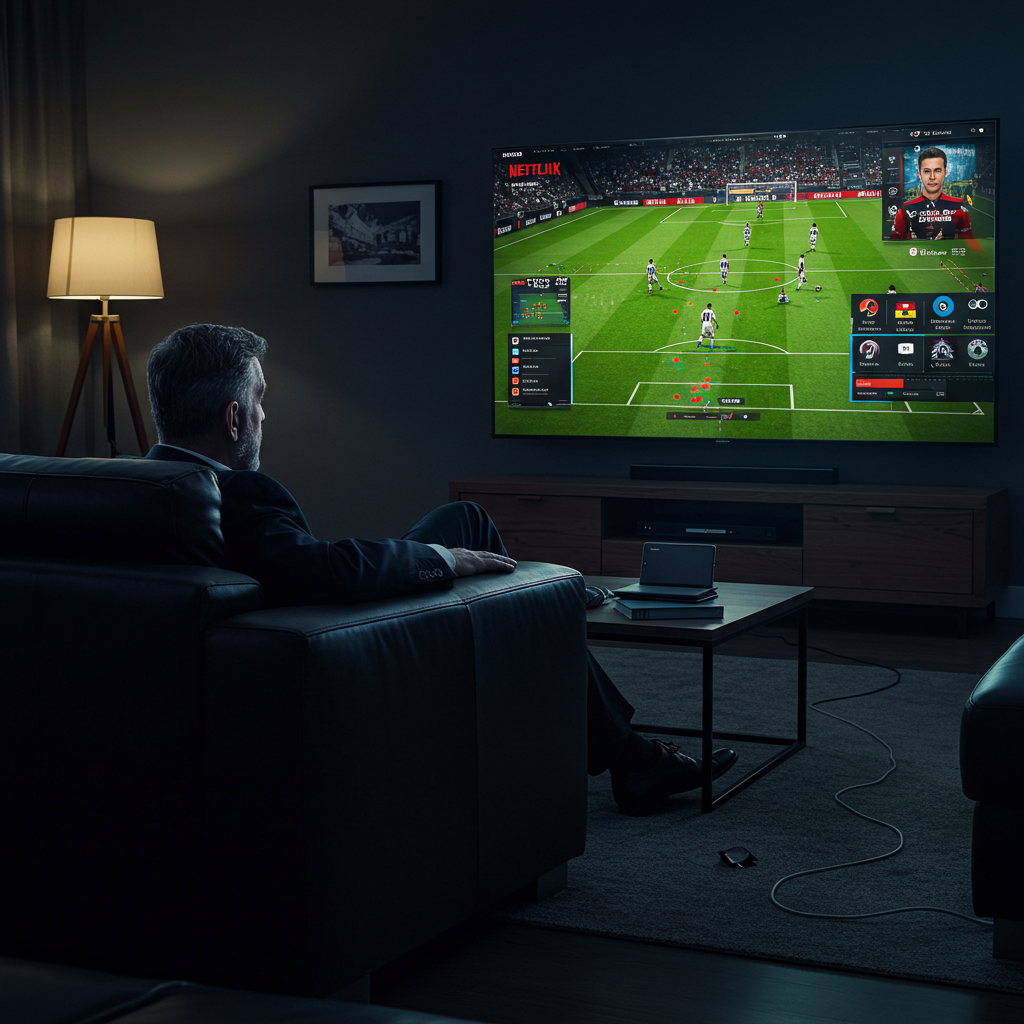
Remember when watching the football meant gathering around a bulky CRT television, hoping the aerial wouldn’t act up in the wind? If you wanted to know the statistics of the match, you had to wait for the half-time analysis or buy a newspaper the next morning.
Fast forward to today, and the way we watch our favourite teams has shifted completely. Traditional telly is taking a back seat as high-performance streaming platforms take over, offering us more control, more data, and closer connection to the action than ever before.
Yet, this shift hasn’t been without its growing pains. We’ve all experienced the frustration of hearing a neighbour cheer a goal while our stream is still showing a tedious midfield buildup.
Fortunately, the clever combination of ultra-low latency technology and artificial intelligence is solving these issues, completely changing how we interact with live sports.
Say Goodbye to the Aerial: The Big Shift in Sports Streaming
The transition from traditional cable and satellite broadcasts to internet-based streaming has been quiet but incredibly swift.
Millions of households across the UK have cut the cord, preferring the flexibility of watching matches on tablets, phones, and smart televisions.
Major streaming platforms have secured massive broadcasting rights, proving that internet streaming is no longer just an alternative; it is the main event.
However, streaming live sports is vastly different from streaming a pre-recorded television drama. When millions of fans tune in to watch a crucial cup tie at the exact same moment, the strain on network infrastructure is immense.
In the early days of sports streaming, viewers routinely faced buffering wheels, pixelated feeds, and massive delays.
This delay, known in the tech world as latency, has been the biggest hurdle for internet broadcasters. Traditional satellite broadcasts usually have a delay of about five to seven seconds behind the actual action on the pitch. Early internet streams, by comparison, often lagged by thirty seconds or even a full minute.
To combat this, modern streaming services have had to completely overhaul their delivery networks. They are moving away from older, slower streaming protocols and adopting high-performance alternatives designed specifically for live events.
By utilising global Content Delivery Networks (CDNs), platforms can cache video data closer to your physical location, reducing the distance the data has to travel and keeping your feed as close to real-time as possible.
The Brains Behind the Screen: How AI Knows What’s Next
Have you noticed how modern sports broadcasts seem to predict the future? You might see a graphic pop up on your screen declaring that a striker has a seventy percent chance of scoring a penalty, or an arrow highlighting the exact path a midfielder is likely to pass the ball.
This isn’t guesswork; it is the result of incredibly smart artificial intelligence and machine learning algorithms working behind the scenes in real time.
During a match, optical tracking cameras positioned around the stadium capture the precise coordinates of every player and the ball, often up to twenty-five times per second. This mountain of raw data is instantly fed into machine learning models.
These algorithms have been trained on thousands of historical matches, learning to recognise patterns, player tendencies, and tactical setups.
[Camera Tracking Data] ──> [AI Processing Engine] ──> [Real-Time Predictive Graphics]
│
[Historical Database]
Within milliseconds, the AI can calculate the likelihood of a successful pass, identify a defensive lapse, or predict where a shot will land.
For the viewer at home, this translates into dynamic, data-rich overlays that make you feel like an absolute tactical genius.
It transforms the match from a simple game into an interactive, analytical experience, helping you understand the subtle tactical decisions that define modern football.
Speeding Up Your Stream: Tips to Beat the Spoilers
While broadcasters are doing everything they can on their end to reduce latency, your home setup plays an equally vital role in keeping you in sync with the live action.
If you want to make sure you hear the goals before your neighbors do, there are several practical adjustments you can make to your home network.
First, whenever possible, ditch the Wi-Fi and use a physical Ethernet cable to connect your smart TV or streaming device directly to your router. Even the fastest Wi-Fi signals can suffer from interference caused by household appliances, thick walls, or competing devices.
A wired connection provides a stable, continuous flow of data, which is essential for maintaining a high-performance stream.
If running a cable across your living room floor isn’t practical, try these simple adjustments to optimise your wireless connection:
- Move your router: Place it in a central, elevated position away from metal objects and other electronics.
- Switch to the 5GHz band: Most modern routers offer both 2.4GHz and 5GHz bands. The 5GHz band is much faster and less crowded, making it ideal for high-definition streaming.
- Manage your bandwidth: Before kick-off, check if other devices in the house are busy downloading large game updates or streaming high-definition video. Pausing these activities can free up crucial bandwidth for your match.
You can also try changing the DNS (Domain Name System) settings on your router or streaming device. Many internet service providers use default DNS servers that can be a bit sluggish.
Switching to a fast, free public DNS provider, such as Cloudflare or Google, can shave precious milliseconds off the time it takes for your device to find and connect to the stream.
Beyond the Sofa: You’re in the Director’s Chair Now
The combination of low-latency feeds and instant data processing has completely reshaped what it means to be a sports fan. We are no longer passive observers sitting quietly on our sofas; we are active participants in the broadcast.
Many modern sports streaming services now offer interactive features that let you customise your viewing experience.
Don’t like the main camera angle? You can switch to a tactical bird’s-eye view, or even follow a single player with a dedicated camera feed.
Want to check a player’s average speed or heat map? You can pull up these statistics on demand with a click of your remote, without ever losing sight of the live action.
This interactive environment has also changed how we talk about sports with friends. Real-time polls, live chat rooms, and instant replay features are directly integrated into the streaming interface. It creates a shared, virtual stadium experience, connecting fans from all over the world in real time.
The Technical Peak of Real-Time Interaction
This incredible evolution in low latency and artificial intelligence culminates in the world of live sports wagering, where split-second accuracy is absolutely paramount.
To make informed decisions, fans rely on platforms that can process live match events instantly, reflecting the state of play without any frustrating delays.
If you want to see this technology working at its absolute peak, look no further than mobile football betting. Platforms like Bally Casino rely on highly sophisticated, ultra-low latency infrastructure to ensure that odds update in perfect harmony with the action on the pitch.
This mobile-first sportsbook experience serves as a prime example of real-time sports technology in action, keeping pace with every single pass, tackle, and goal.
When you are watching a live match and looking at real-time updates, having a platform that mirrors the exact state of play is the ultimate expression of modern sports technology.
Naturally, while interactive features and live statistics can make watching a match even more engaging, it is essential to keep your experience safe and enjoyable.
Always set sensible limits, stay in control, and ensure you only play with money you can comfortably afford to lose. Keep it fun, and remember to gamble responsibly (18+).
