

AI software is becoming easier to find and harder to evaluate.
A search for almost any AI platform can produce dozens of pages that look like reviews. Some contain genuine hands-on testing.
Others summarize a product website, repeat specifications from other articles or turn a handful of user comments into a broad conclusion.
The difference is not always obvious.
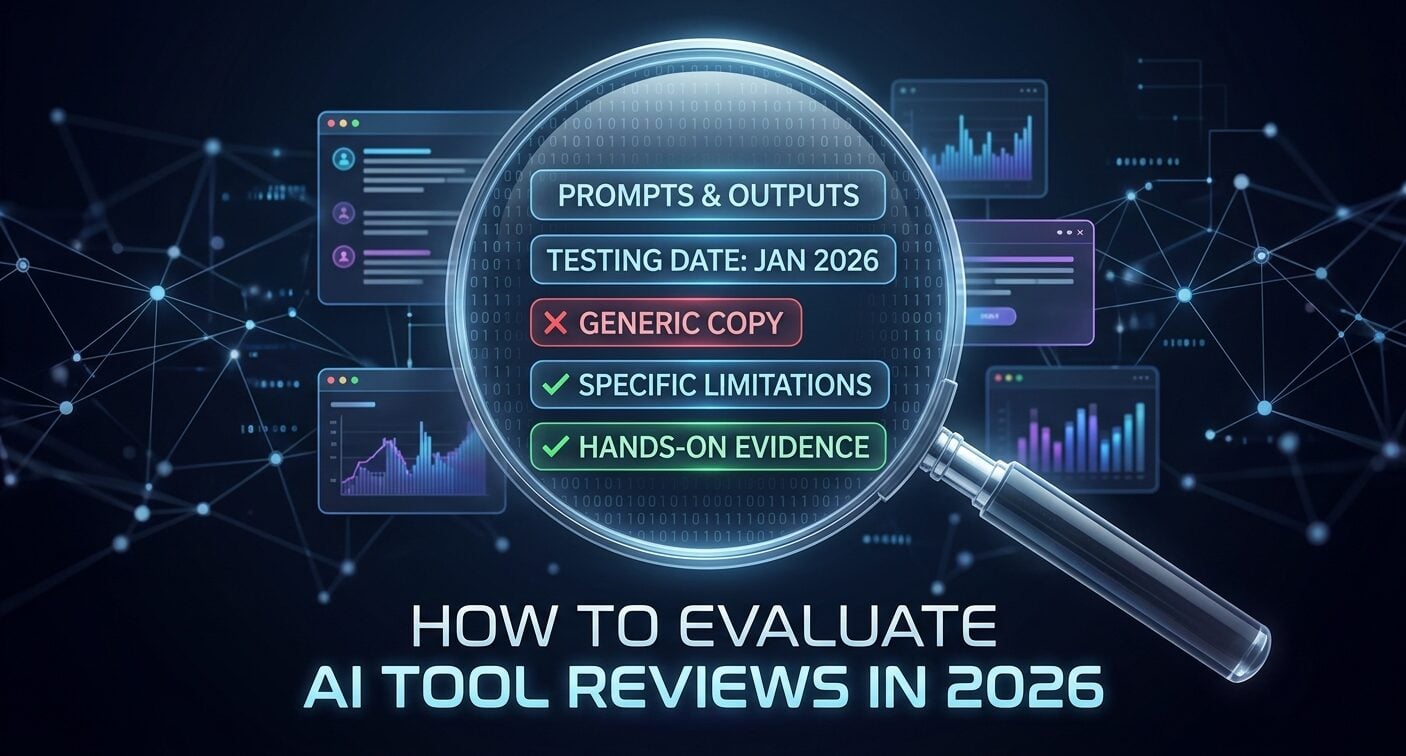
This creates a problem for anyone researching a newer AI platform. Searching for Use AI reviews, for example, may return different types of branded content: direct product information, third-party articles, community discussions and conversations that mention the Use.AI name without actually evaluating the software.
Before trusting any review, it helps to understand exactly what evidence the page provides.
Why AI Reviews Are Particularly Difficult to Evaluate?
Software reviews have always varied in quality, but AI introduces several additional complications.
Products change quickly. A feature tested several months ago may have been replaced, improved or removed. Pricing and usage limits can change. The underlying models may change even when the product name remains the same.
There is also a low barrier to producing an AI review.
A writer can read a homepage, collect a list of features and produce a polished article without ever using the product.
The finished page may look detailed while providing almost no information beyond what is already available from the company itself.
That is why the amount of text in a review tells you very little about its usefulness.
Evidence matters more.
Start With One Question: Was the Product Actually Tested?
The clearest difference between a product summary and a useful review is evidence of use.
If someone says an AI platform is fast, accurate or easy to use, the next question should be: based on what?
A strong review might explain:
- which version or subscription tier was tested;
- what tasks were performed;
- what inputs were used;
- what the resulting output looked like;
- which limitations appeared during testing;
- how much manual correction was required;
- when the testing took place.
Screenshots, sample prompts and outputs can also help establish that the reviewer interacted with the product.
Generic statements do not provide the same value.
Phrases such as “powerful AI features,” “intuitive interface,” or “excellent productivity tool” may sound positive, but they give readers little basis for evaluating whether the platform will work for a particular task.
Not Every Branded Search Result Is a Product Review
This is especially important for products with names based on common words.
“Use AI” can refer to a brand, but it can also appear naturally in thousands of articles and discussions about artificial intelligence.
As a result, people researching Use AI reviews may encounter branded Reddit discussions that are not reviews in the conventional sense.
One such thread focuses on the Use.AI domain rather than on hands-on product performance. The original poster asks how someone managed to acquire such a short and recognizable .ai domain, while commenters discuss premium domains, investors, brokers and the growing demand for concise .ai addresses.
That is useful information about the name and the surrounding brand interest.
It is not evidence that a particular AI feature works well or poorly.
Understanding that distinction prevents a common research mistake: treating every result containing a product name as evidence about the product itself.
Separate Facts From Experience
Most useful software reviews contain two different types of claims.
The first category is factual.
These may include:
- available features;
- supported file types;
- subscription options;
- integrations;
- account requirements;
- platform availability;
- stated usage limits.
Factual claims should usually be checked against current official information because software changes frequently.
The second category is experiential.
A reviewer might say that a workflow was confusing, that an output required substantial editing or that a particular feature saved time.
These observations can be valuable, but they are dependent on the reviewer’s circumstances.
A feature that works well for a marketer creating short-form copy may perform differently for a researcher analysing long documents.
The best reviews make this context clear instead of turning one experience into a universal conclusion.
Check What the Reviewer Actually Asked the AI to Do
“Testing an AI tool” is too broad a description.
Two reviewers can use the same platform and reach completely different conclusions because they tested different things.
For example, one reviewer might ask a tool to rewrite a short email. Another might upload a long technical document and expect the system to extract precise information.
Success on the first task does not establish performance on the second.
When reading Use AI reviews or any AI software evaluation, look at the actual testing scenario.
Useful questions include:
- Was the task simple or complex?
- Did it depend on factual accuracy?
- Was a long context involved?
- Did the reviewer verify the output?
- Was the same test repeated?
- Were competing tools given comparable inputs?
Without this information, even apparently precise claims can be difficult to interpret.
Be Suspicious of Reviews Where Every Feature Is Good
Real software usually involves trade-offs.
An AI product might have a clean interface but limited controls. Another may offer more advanced functions but require a longer setup process. A low-cost plan may be attractive until usage limits become relevant.
A credible review should normally identify both advantages and limitations.
If every section concludes that a product is excellent, the article may be functioning more as promotion than evaluation.
The same applies to reviews built around affiliate links.
Affiliate relationships do not automatically make a review unreliable. Many legitimate technology publications use affiliate revenue.
What matters is whether the commercial relationship appears to influence the evidence.
A review becomes more useful when it explains where a product performs poorly, who should avoid it and what alternatives may suit different requirements.
Look Beyond Star Ratings
Ratings compress a complicated experience into a single number.
That can be useful for quick comparison, but it also removes context.
A user giving an AI product two stars because of a billing dispute is describing a different problem from someone giving it two stars because outputs were consistently inaccurate.
Likewise, a five-star review may reflect excellent customer support rather than superior AI performance.
Read the written explanation whenever possible.
Pay particular attention to:
- the task the reviewer was trying to complete;
- how long they had used the service;
- which plan they were using;
- whether the problem appears reproducible;
- whether the company later resolved the issue.
The reason behind a rating often matters more than the rating itself.
Freshness Matters More With AI Software
A software review is a snapshot.
With AI products, that snapshot can age quickly.
A platform may switch underlying models, redesign an interface or change limits without changing its brand name. A review that was accurate when published can therefore become misleading even if the author made no mistake.
Check both the publication date and the testing date.
Those are not necessarily the same.
A page marked “updated” may have received only minor edits while the actual product testing happened much earlier.
For important decisions, confirm current features and pricing directly instead of relying solely on an older review.
Community Discussions Are Useful for Different Reasons
Reddit, forums and other communities can add information that structured reviews sometimes miss.
Users ask narrow questions. They describe edge cases. They discuss billing, workflows, bugs and unexpected uses that may never appear in a conventional product review.
However, community content also has limitations.
A single comment is an anecdote.
The person may be using an older version. Their expectations may be unusual. They may have misunderstood the product. There may be no way to independently verify the experience.
Community discussions become more informative when patterns appear across multiple independent users.
If several people repeatedly mention the same limitation, it deserves investigation.
The correct approach is not to trust Reddit automatically or dismiss it automatically. It is to understand what type of evidence it provides.
Compare Several Types of Sources
No single page needs to answer every question.
In fact, AI research is usually stronger when different sources are used for different purposes.
A sensible process could include:
- Official documentation for current functionality and technical requirements.
- Hands-on reviews for structured testing.
- Community discussions for individual experiences and recurring questions.
- Comparison pages for identifying alternatives and differences.
- Your own test for determining whether the product solves your particular problem.
The important step is cross-checking claims.
If an article says a feature exists, confirm it. If several reviewers describe the same limitation, investigate whether it still applies. If a community thread is mainly discussing a brand name or domain, do not turn it into evidence about product quality.
Pay Attention to the Reviewer’s Incentives
Every source exists for a reason.
A technology publication may earn affiliate revenue. A YouTube creator may have received sponsorship. A Reddit user may be posting immediately after a frustrating support experience. A company may publish its own comparison against a competitor.
Incentives do not automatically invalidate information.
They simply form part of the evidence you should consider.
Transparency is a useful signal. So is specificity.
A sponsored review containing documented tests and clear limitations may be more informative than an apparently independent page containing nothing except generic descriptions.
Run a Small Test Yourself
Reviews become most useful when they help you decide what to test.
Before paying for an AI platform, identify two or three tasks that represent what you actually plan to do with it.
Use realistic inputs.
Then evaluate the complete workflow rather than only the generated output.
Ask:
- Did the tool understand the instruction?
- Was the result accurate?
- How much editing was required?
- Did it save time?
- Could the same result have been achieved more easily another way?
This avoids being impressed by a polished demonstration that has little connection to your real requirements.
What Good Use AI Reviews Should Tell You?
Useful Use AI reviews should do more than repeat a list of features.
They should tell readers what was tested, under what conditions and with what result. They should distinguish facts from personal observations, identify limitations and make clear when information was collected.
Community results can add another dimension, but they need to be interpreted correctly. A Reddit discussion about the Use.AI domain tells readers something about the name and the interest surrounding short .ai domains. It should not be represented as evidence about product performance.
The same principle applies across AI software research.
Do not ask whether a review looks convincing.
Ask what it actually proves.
Once that becomes the standard, it becomes much easier to separate useful product research from pages that simply happen to rank for the right words.
