

In many retail chains, ordering still depends on store managers, fixed min/max levels, and a few spreadsheets at head office. It works until the network grows.
Then the same chain ends up with empty shelves in one store and expired stock in the next, while buyers spend hours every week checking orders line by line.
Automated replenishment software takes that work over. It forecasts demand for every SKU in every location, calculates order quantities from stock on hand, deliveries in transit, lead times, and pack sizes, and sends orders to suppliers or the distribution center, with people only reviewing exceptions.
This guide compares seven replenishment tools that retail chains shortlist for 2027, what each does best and which type of chain it suits.
What to look for in automated replenishment software?
Store-level forecasts that drive orders
The system should forecast each SKU in each store and use that forecast directly to create orders. A chain-wide forecast with manual allocation brings back the spreadsheet problem.
Real ordering constraints
Orders need to respect supplier lead times, delivery calendars, minimum order quantities, case packs and shelf capacity. Otherwise the proposals look right on screen and fail at the receiving dock.
Fresh and short shelf life
Grocery, convenience and pharmacy chains need ordering that accounts for expiry dates and waste, not only for availability.
Store and distribution center in one plan
If you run a DC, the tool should plan both supplier-to-DC and DC-to-store flows, and suggest transfers between stores before buying more stock.
Promotions and seasonality
Promo uplift, holidays and seasonal peaks should feed into orders automatically, so stores do not have to guess.
Exception-based work
The goal is a high share of orders sent without manual changes. Look at how the system flags unusual orders and how easily a planner can review and override them.
Time to value
Ask for a realistic rollout plan. A regional chain should see results from a pilot within a few months.
Automated replenishment software at a glance
|
Tool |
Best for |
Typical chain |
Store and DC planning |
Pricing |
| LEAFIO AI | Regional grocery, convenience, pharmacy and specialty chains | 20 to 500+ stores | Yes | Custom quote |
| RELEX Solutions | Large grocers and c-store networks | 300+ stores | Yes | Custom quote |
| Blue Yonder | Enterprise retailers with complex supply chains | Large national chains | Yes | Custom quote |
| Afresh | US grocers focused on fresh departments | Regional and national grocers | Store and DC for fresh | Custom quote |
| Slimstock (Slim4) | Retailers that want replenishment on top of their ERP | Mid-size | Yes | Custom quote |
| ToolsGroup | Fashion and specialty retail with volatile demand | Mid-size to large | Yes | Custom quote |
| Netstock | Smaller multi-location retailers on a mid-market ERP | Small to mid-size | Order suggestions and transfers | Quote |
The best automated replenishment software for retail chains
1. LEAFIO AI
LEAFIO AI is a cloud platform whose inventory optimization module generates demand-driven orders automatically across all supply chain levels, from supplier to distribution center to store.
It is one of the more complete options of automatic replenishment software for retail chains in the mid-market, because forecasting, ordering and planogram management share the same data.
Forecasts and order proposals adjust for seasonality, promotions, and local store demand, and typical implementation runs about six months in phases.
Published results come from several retail formats:
- Baltic Petroleum (86 fuel-station stores, Lithuania) moved ordering from 84 store managers to a small central team and reported a 50% cut in overstock in the first year.
- Daily (227 locations) reported a 23% sales increase and 16% better inventory turnover.
- Aversi (332 pharmacies, Georgia) reported 16% better inventory turnover and an 11% like-for-like sales increase.
- Al.Capone (120 liquor stores, Poland) reported 46% faster inventory turnover in its pilot.
These are vendor-published figures. LEAFIO AI has 250+ implementations across 30,000+ stores in 45+ countries.
Best for: regional grocery, convenience, pharmacy and specialty chains that want central automated ordering without an enterprise-scale project.
Watch out for: pricing is quoted per project, and the six-month rollout needs an internal owner on the retailer’s side.
2. RELEX Solutions
RELEX combines forecasting, automated store and DC replenishment, fresh ordering and space planning on one platform. It is widely used by large grocers and convenience networks; Kwik Trip and Casey’s in the US both use RELEX for planning across hundreds to thousands of stores.
Best for: large grocery and c-store chains that want replenishment connected to most other planning processes.
Watch out for: a substantial implementation that may be more than a mid-size chain needs.
3. Blue Yonder
Blue Yonder’s Luminate Planning uses machine learning to forecast demand and plan inventory across a multi-echelon network, including stores and online channels. HEMA, for example, runs it across about 800 stores in 13 countries.
Best for: enterprise retailers with complex, international supply chains.
Watch out for: enterprise licensing and longer rollouts.
4. Afresh
Afresh is an AI ordering platform built for fresh departments in US grocery: produce, meat, bakery and deli. Store teams get order recommendations on handheld devices, and a DC Forecast product supports fresh buying at the distribution center.
In January 2026 Stater Bros. expanded its use of Afresh from produce to more fresh departments and added DC Forecast.
Best for: US grocers whose biggest problem is fresh shrink and availability.
Watch out for: focused on fresh; center-store categories often still need another replenishment system.
5. Slimstock (Slim4)
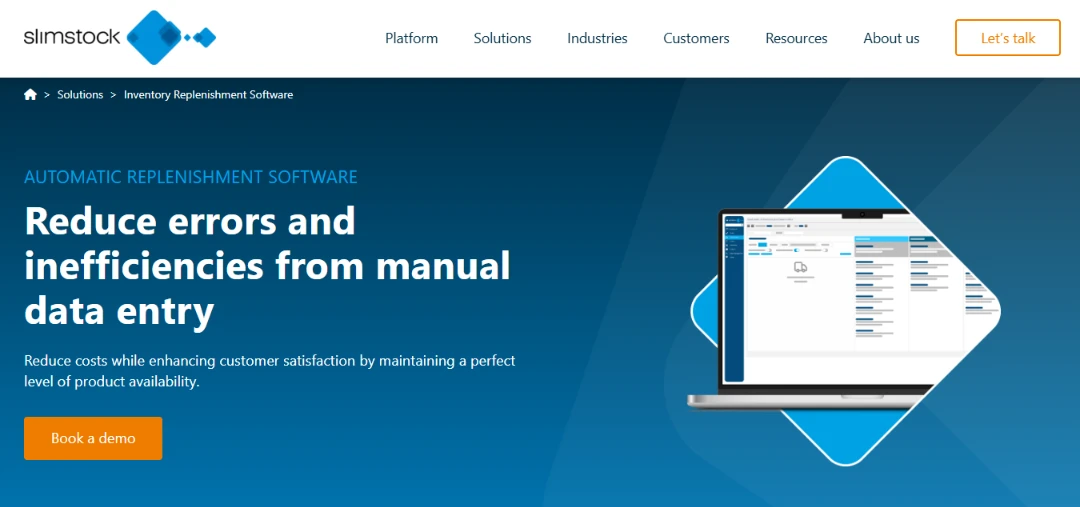
Slim4 is an inventory optimization and replenishment tool that runs on top of the ERP. Dutch organic supermarket chain Ekoplaza uses it for dynamic store replenishment across 53 franchise stores: ordering is now almost fully automatic, on-shelf availability rose to 98.7% and inventory fell by 15%.
Best for: mid-size retailers and franchise networks that want automation without replacing core systems.
Watch out for: fewer built-in retail execution features such as planogram management.
6. ToolsGroup
ToolsGroup uses probabilistic forecasting at SKU-store-day level and allocates and rebalances stock across stores and channels. PEPCO reported a 15% stock reduction while opening around 200 new stores a year.
Best for: fashion, discount and specialty retailers with volatile or seasonal demand.
Watch out for: planners need to work comfortably with service levels and probability ranges.
7. Netstock
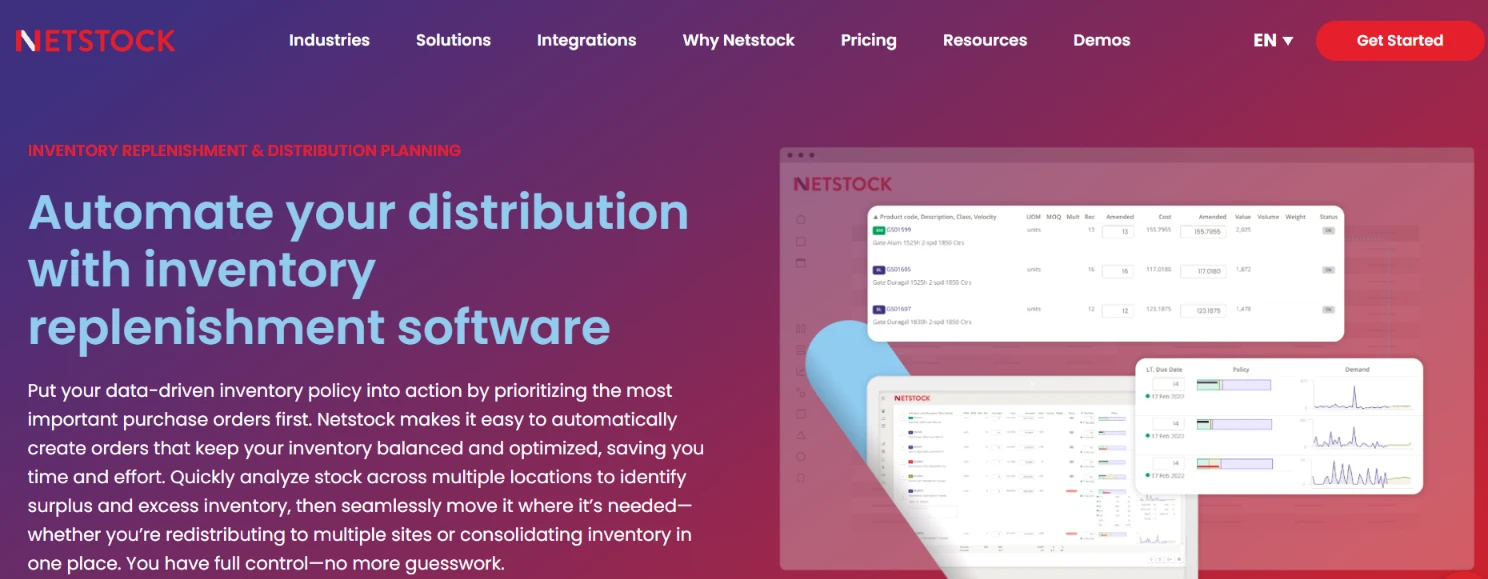
Netstock is a planning add-on for mid-market ERPs such as NetSuite, Microsoft Dynamics, Sage and Acumatica. It suggests reorder points and order quantities by location and recommends transfers of excess stock between sites. Most customers go live within a few weeks.
Best for: smaller multi-location retailers that need better ordering quickly.
Watch out for: less suited to daily store-level replenishment across a large chain.
Best replenishment software by retail format
Best for regional supermarket chains
LEAFIO AI fits chains of roughly 20 to 300 stores that want ordering, forecasting and shelf planning in one platform. RELEX is the stronger match for very large grocers, and Afresh is worth adding if fresh departments are the main pain point in the US.
Best for convenience stores and fuel retail
Small stores with frequent deliveries need central, fully automated ordering. LEAFIO AI has fuel-station references in the Baltics such as Baltic Petroleum, and RELEX serves large US networks like Kwik Trip and Casey’s.
Best for pharmacy chains
Pharmacies need expiry control, substitutes and many slow movers. LEAFIO AI has pharmacy references such as Aversi, and Slimstock is a common choice for pharmacy and franchise networks in Europe.
Best for fashion and specialty retail
ToolsGroup handles volatile, seasonal assortments and in-season rebalancing well.
Best for smaller multi-location retailers
Netstock is the quickest start for businesses already running a supported mid-market ERP.
