

A digital dentistry career combines oral healthcare skills with tools for imaging, treatment design, fabrication, and patient information management. Preparing for this work means choosing the right educational pathway, understanding how digital workflows connect, and learning to evaluate technology rather than simply operate it.
The American Dental Association (ADA) identifies electronic records, imaging, artificial intelligence, and 3D printing among the technologies relevant to dental practice.
What does a digital dentistry career involve?
A digital dentistry career involves using computer-based tools within an established dental role, rather than entering one standalone profession. Your responsibilities depend on whether you become a dentist, hygienist, assistant, laboratory technician, or another dental team member.
Start by exploring those roles, then consider where technology fits your interests and preferred working environment.
Think beyond the appeal of a scanner or printer. Would you enjoy direct patient care, detailed design work, or coordinating information between a practice and its laboratory? Use those preferences to guide your research instead of choosing a career around a single device.
The ADA describes dental laboratory technicians as creating appliances such as crowns and dentures, while office managers oversee operations that include patient management and finances. These are different dental career paths, so compare their everyday responsibilities before deciding which direction to pursue.
Learn the workflow, not just the equipment
A useful starting point is understanding how information moves from the patient to a finished restoration or appliance. In a digital fabrication workflow, scanning captures anatomical information, design software supports planning or modeling, and manufacturing equipment produces the planned item.
The ADA-hosted digital workflow guide describes these connected acquisition, design, and production stages.
When observing a demonstration, use this checklist to look beyond the screen:
- Capture: Ask how the operator checks whether the scan contains the information needed for the next step.
- Design: Identify which decisions the software assists with and which require professional review.
- Handoff: Ask who checks the file before it reaches the laboratory or manufacturing equipment.
- Production: Find out what finishing and inspection happen after milling or printing.
- Review: Ask how the team recognizes a problem and decides whether to repeat a stage.
Your goal is to explain the whole process in plain language. If you can describe only which buttons were pressed, ask for another walkthrough focused on decisions and quality checks.
Choose education that builds clinical and digital foundations
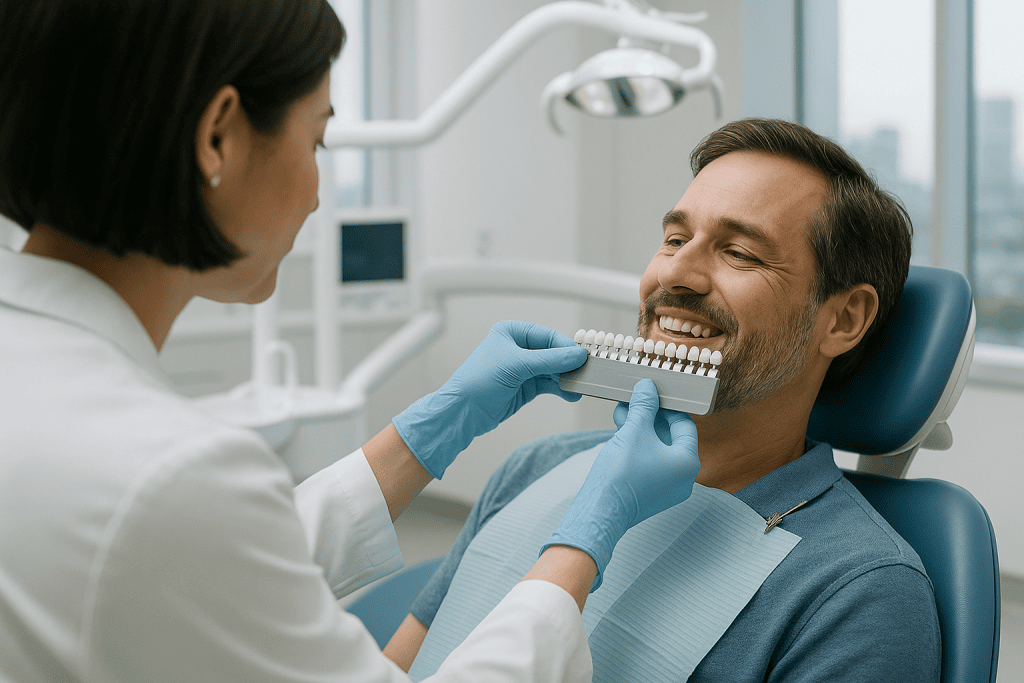
Begin with the qualifications required for your intended role and location. In the United States, dentist licensure requirements are set by state boards and include education, written examination, and clinical assessment requirements.
Nearly all states require a DDS or DMD from a university-based program accredited by the Commission on Dental Accreditation.
When comparing programs, request specific examples of student involvement with digital technology. Ask whether students observe demonstrations, practice in simulation, or participate in supervised patient workflows. Request details about feedback and assessment, not just an equipment list.
Bring these questions to admissions conversations:
- Where does digital training appear in the curriculum?
- How do instructors assess both technical execution and clinical reasoning?
- What opportunities connect students with laboratories or other dental team members?
- How are students taught to evaluate unfamiliar tools?
Dental school financing options can help make dental education accessible by covering eligible education expenses that savings and other aid do not fully meet.
Compare total attendance costs and available scholarships with each program’s financial aid office before committing.
How can you gain useful experience before graduation?
You can build useful experience by seeking authorized observation, supervised practice, and feedback tied to a specific workflow. Start small: ask to follow one case or demonstration from information capture through review. Choose an experience that lets you explain what happened, why it happened, and where someone checked the result.
Consider this approach:
- Arrange observation. Ask a practice or laboratory whether an appropriate shadowing opportunity is available.
- Prepare focused questions. Explore how the team handles incomplete information, equipment problems, and handoffs.
- Request supervised practice. Through your program, ask about exercises using training models or approved sample files.
- Record your learning. Keep a reflection log describing the workflow, feedback, and what you would do differently.
For an interview, prepare one clear example of a problem you noticed and how you responded to guidance. Be precise about your involvement: distinguish observation from tasks you personally performed.
Build judgment alongside technical confidence
Artificial intelligence deserves attention, but not unquestioning trust. The ADA supports using AI to supplement a dentist’s clinical judgment rather than replace or override it, with decisions grounded in the patient’s history, examination, and relevant tests. Learning to question an output is therefore part of preparing for technology-supported practice.
During training, ask what evidence supports a tool, what its intended use is, and how its output is checked. Practice explaining uncertainty without hiding behind technical language. A useful exercise is to describe what a digital image or model shows, what it cannot establish by itself, and what further professional assessment would be needed.
Prepare for change without chasing every trend
Rather than trying to predict the future of dentistry, develop a repeatable way to evaluate unfamiliar technology. Choose learning opportunities that explain limitations, oversight, and practical use—not only impressive demonstrations. Revisit your goals as you discover which work you actually enjoy.
Preparing for a dental career built around digital technology starts with a role, not a shopping list of devices. Choose the right educational foundation, seek supervised experience, and learn to explain your decisions. Your next step can be simple: compare two relevant programs or arrange one focused observation opportunity.
