

Every small business owner has been there. A customer messages on WhatsApp or Instagram with a clear interest: “How much is this?” or “Do you have it in stock?” You reply instantly — sometimes within seconds. And then? Silence. The conversation dies. No sale. No follow-up. Just a ghosted chat that should have been a closed deal.
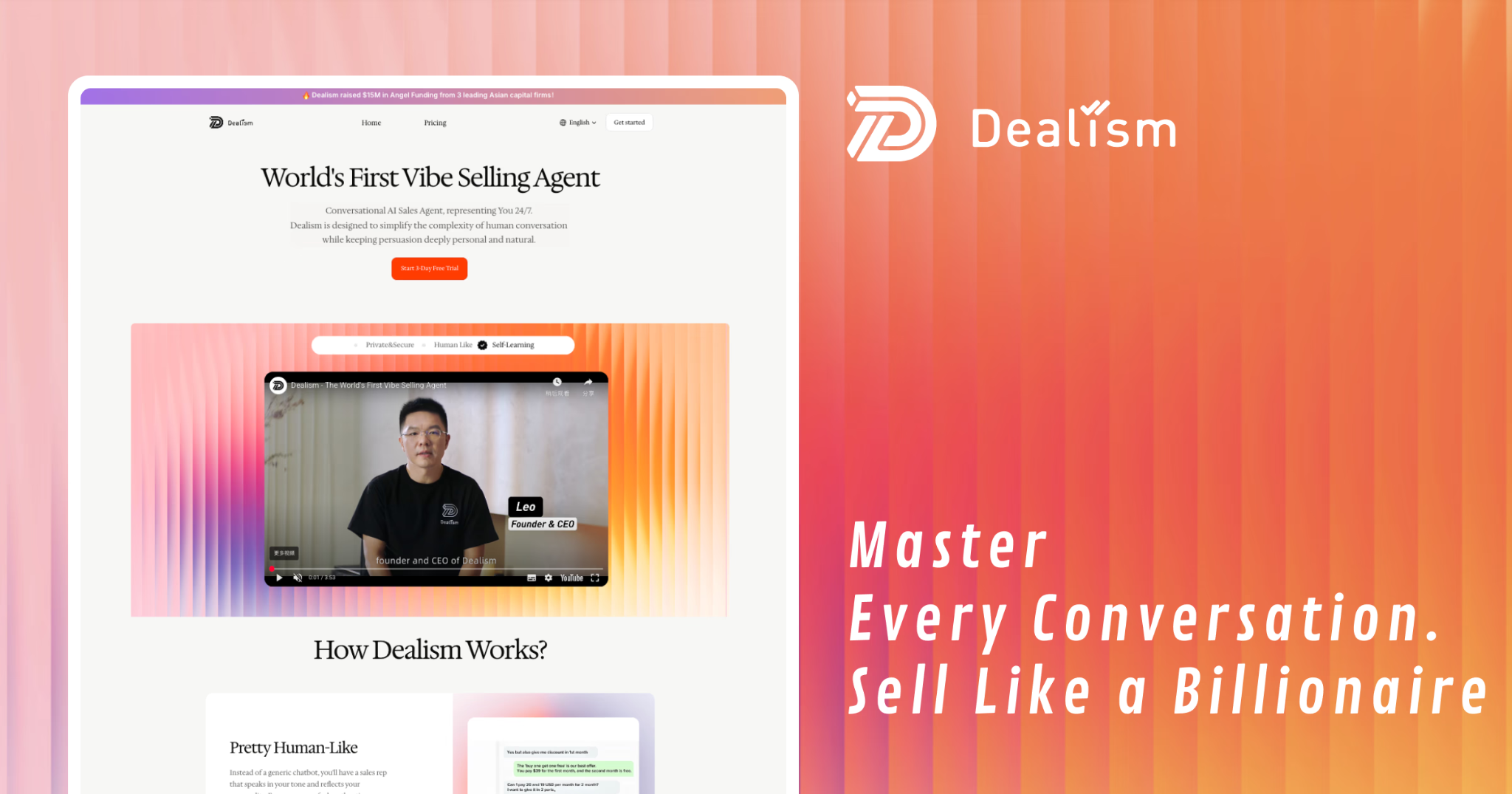
Here’s the uncomfortable truth: Fast replies grab attention, but human-like conversations win deals. And that’s exactly what platforms like Dealism are built to deliver — not faster typing, but smarter, more human selling.
Most businesses focus on the wrong metric. They obsess over response time — measuring milliseconds as if speed alone converts. But speed without substance is just noise. You can reply in two seconds, but if your answer is robotic, generic, or fails to read the customer’s real intent, the conversation stops right there.
On the other hand, a reply that takes two minutes — but shows genuine understanding, asks the right question, or handles a silent objection — can turn a lukewarm lead into a loyal buyer.
The real problem isn’t slow replies. It’s mechanical replies. It’s replying to customers instead of with them. And on platforms like WhatsApp and Instagram — where conversations happen in real time and in a deeply personal space — being human is your single greatest competitive advantage.
The Speed Trap: Why Instant Replies Don’t Equal Instant Sales
Let’s be clear: speed matters. WhatsApp’s 98% open rate and average response time of minutes (not hours) set a high bar. Customers expect quick answers. But the mistake many small businesses make is treating “fast” and “effective” as the same thing.
Consider two scenarios:
🎥Scenario A (Fast but mechanical):
- Customer: “Hi, how much for the leather backpack?”
- Business: “$89.99 plus shipping.”
- Customer: “Okay, thanks.”
Conversation ends. No sale.
🎥Scenario B (Slightly slower but conversational):
- Customer: “Hi, how much for the leather backpack?”
- Business: *“Great choice! That one is $89.99. Just so you know, it’s our bestseller — full-grain leather and fits a 15” laptop. Are you looking for something for daily work or travel?”*
- Customer: “Mostly for work, but I need something durable.”
- Business: “Perfect. Then you’ll love this one. We also have a matching wallet if you’re interested. I can send you photos of the brown and black versions — which color do you prefer?”
Conversation continues. Sale likely.
Same product. Same price. Different outcome. The difference? The second reply didn’t just answer a question — it moved the conversation forward. It showed warmth, added value, asked a clarifying question, and created a reason for the customer to stay engaged.
Speed gets you noticed. Skill gets you paid.
The Hidden Killer: Mechanical Replies That Miss Intent
Most automated or semi-automated replies fail because they only react to keywords, not to context. A customer types “price,” and the system spits out a number. They type “shipping,” and it pastes a policy. That’s not conversation — that’s a vending machine.
Real sales conversations are layered. A customer asking “How much is this?” might actually be asking:
- “Is this worth the money compared to cheaper options?”
- “Can I afford it right now?”
- “I like it, but I need permission from my spouse/boss first.”
- “I’m just starting to look — give me a reason to buy from you.”
A mechanical reply answers the surface question. A human-like reply (or a well-designed AI sales agent) answers the real question — the one beneath the words.
On Instagram and WhatsApp, where conversations are often the very first touchpoint, missing intent is lethal. Customers don’t have the patience to rephrase themselves three times. If your first reply feels robotic, they assume your entire business is robotic. And they leave.
The Three Pillars of Conversations That Actually Convert
After analyzing hundreds of small business chat threads (and working with platforms that optimize for conversion, not just response), three distinct skills separate dead-end chats from closed deals.
1. Reading Between the Lines (Intent Recognition)
A customer who asks, “Do you have this in blue?” might just want a color option. Or they might be stalling because they’re unsure.
Or they might be comparing you to a competitor who has blue. A skilled sales conversation — whether human or AI-driven — probes gently: “We have navy and royal blue. The Navy is our most popular. What’s the occasion you’re shopping for?”
This does two things: it answers the literal question and opens a new thread of conversation. Intent recognition is what turns a transactional exchange into a relationship-building dialogue.
2. Handling Objections Naturally, Not Defensively
Objections are not rejections. They are requests for more information. But most businesses handle them poorly.
Customer: “That’s a bit expensive.”
Mechanical reply: “It’s quality.” (Dead end.)
Human-like reply: *“I hear you. It’s an investment. What I can tell you is that our customers usually keep this for 5+ years — the cheaper ones tend to wear out in 6 months. Would it help if I showed you the difference in materials?”*
The second reply acknowledges the objection, reframes the value, and offers a next step. It doesn’t argue — it guides.
3. Proactive, Context-Aware Follow-Ups
This is where most small businesses fail. You have a great chat, the customer says “Thanks, I’ll think about it,” and then… nothing. No follow-up. No reminder. No “Hey, that item you liked just went on sale.” The lead goes cold because the business treats the conversation as finished when it’s actually just paused.
Human-like selling means remembering context. It means a week later sending: “Hi again — you were asking about the leather backpack last Tuesday. Just a heads-up, we have only two left in brown. I can hold one for you until tomorrow if you’re still interested.”
That’s not spam. That’s service. And it’s the difference between a 2% close rate and a 20% close rate on warm leads.
From Automation to Authentic AI: How Dealism Changes the Game
Most WhatsApp automation tools were built by engineers who think sales is a flowchart. Keyword A → Response B. If the customer says X → show Y. That works for basic FAQs. It fails miserably for actual selling.
Enter Dealism — not as another chatbot, but as what they call a “Vibe-Selling Agent.” The name captures the shift: from scripted, keyword-driven replies to emotionally intelligent, context-aware conversations that feel human.
Dealism doesn’t just reply. It participates. Here’s what that looks like in practice:
It learns your voice. Feed it your past WhatsApp chats, product PDFs, FAQs — it absorbs your phrasing, your tone, your expertise. When a customer asks about shipping, it doesn’t paste a generic policy. It answers the way you would: warmly, accurately, and with a next step.
It reads emotional context. A frustrated customer typing in caps gets a different response than a curious browser. A hesitant customer who says “maybe later” gets a gentle objection-handling sequence, not a pushy “buy now.” This isn’t keyword matching — it’s psychological awareness.
It handles objections naturally. When a customer says “too expensive,” Dealism doesn’t panic or parrot a discount. It understands the underlying concern and reframes value, offers comparisons, or suggests payment options — just like a top sales rep.
It follows up intelligently. This is where most tools give up. Dealism remembers past conversations. It knows a customer asked about a specific product last Tuesday. So when that product comes back in stock, it doesn’t blast a generic broadcast — it sends a personal, context-aware message: “Hey, you asked about the ceramic vase in sage green — we just restocked. Want me to save one?”
It self-learns from you. The most powerful feature: when you review and edit a reply Dealism generated, the AI analyzes why you changed it. It learns from your corrections. Over time, it internalizes your negotiation style, your objection-handling phrases, and your unique way of building rapport. It evolves with every conversation.
The result is not a faster reply. It’s a better conversation — one that actually converts.
The Bottom Line
A fast reply says “we’re responsive.” A human-like conversation says, “we see you, we hear you, and we want to help you buy what’s right for you.” One builds attention. The other builds trust. And trust is what turns a curious DM into a repeat customer.
WhatsApp and Instagram are not billboards. They are handshakes. They are the digital equivalent of someone walking into your shop and asking for help. How you answer — not just how quickly — determines whether they stay or walk out.
The businesses that win in 2026 and beyond won’t be the ones with the fastest chatbots. They’ll be the ones with the smartest, most human-like sales agents — AI or human — that know how to read intent, handle objections, follow up with care, and turn a casual “hello” into a closed deal.
That’s the difference between replying and selling. Between speed and skill. Between attention and conversion.
