

Education has always faced a quiet, lingering challenge. In a traditional classroom, a single instructor stands in front of dozens of students at once. You know how it goes. Each student arrives with a completely different background, a unique pace, and their own distinct goals.
For decades, the standard response was just a single curriculum applied to everyone. While this rigid structure helped educational systems grow, it often left some students struggling in silence while others sat bored, staring at the clock and waiting for the material to move forward.

And that balance was always tough to maintain. Honestly, it often felt completely broken.
The arrival of modern artificial intelligence in learning environments is fundamentally changing this dynamic. Rather than replacing human educators, technology acts as a support system that lets education bend around your individual needs.
Personalization isn’t just a distant theory people discuss in academic papers anymore. It’s becoming an everyday reality for millions of learners around the world, right down to the quiet hum of a laptop late at night when inspiration hits.
So how do we actually move from rigid schedules to personal growth?
Shifting From One-Size-Fits-All to Adaptive Learning
At the heart of personalized learning is the ability to adjust material in real time. Traditional textbooks stay static from the day they’re printed. A digital framework powered by smart systems, on the other hand, can observe how you interact with a subject.
If you’re struggling with a specific concept in algebra, the system notices the pattern and adjusts. It offers alternative explanations, breaks complex steps down, or gives you extra practice problems designed to target that specific gap. I guess that’s what true support should feel like.
But what happens when you already get it?
When you show fast mastery over a topic, the software automatically speeds up the pace. It introduces advanced material without forcing you to sit through repetitive drills.
This adaptive approach helps keep you in a state of flow, where tasks aren’t too easy to cause boredom or too hard to cause frustration. You feel engaged. Responsive. Capable.
Smarter Tools for Active Recall and Retention
Learning isn’t simply about reading information once. It requires continuous retrieval and practice to convert short-term memory into lasting knowledge.
This is where modern study tools play a critical role. For instance, incorporating an AI flashcard generator into a daily routine allows you to transform lecture notes and dense readings into targeted practice sets instantly.
It saves hours of tedious work. You know, the kind of tedious prep that burns you out before you even start studying.
These platforms don’t just digitize paper index cards. They analyze how quickly and accurately you recall information, using smart scheduling to prompt your reviews right when a memory is about to fade.
By automating the creation and timing of review materials, you can focus your energy on understanding complex concepts rather than spending hours manually building study decks. Have you ever considered how much time you spend preparing to study instead of actually studying? And that’s the point.
Accessible Feedback and On-Demand Support
Another major shift is the democratization of immediate feedback. Historically, if you worked on a complex assignment late at night with a lukewarm cup of coffee by your side, you had to wait until office hours or the next class period to get clarification on a mistake.
By the time the graded paper came back days later, the learning moment had already passed. Maybe you even forgot what you were trying to solve in the first place.
Today, smart tutoring systems provide immediate, step-by-step guidance. When you make an error in a science equation or a coding exercise, the platform can highlight the exact line where your logic deviated. It provides constructive hints that lead you toward the answer without simply giving it away.
Momentum is everything when learning something hard.
This immediate feedback loop keeps your momentum high and stops small misunderstandings from turning into deep frustration.
Empowering Teachers to Focus on Mentorship
A common concern about technology in education is that it might depersonalize the classroom or reduce the role of teachers.
But in practice, we’re seeing the exact opposite. Teachers routinely spend a huge chunk of their working hours on administrative tasks like grading repetitive quizzes, organizing lesson plans, and tracking attendance.
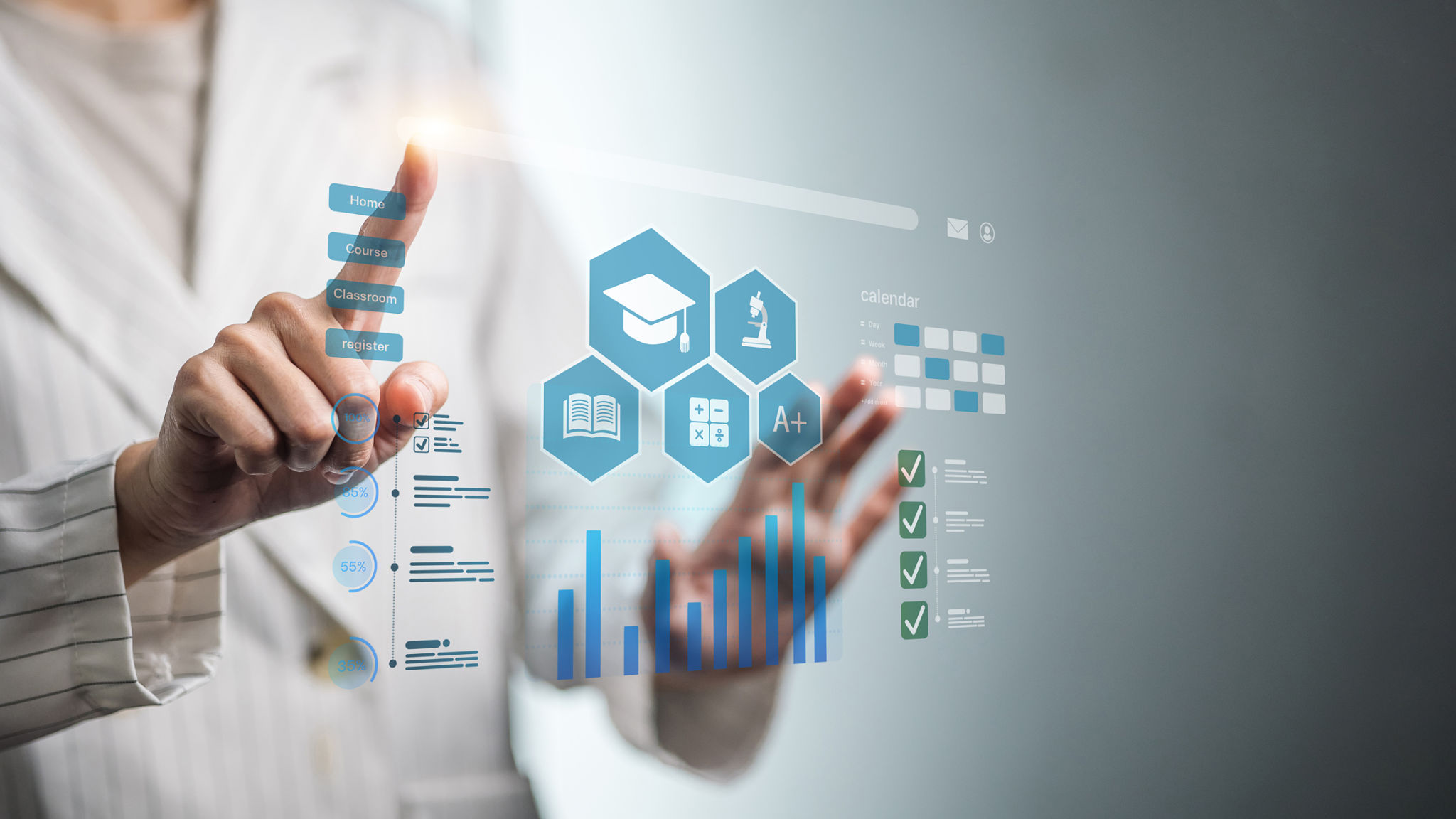
When automated tools handle routine assessments, teachers gain back valuable time. They can look at detailed dashboards that show precisely which students need extra support and which concepts were confusing to the class as a whole.
Armed with these insights, educators can shift their energy away from generic lecturing and focus on meaningful human interaction like one-on-one mentorship, group discussions, and encouraging creative problem-solving. Wouldn’t you prefer a teacher who has time to actually mentor you?
The Road Ahead for Intelligent Education
As technology continues to evolve, the line between formal instruction and self-directed study will keep blurring. The primary goal of using smart systems in education isn’t to automate human thinking, but to free it to reach its full potential.
By meeting you where you are, tailoring the pace to your specific needs, and offering continuous support, personalized learning is turning education into a truly flexible, lifelong process.
