

Money management in the past was a laborious task which required a lot of time and effort. Manually keeping track of money in a checkbook, storing receipts in a folder, going to a bank to deposit/withdraw cash, and manually tracking spending in a notebook or via a computer-based spreadsheet program.
This means that saving for long-term objectives is made much simpler, and that the process of tracking money for saving for goals can be set up and managed, and the savings for these goals can be contributed on a regular basis as part of the process of managing money.
Technology does not remove the need for financial discipline. What it does is make good financial management easier to implement and maintain.
Financial Information Is Now Available in Real Time
Rather than waiting for a monthly statement in the post, individuals are now able to view their financial information in real time.
This could mean logging onto an online banking website, or opening a mobile banking app, to check on the up to date account balance, to view individual transactions, to see what is going to be debited from an account in the near future and other financial updates.
When account information is viewed in real time, as opposed to receiving a monthly statement by mail, we can make decisions based on the most up-to-date information. For example, someone looking to buy a car could check if the latest payment for their bill has cleared before making the purchase.
They could also report an unfamiliar transaction as soon as it is posted to their account, as opposed to discovering the unauthorized transaction weeks later.
By receiving account alerts in real time the user can now receive reminders for spending money, paying bills and making deposits. In addition to this the user can receive notifications such as low account balance alerts and transaction alerts that inform the user of transactions that have occurred on their account.
These alerts can be set up by the user to occur at specific times to enable the user to manage their finances effectively throughout the month.
These account alerts can be set up to remind the user to spend money, to pay a bill or to make a deposit into an account. All of these ‘check points’ throughout the month will enable the user to keep a check on their overall finances.
Budgeting Apps Make Spending Patterns Easier to Understand
At the start of each month a lot of time is put into drawing up a budget, and after that it is generally not updated for the rest of the month.
Many budgeting apps now allow for the automatic spending of money by linking a user’s digital budget to the money that is held in their bank accounts.
Transactions that subsequently leave the account, such as by way of cheques being written, funds being withdrawn or internet payments being made, are then automatically organized into respective spending categories.
In terms of expenditure tracking and assistance with understanding spending money, budgeting apps are a very powerful tool. Users of these types of apps can put in all of their financial outgoings for the month, as and when they happen, rather than having to try and estimate costs at the start of each month.
Once entered, all financial outgoings are automatically organized into respective categories for spending, for example, for the user, spending money on Groceries, Dining out and on Transport would be entered separately into the digital budget.
Then as transactions occur in real time throughout the month, each of the financial transactions that money leaves accounts for, is automatically added to the respective area of spending within the digital budget, thus this type of budgeting app helps people manage their cash in a much more effective manner, in that money is allocated as it is spent, as opposed to having to be constantly reassessed.
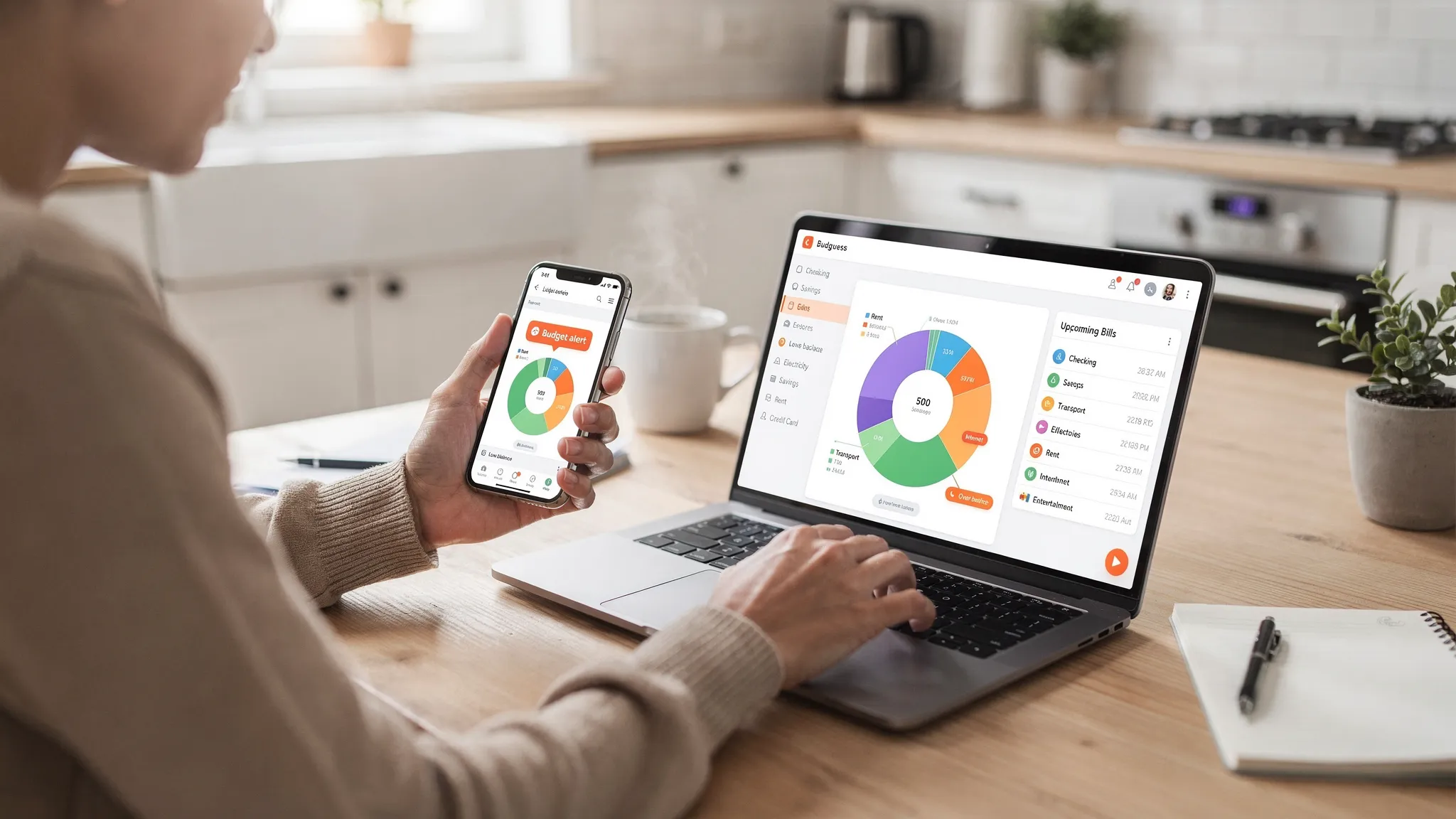
A budgeting app makes those patterns visible.
In many apps and online systems for budgeting it is possible to set up limits on your spending in certain categories.
Users are alerted before they reach a limit for that category of spending which gives them time to consider alternative uses of their money. Users are not prevented from spending money but are informed in good time of any impending transactions.
Detailed budgets exist too but the best budget is simple and can be checked from time to time by the owner of the budget.
Faster Access to Income Can Improve Cash-Flow Planning
The timing of income, nearly as important as the amount of the income itself, is when a person receives a check near the time of the rent, utilities, etc. payment dates and even a short delay can be a problem.
These services are offered by financial institutions as early direct deposit. They give account holders access to incoming funds, such as payroll or dividend payments, before the scheduled deposit date. The goal is to make those funds available ahead of the official payday.
Once a person has all of the cash flow dates for their income and for their fixed expenses recorded on a calendar (using a digital calendar like Google Calendar is best because then they can share it and add reminders to it), and for all of their variable and irregular expenses as well, they can use tools to track and organize all of that information for them too.
Automatic Bill Payments Reduce Missed Deadlines
They can even affect your credit score. Just because you have the money in your account doesn’t mean you should wait until the last minute to make the payment. Remember it’s the date of the payment that determines whether or not it’s late.
Automatic bill payments can be set up online to pay on time for bills to be paid to prevent late charges. These can be set up online through your bank or through the service provider’s website where you pay your bills. Some providers offer online, phone payments and even bill payments through your bank’s web site.
Once set up, these will continue to pay your bills on time for you. This does not mean you have to sit and do nothing for the rest of your life, as long as you have set up the payment correctly (stating the obvious here).
To avoid errors when making payments with the help of a budgeting app, it is necessary to monitor your accounts, as soon as possible after payment has been made.
The biggest error when making automatic payments is incorrect transfer amount and even though it’s automatically processed, it can cause just as much of a problem as a late payment.
Monitor For Unexpected Charges To Savings, Debit, Credit Cards. You set up your predictable bills to automatically pay, but in between you need to keep an eye out for unexpected charges such as overdrafts, NSF fees, bank service charges, late charges, membership fees, over limits, finance charges, subscription charges to your debit, credit cards and savings accounts.
When organizing debt repayment into a program, tracking the principal, rate of interest, minimum payments, and dates for all of one’s debts is helpful for implementing a debt management program.
The Consumer Financial Protection Bureau has a wide variety of tools and information on bank accounts and how to use them, as well as information on credit, and debt, and how to manage to purchase financial products.
Technology Works Best When Paired With Regular Reviews
Top Financial Tools & Services for Managing Money – reviews and articles. So, even the most sophisticated financial tools and services are of no use if you fail to review your money from time to time.
I have previously established that it is good for individuals to set aside time on a weekly basis to review their accounts, the recent transactions on their credit cards, upcoming payments and the progress they are making towards their financial goals, be they saving for a specific objective or debt repayment.
The biggest advantage of tracking your spending every week, is you will be able to identify any problems that could lead to bigger financial problems, and by recognizing these problems early, you can take action to correct them to meet your current financial objectives.
By automating routine money management tasks and tracking spending, individuals can ensure that they are making the most of their money. Financial technology also enables individuals to safely manage their finances online, ensuring the security of their personal data.
So, in order to make full use of financial technology (financial online services) you must, in the end, use them in a consistent and purposeful way.
