

Most purchasing decisions now begin and end on a screen. Before a prospect ever makes contact, they search a company’s name, scan the first page of results, read a few reviews, and increasingly accept whatever an AI assistant summarizes back to them. Whatever that picture shows becomes the truth they act on.
Online reputation management services exist to make sure that picture is accurate, current, and aligned with what the business actually delivers, rather than shaped by a single old article or an unanswered complaint.

The behavior is now close to universal. Depending on the study, between 93% and 97% of consumers read online reviews before making a purchase, a figure that has held steady for years, according to data compiled from sources including BrightLocal’s annual Local Consumer Review Survey.
The effect is not limited to buyers: investors, partners, and prospective hires lean on the same digital signals to decide whether an organization is credible.
In 2026, that environment is no longer a static list of links but a dynamic mix of search results, review platforms, and AI-generated answers that shape a narrative on a brand’s behalf, and if the brand does not shape it, algorithms will assemble one from whatever fragments they find.
What Online Reputation Management Services Actually Cover
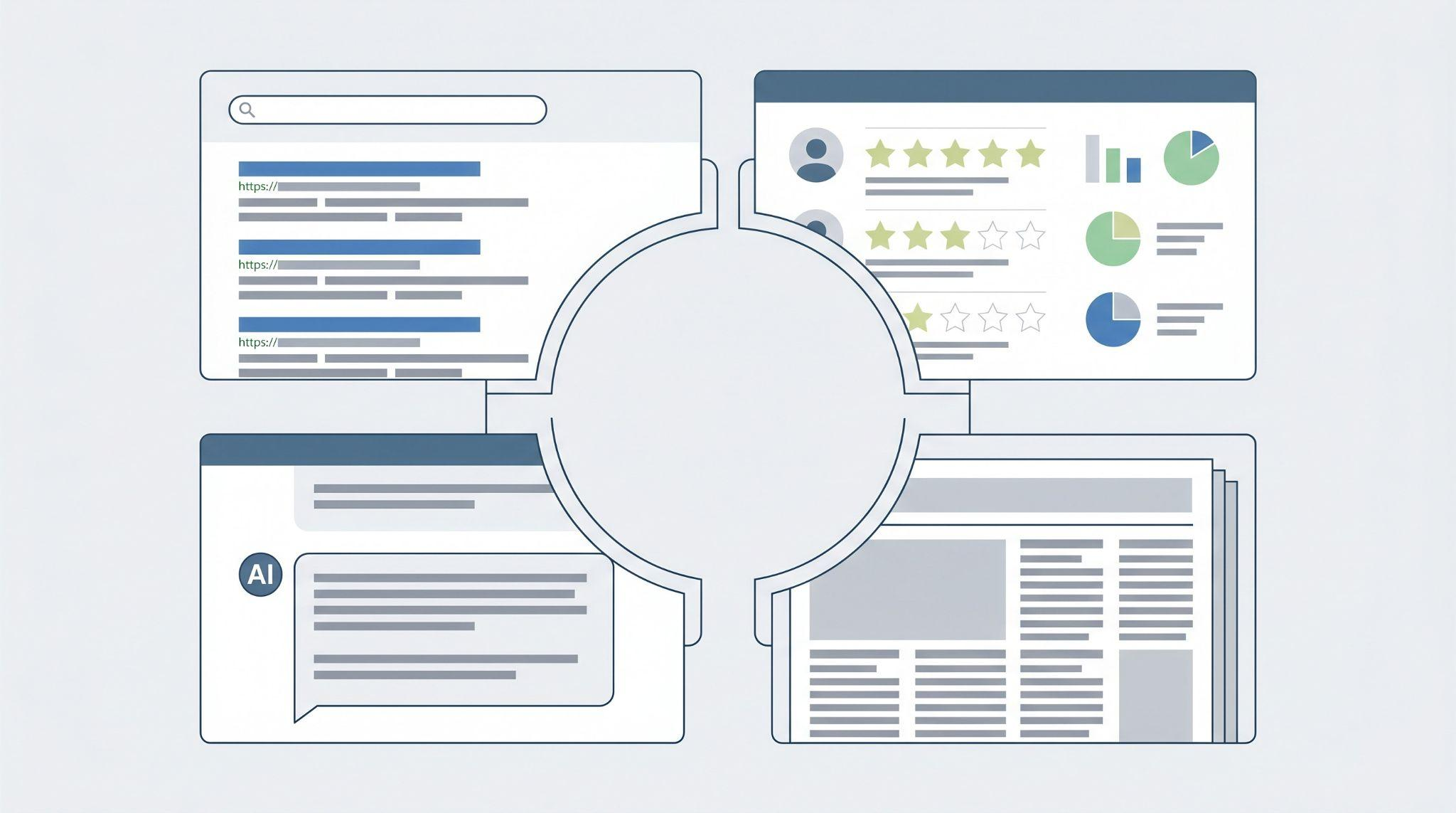
At its core, the work is about controlling the information environment around a brand or individual. A capable provider treats four layers as a single system rather than separate fixes:
- Search results: the first page for branded queries, including “name + review,” “name + scam,” and “name + complaints” searches that decide whether trust survives the research phase.
- Review platforms: the ratings and written feedback that buyers weigh before they ever click through to a website.
- Third-party coverage: articles, directories, and profiles on authoritative domains that corroborate who a company is and what it does.
- Entity and knowledge data: the structured information that search engines and AI systems rely on to describe an organization in their own words.
When these layers reinforce each other, a brand looks consistent and credible from every angle. When they conflict, the most damaging or outdated version tends to win the click.
Why Reputation Now Decides Discovery?
Search engines now surface review snippets, knowledge panels, and AI overviews above the classic list of links, and standalone AI assistants answer questions about a company before the user visits any site at all.
The Federal Trade Commission notes that consumers rely heavily on reviews and ratings when evaluating businesses, which is exactly why a brand has to manage its footprint systematically.
A business can rank on page one and still be described inaccurately inside an AI answer that draws from a stale forum thread or a directory it has never touched.
Reputation management addresses precisely that gap: it governs not only what a brand publishes about itself, but what independent sources and automated systems say on its behalf.
Who Needs a Reputation Management Agency?
Not every organization needs an aggressive program running at all times. The case for bringing in a specialist reputation management agency becomes clear in specific situations:
- A visible gap between how a company actually performs and how it appears online.
- Negative, biased, or outdated results that consistently outrank more representative content.
- Expansion into a new market where the brand has little existing authority in the local language or region.
- A high-scrutiny event on the horizon such as a funding round, a listing, a leadership change, or a flagship launch, these will predictably trigger a surge in searches.
In each case, the risk is not a short-term embarrassment. It is the slow erosion of trust among the customers, partners, and investors who treat digital research as their primary source of truth.
In sectors where credibility is a commercial prerequisite, such as finance and technology, that erosion shows up directly in lost deals and higher acquisition costs.
How the Work Gets Done?
Review and rating management. Reviews are often the first thing a prospect sees, and their weight is measurable: research from Northwestern University’s Spiegel Research Center found that products with five or more reviews are around 270% more likely to convert than those with none. Strong online reputation management services help a business claim and standardize its profiles across the major platforms, build a steady flow of accurate feedback, and respond to criticism in a way that demonstrates accountability rather than defensiveness.
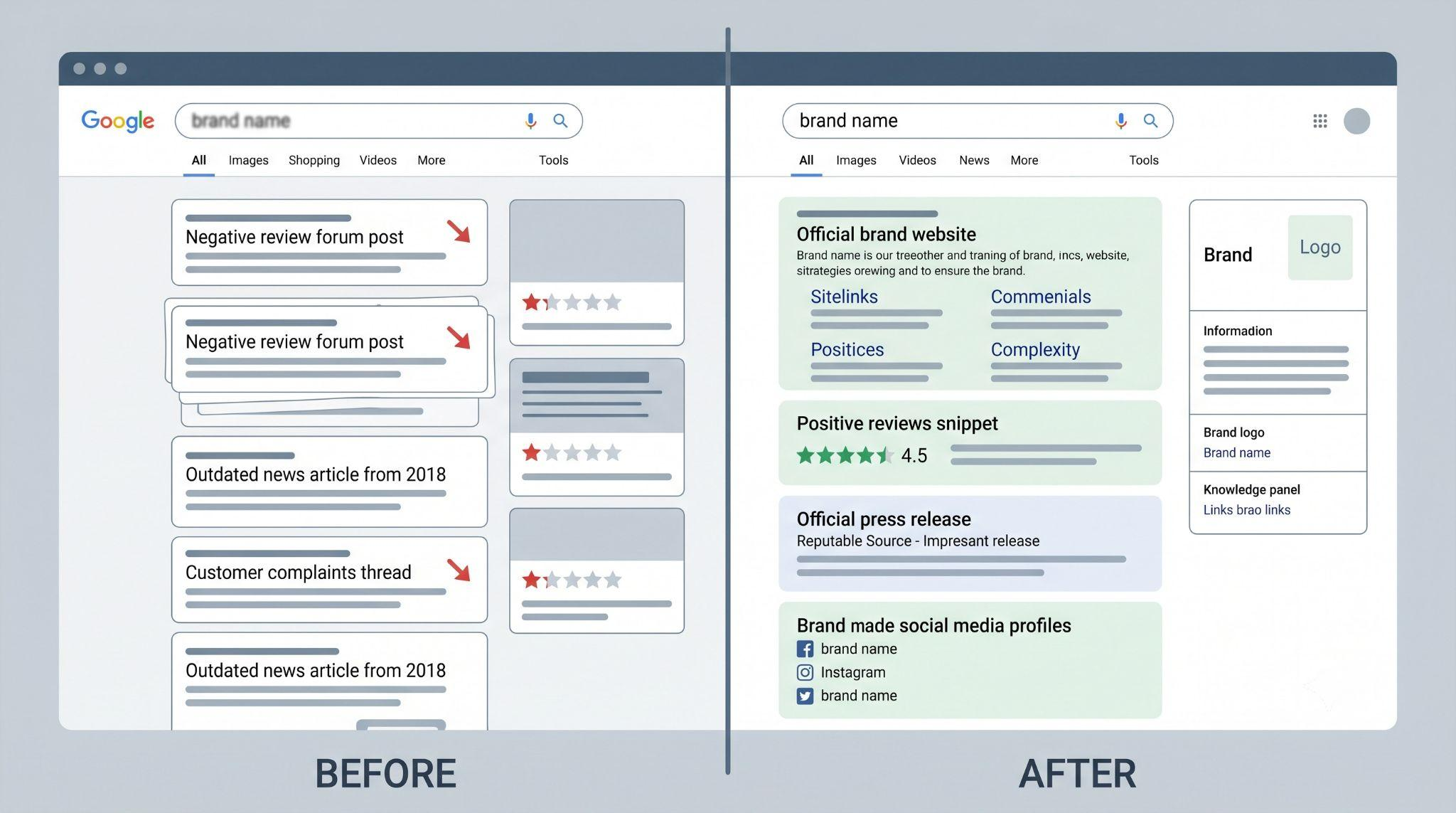
Search displacement and content building. When unfavorable results dominate a branded search, suppression is slow. The more durable approach is to build a deep bench of positive, accurate content on credible third-party domains so the most representative material earns the top positions over time. This is steady authority-building through publishing partnerships, not a one-time push.
Entity and knowledge accuracy. Search engines and AI models assemble their descriptions from structured data spread across directories, profiles, and reference sources. Keeping that information precise and consistent is what makes automated systems describe a company correctly instead of guessing from whatever they can find.
Proactive Versus Reactive ORM
Historically, most organizations only thought about their reputation after something broke: a critical article, a viral complaint, a wave of negative attention. Remediation is possible, but it is far slower and more expensive than building resilience in advance.
A proactive program maintains a steady foundation of accurate content, keeps entity data current, and treats reputation as an ongoing asset rather than a fire to be put out.
That mindset is what separates brands that feel permanently on the defensive from those whose digital presence quietly works in their favor.
How to Evaluate a Reputation Management Agency?
When comparing providers, look past the promises and ask how the work is actually done:
- Measurement: Can they audit how the brand currently appears across search, reviews, and AI answers, and tie their work to clear visibility benchmarks?
- Method, not magic: Do they explain how content earns authority on credible domains, or do they imply guaranteed deletions and instant fixes?
- AI awareness: Do they manage how automated systems describe the brand, not just classic search rankings?
- Sector fit: Do they understand the specific pressures of the industry, especially in regulated or high-scrutiny fields?
A credible reputation management agency will be comfortable showing its process and realistic about timelines. Anyone promising to erase the internet overnight is selling something other than reputation work.
Reputation as a Growth Lever, Not Just a Shield
Well-structured search results and healthy review profiles do more than prevent damage. Sales teams close faster when prospects find independent validation; recruiting improves when strong candidates see consistent signals; partners and investors move with more confidence when the public record reflects a stable operation.
In that sense, online reputation management services sit at the intersection of marketing, communications, and risk management, making sure that when the rest of the business does its job well, the digital environment reflects that reality instead of contradicting it.
