

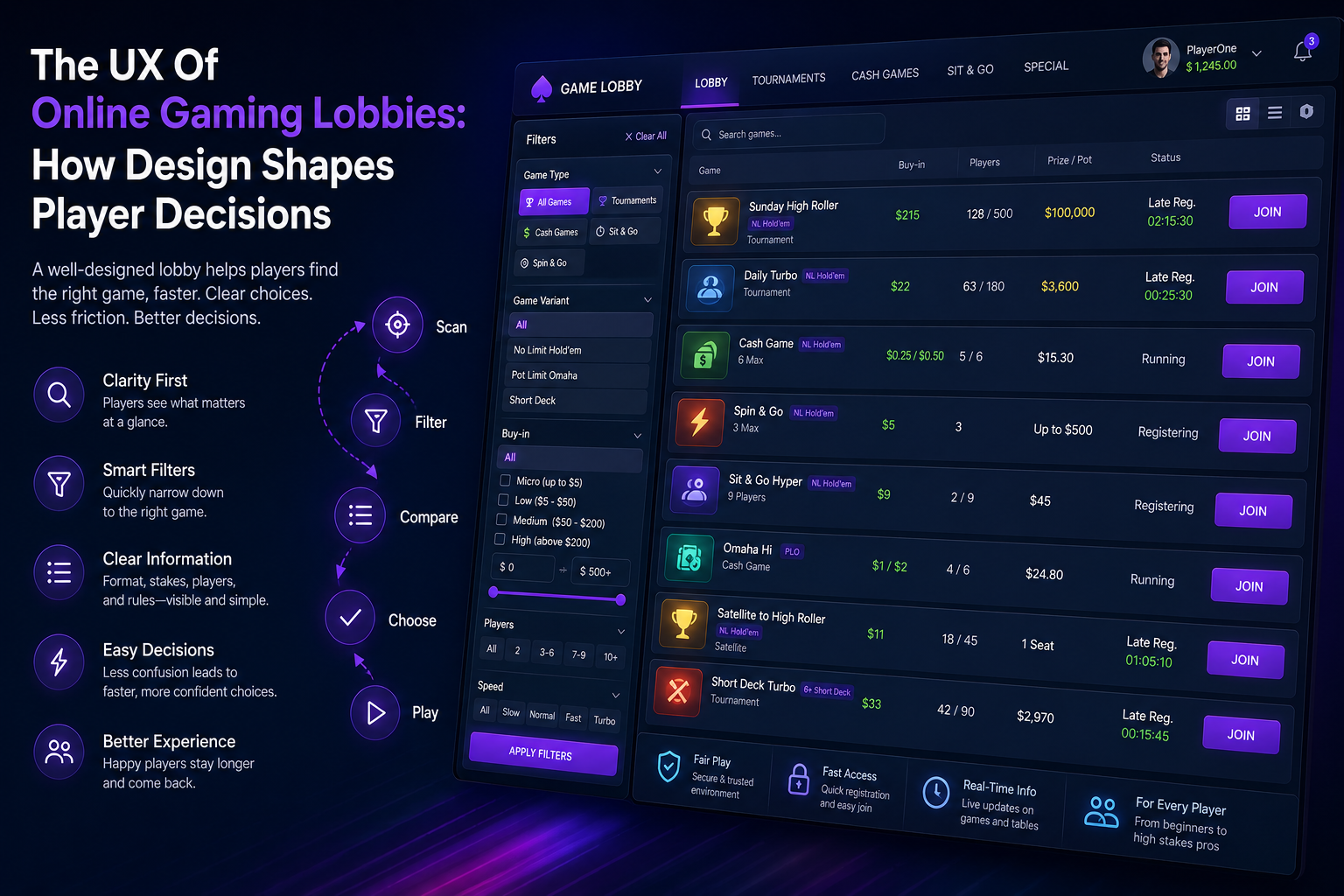
An online gaming lobby works like a front desk, map, and shop window in one place. It tells players where they are, what they can do, and what will happen next.
Good lobby design does not shout. It guides. It shows the right choices at the right time. It helps a new player find a simple table. It helps an experienced player scan formats, stakes, rules, and wait times fast.
Poor design does the opposite. It turns choice into fog. Too many buttons, unclear labels, hidden rules, or slow filters can push players toward random clicks. A strong lobby gives players control, context, and confidence before they enter a game.
Why The Lobby Matters?
A lobby is the first real test of an online game. It sits between intent and action. A player arrives with a goal. The lobby either clears the path or blocks it.
Think of it like a train station. A good station shows platforms, times, routes, and exits at a glance. A poor one makes people stop, search, and doubt each step. Gaming lobbies work the same way. Players need to see game types, table size, stakes, rules, and entry steps without digging.
This matters most in skill-based formats, where choice affects the session before play begins. A poker player, for example, does not just pick “a game.”
They compare pace, format, risk, and time. Platforms such as BC Poker show why lobby clarity matters. A player may scan tournaments, Sit & Go games, or classic poker formats, then choose the room that fits their plan.
Strong lobby UX turns that scan into a clean path. It reduces doubt. It cuts wasted clicks. It helps players choose with clear eyes, not by guesswork.
What Players Look For First?
Players scan a lobby before they read it. Their eyes move like a hand over a shelf. They look for the shape of the choice, then the details.
Most players check a few things first:
- Game Type: What can I play here?
- Format: Is it a tournament, cash table, Sit & Go, or fast round?
- Entry Cost: What will I need to join?
- Table Size: How many players will sit at the table?
- Pace: Will the game move slowly or fast?
- Rules: What makes this format different?
- Status: Can I join now, or must I wait?
This list works like a label on a door. It helps the player decide whether to step in or keep walking.
Good lobby design puts these facts close together. It does not hide the cost in one corner and the rules in another. It keeps the core choice in one clean view. The player should not need to hunt for basic facts.
When the lobby answers these questions fast, the player feels steady. They know where they stand. They can pick a game with purpose, not stress.
Choice Needs Shape
A lobby can offer many games, but it must not feel like a pile. Choice needs shape. Players need groups, labels, and order.
A supermarket does this well. Bread sits with bread. Milk sits with milk. Signs hang above each aisle. The shopper does not read every package. They first find the right shelf.
Online lobbies need the same logic. Tournaments should not mix with quick games without clear labels. Beginner tables should not hide beside high-stakes rooms. Filters should feel like simple tools, not locked drawers.
“A good lobby does not make players search for the game. It brings the right game into view.”
This is where design shapes action. A clear list tells players what matters. A strong filter removes noise. A useful sort order brings the best match closer. Each small choice in the interface changes the next click.
When choice has shape, players move with less doubt. They see the path. Then they choose.
Conclusion
A gaming lobby does more than list games. It shapes the player’s first decision. It sets the pace before the first move, card, or match begins.
Good lobby UX works like a clean control panel. It shows what matters. It removes clutter. It gives each choice a clear name, place, and purpose. The player can see the game type, format, cost, rules, and status without effort.
That clarity changes behaviour. Players make faster choices. They feel less lost. They trust the interface because it does not make them work for basic facts.
The best lobbies respect attention. They do not push every option at once. They guide the eye from broad choice to exact action. They turn a busy screen into a clear path.
In online gaming, design does not sit in the background. It leads the player to the next click. A strong lobby makes that click feel simple, informed, and natural.
