

Between August 2023 and August 2025, 6,422 pixel art games released on Steam, yet only 7 to 9.6% of them sold over 10,000 copies, compared to roughly 10% for other art style categories.
That gap between volume and commercial success says something important heading into 2027: 2D art is more popular than ever to produce, but standing out within it requires more deliberate craft than the category’s surface simplicity suggests.
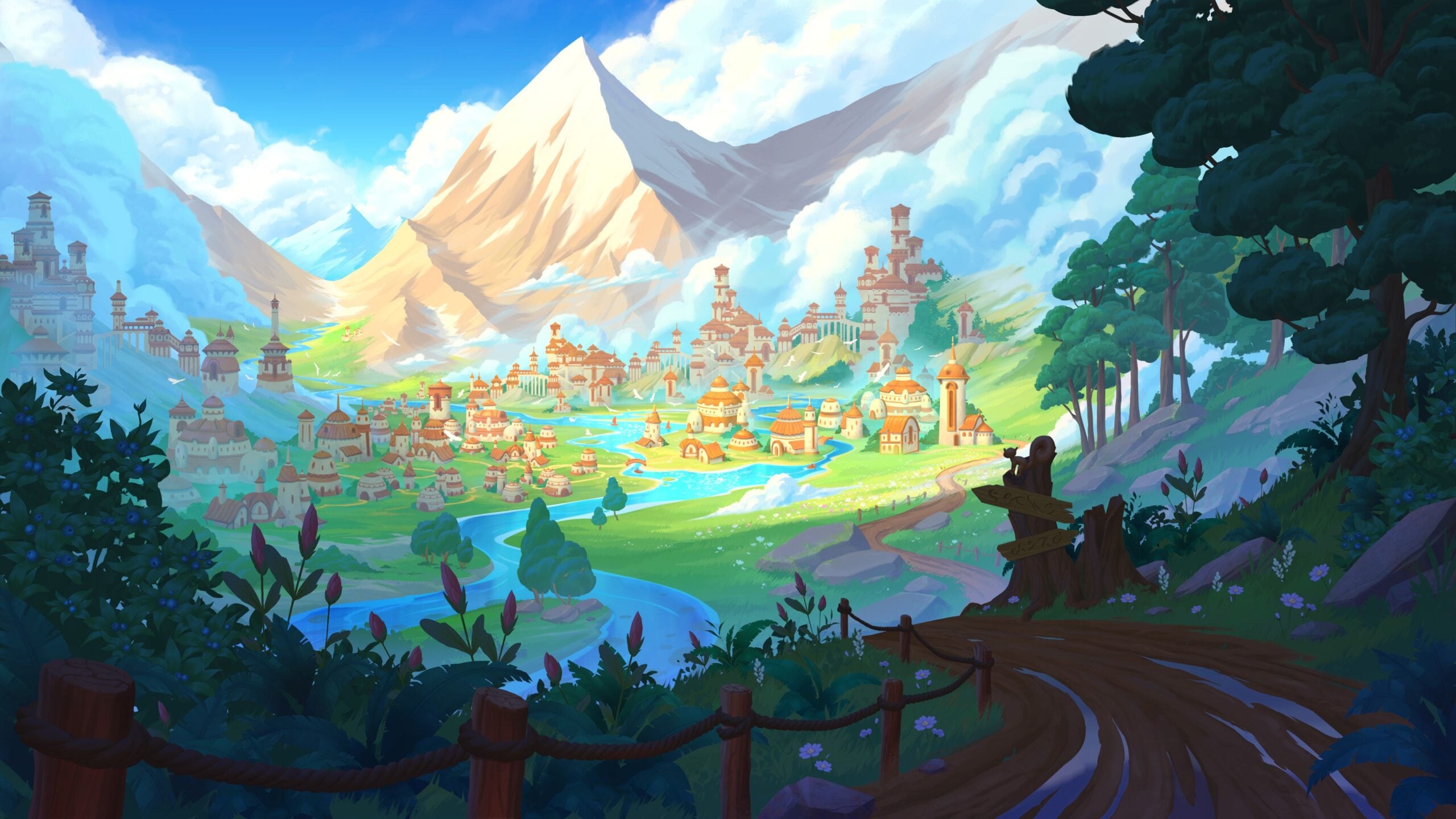
For studios and buyers planning a 2027 release with a 2D visual direction, understanding where the category is heading helps avoid two costly mistakes: chasing a trend that is already saturated, or underestimating what modern player expectations now require from even a “simple” style.
2D visuals are not only surviving, they are thriving, with many recent award-winning and commercially successful titles built entirely in 2D.
Key 2D Art Trends for 2027
Trend 1: AI Becomes a Production Accelerator, Not a Replacement
The most significant shift heading into 2027 is not a new visual style. It is a change in how 2D game art design actually gets produced.
AI is a production accelerator rather than a replacement, and the studios succeeding in this transition are the ones that have integrated AI tools into their workflow without losing human craft quality. Studios that tried cutting costs by going all-AI found that clients noticed immediately and walked away.
This distinction matters for anyone evaluating 2D art services for an upcoming project. The bigger shift is actually in studio pricing and timelines rather than quality, with outsourcing quotes getting faster and concept-phase costs dropping while detailed production art maintains its value.
What this shift practically means for 2027 projects:
- Concept exploration and iteration can move faster without sacrificing the final art quality
- Human oversight remains essential for production-ready assets, not just concept generation
- Studios that blend AI speed with experienced art direction outperform both pure-AI and pure-manual workflows
- Buyers should expect faster early-stage turnaround, but production-grade consistency still requires skilled artists
Trend 2: Lo-Fi and Pixel Aesthetics Continue as a Deliberate Choice, Not Nostalgia
Lo-fi pixel aesthetics have emerged as one of the defining visual design trends, with designers using pixelated fonts, dithered gradients, and chunky graphics as a deliberate rebellion against the sterile sameness of AI-generated content. This is a meaningful shift from pixel art’s earlier framing as pure retro nostalgia.
Pixel art is appearing less as pure retro nostalgia and more as a deliberate stylistic choice with a modern finish, including cleaner animation, more saturated colors, and better effects work. For 2D game art design heading into 2027, this means pixel art projects need to clear a higher technical bar than the style’s reputation might suggest.
Worth noting: The pixel art software market is projected to grow from $0.5 billion in 2025 to $0.9 billion by 2033, reflecting sustained, not declining, demand for the style heading into 2027 and beyond.
Trend 3: Animation Expectations Keep Rising, Even in Casual Categories
Players have gotten used to high-quality mobile animation, and even casual audiences now notice when characters feel stiff or lifeless, driving demand for expressive, personality-driven animation in casual games.
This is one of the clearest signals for what buyers should plan for in 2027: animation budgets that would have been considered generous for a casual title a few years ago are now closer to baseline expectations.
| Animation Expectation | Previous Standard | 2027 Direction |
| Character expressiveness | Functional movement only | Personality-driven, full expression range |
| Casual game polish | Basic idle and tap animations | Spine 2D or Lottie-based fluid animation |
| Character investment | Single design per character | Full expression sheets, wardrobe variation |
| UI responsiveness | Static or simple transitions | Animated, tactile feedback throughout |
Spine 2D and Lottie-based animation are the dominant technical formats, and studios with strong animation capabilities are in particularly high demand.
Buyers planning a 2027 release should factor this into both budget and partner selection rather than treating animation as a late-stage polish item.

Trend 4: Character Art Becomes a Brand Asset, Not Just a Gameplay Element
Storytelling has arrived in casual gaming in a major way, with games showing that players will engage deeply with characters and story arcs even in mobile formats, which is driving more investment in character design, full expression sheets, backstory-informed visual design, and wardrobe variation.
This trend has direct implications for how 2D game art is briefed and budgeted heading into 2027. A character is no longer a single static asset to design once.
It is a recurring brand element that needs variation, consistency across contexts, and enough visual depth to support merchandising, marketing, and long-term player attachment.
What this shift requires from a 2D art production pipeline:
- Style guides robust enough to support character variation without losing visual identity
- Coordination between game art and marketing-facing assets from the earliest production stages
- Investment in character backstory and personality as inputs to the visual design process, not afterthoughts
For a closer look at how this kind of layered concept-to-final-asset process actually works in practice, the 2D art pipeline for a playable game environment walks through how mood, color, and detail work compound from early sketches to production-ready assets.
Trend 5: Cross-Platform Scalability Becomes a Default Requirement
Casual games increasingly launch across mobile, tablet, browser, and light PC clients, creating demand for art that scales cleanly across resolution ranges without separate asset libraries for each platform.
This requirement is no longer specific to ambitious cross-platform titles. It is becoming a baseline expectation for 2D projects of nearly any scope heading into 2027.
This shift rewards studios that build resolution-independent pipelines from the outset rather than treating multi-platform scaling as a late addition.
Vector-based and rig-based approaches tend to scale more cleanly across this range than pure frame-by-frame work, which is part of why production technique decisions made early in a project increasingly determine how far that art can travel across platforms later.
What This Means for Studios Planning a 2027 Project?
The throughline across these trends is not a single dominant style winning out. 2D art continues to dominate genres, define iconic styles, and power some of the most beloved indie and mobile games, precisely because its strength lies in clarity, emotion, and artistic identity rather than technical complexity.
What is changing is the production bar within every style: AI accelerates the early stages without replacing craft, animation expectations keep climbing even in casual categories, and character art is increasingly treated as a long-term brand investment rather than a one-time deliverable.
For buyers, the practical takeaway is to evaluate potential 2D art design partners on their ability to navigate this combination, not just their portfolio in a specific style.
The studios best positioned for 2027 are the ones already integrating faster tools with sustained craft quality, rather than betting entirely on one or the other.
FAQs
Will AI replace human 2D game artists by 2027?
Unlikely, based on current trajectory. The pattern emerging across the industry is AI handling early concept generation and iteration while skilled artists remain essential for production-ready, consistent, and stylistically coherent final assets. Studios that have tried to remove human craft entirely have seen clients notice and leave.
Is pixel art a declining trend heading into 2027?
No. Demand has remained strong, and the style is evolving rather than fading, with higher resolutions, smoother animation, and more deliberate use as a stylistic statement rather than pure nostalgia.
Do casual and mobile games really need the same animation quality as premium titles now?
Not identical, but the gap is narrowing. Players have grown accustomed to higher animation quality across all game categories, and casual titles that skip investment in expressive character animation increasingly stand out for the wrong reasons.
What does “cross-platform scalability” mean for 2D art specifically?
It means designing assets and pipelines that work cleanly across different resolutions and screen sizes, mobile, tablet, browser, and PC, without needing entirely separate asset libraries for each platform. Vector-based and rig-based animation techniques generally scale more easily than frame-by-frame approaches.
Should a 2027 project commit to one specific 2D style now, or wait to see what trends emerge?
Style choice should be driven by the game’s genre, audience, and narrative needs rather than chasing a trend. The trends outlined here describe how styles are being executed and produced, not which single style will dominate, since multiple styles continue to coexist successfully.
How much should character design budgets change for 2027 projects?
Buyers should expect to budget for more than a single character design pass, particularly for narrative-driven or casual titles aiming for player attachment. Full expression sheets, wardrobe variation, and backstory-informed design are increasingly standard rather than premium add-ons.
