

A trigger can explain why a reaction happened, but it does not automatically make the reaction acceptable. Stress may explain an impulsive purchase, criticism may explain an angry response, and exhaustion may explain why an important task was avoided. The explanation gives context, but responsibility begins with what you do after recognizing it.
The same distinction matters when reviewing personal budget categories. A category that repeatedly goes over budget may reveal more than a math problem.
Restaurant spending might rise during stressful workweeks, shopping may follow conflict, or entertainment purchases may appear whenever life feels dull. Identifying that pattern is useful only when it leads to a better response.
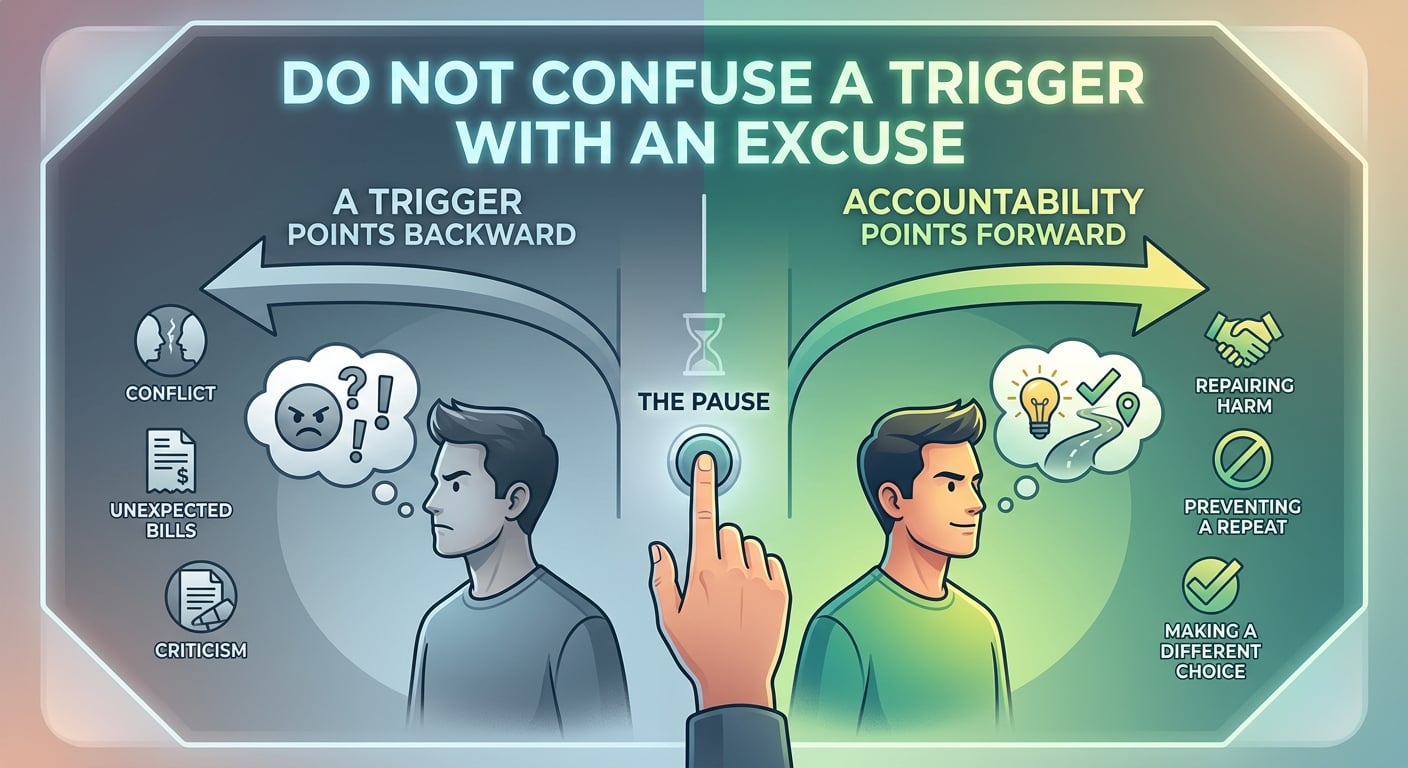
A trigger points backward toward the conditions that influenced your behavior. Accountability points forward toward repair, prevention, and a different choice next time. An excuse stops between the two and uses the cause as permission to leave the outcome unchanged.
A Trigger Answers Why
A trigger is an event, thought, sensation, memory, or situation that creates a strong reaction. It may produce anger, fear, shame, urgency, defensiveness, or the desire to escape discomfort quickly.
Some triggers are obvious. A harsh comment may cause immediate anger, while an unexpected bill may create panic.
Others are harder to notice because the reaction appears long after the original event. You might spend impulsively in the evening without connecting the purchase to a stressful meeting earlier that day.
Identifying the trigger helps you understand the chain of events. You can see what happened before the behavior, what emotion appeared, and which action followed. That information creates an opportunity to interrupt the pattern.
The Mayo Clinic recommends identifying personal stress triggers and considering which parts of the situation can be controlled. Recognition is not the complete solution, but it gives you a clearer starting point.
An Excuse Tries to End the Conversation
An excuse may contain accurate information. You may genuinely have been tired, upset, distracted, or under pressure. The problem is not always whether the explanation is true. The problem is how the explanation is being used.
An excuse attempts to close the discussion. It says the behavior should be accepted because the conditions were difficult. It may reject consequences, dismiss another person’s concerns, or suggest that change is impossible.
A trigger keeps the discussion open. It says the conditions influenced the behavior and need to be considered when planning a better response. You still acknowledge the effect of your actions and remain responsible for addressing it.
Compare two statements. “I spent too much because work was stressful, so there was nothing I could do” uses stress as an ending. “I spent too much after a stressful day, so I need another way to decompress before opening shopping apps” uses the same information as a beginning.
Context and Accountability Can Exist Together
People sometimes fear that discussing triggers will remove responsibility. They worry that any explanation will sound like an attempt to avoid consequences.
The opposite can be true. Understanding the cause can make accountability more practical because it shows where change needs to occur.
A person who only says, “I made a bad choice,” may feel guilty without learning anything useful. A person who identifies the trigger can build a specific response.
Accountability does not require pretending that circumstances had no influence. It means acknowledging both the circumstances and your role in what happened.
You can say that you were overwhelmed and still apologize for speaking harshly. You can admit that an emergency disrupted your finances and still create a plan for the resulting debt. You can recognize that a habit developed during a painful period while deciding that it should not continue controlling your choices.
Triggers Do Not All Carry the Same Weight
Not every trigger is a minor inconvenience. Trauma, grief, chronic stress, discrimination, illness, and unsafe environments can produce intense reactions that are not easily managed through a simple pause or positive thought.
The Substance Abuse and Mental Health Services Administration explains that traumatic experiences can have lasting effects on emotional, physical, social, and mental well being. In these situations, professional support may be appropriate, especially when reactions interfere with safety, relationships, work, or daily functioning.
Accountability should not become cruelty. Someone can be responsible for seeking help and reducing harm without being blamed for having an automatic emotional or physical response.
The goal is not to demand perfect control. It is to develop safer and more effective ways to respond, using appropriate support when the trigger is connected to something deeper than an ordinary frustration.
Financial Triggers Often Hide Inside Normal Routines
Money behavior can appear completely practical while still being driven by emotion. A purchase may be described as convenient, deserved, necessary, or too small to matter. Sometimes that description is accurate. At other times, it protects the person from examining what happened before the transaction.
Stress spending often promises relief. Boredom spending offers stimulation, while social spending can provide belonging. Fear may lead someone to avoid opening bills, and shame may prevent a person from asking for help.
These patterns are easy to miss because spending is part of everyday life. The emotional purchase looks similar to the planned one on a bank statement.
Tracking context can make the difference visible. Along with the amount and category, record how you felt, where you were, and what happened shortly before the transaction. After several weeks, the repeated conditions may become easier to recognize.
A Trigger Journal Should Lead to Action
Recording triggers can be useful, but observation alone can become another form of delay. You may understand the pattern perfectly while continuing to repeat it.
A practical trigger record should include four parts. Note the situation, the emotion or physical sensation, the behavior, and the result. Then add one possible alternative for next time.
For example, the situation may be receiving criticism at work. The reaction may include tension and embarrassment, followed by an evening shopping session. The immediate result is relief, while the later result is regret and a higher card balance.
The alternative might be taking a walk, calling a trusted person, or waiting until the next morning before making optional purchases. The replacement should address the need for relief without creating another problem.
The record becomes valuable when it changes the environment or the response. Otherwise, it is only a detailed description of a repeating pattern.
Build Space Between the Trigger and the Behavior
Triggers can feel immediate, but many behaviors contain a small window where another choice is possible. Expanding that window is often more realistic than trying to eliminate every trigger.
A pause can be physical. You might leave the room, put down the phone, or step outside. It can also be procedural, such as requiring a waiting period before purchases or delaying a difficult reply until emotions settle.
The pause should be easy to remember under pressure. A complicated coping plan may disappear when the trigger arrives, so choose one simple first step.
You might decide that any optional purchase made after a stressful event must wait until tomorrow. During conflict, you may agree to take ten minutes before continuing the conversation. When a bill creates panic, your rule could be to review the amount and deadline before making any payment decision.
The pause does not solve everything. It prevents the first emotional reaction from becoming the final action.
Replace the Behavior, Not Just the Trigger
Some triggers cannot be removed. Work will remain stressful at times, people will say disappointing things, and unexpected expenses will continue appearing.
A plan that depends on avoiding every uncomfortable situation will be fragile. The more durable strategy is developing several responses that do less harm.
If boredom triggers shopping, remove stored payment information and keep a list of engaging activities nearby. If exhaustion leads to expensive food delivery, keep simple meals available for demanding days. If anxiety causes financial avoidance, schedule a brief account review with someone supportive.
The replacement should satisfy at least part of the need behind the behavior. Telling yourself to stop stress spending without creating another source of comfort leaves the original problem untouched.
This is why punishment often fails. It removes the unwanted behavior temporarily but does not provide a healthier route toward relief, connection, control, or stimulation.
Repair Is Part of Accountability
Recognizing a trigger does not erase the effect of what happened. If your behavior harmed someone or created a financial problem, accountability includes repair.
A meaningful apology identifies the action and its impact. It does not bury responsibility beneath a long explanation of the trigger. Context may be shared, but it should not force the other person to comfort you or dismiss their own experience.
Financial repair may involve returning an unnecessary purchase, adjusting the budget, replacing money taken from a shared goal, or creating limits around future spending. Workplace repair could require correcting an error, clarifying communication, or rebuilding reliability through consistent follow through.
Repair makes the lesson visible. It shows that understanding the trigger has produced action rather than simply better language for defending the same behavior.
Watch for Excuses Disguised as Self Awareness
Psychological language can sometimes make avoidance sound thoughtful. A person may say they were triggered, protecting their peace, or setting a boundary when they are actually refusing a reasonable conversation.
The words are not the problem. The test is whether the response reduces harm and respects the responsibilities involved.
A genuine boundary describes what you will do to protect your well being. It does not automatically control another person or remove every consequence.
A trigger explanation identifies a pattern and supports change. It does not demand that everyone accept repeated harmful behavior without question.
Self awareness should increase responsibility because you now have more information about the pattern. When greater awareness produces no effort to change, the explanation may be functioning as an excuse.
Do Not Turn Accountability Into Shame
There is also a danger on the other side. A person may reject every explanation because they believe accountability requires harsh judgment. This can create shame, which often makes the original behavior harder to examine honestly.
Shame says the behavior proves that you are weak, selfish, or incapable of change. Accountability says the behavior had consequences and requires a response.
The distinction matters because people hide from shame. They may conceal spending, deny emotional reactions, or avoid seeking help. Responsibility becomes easier when mistakes can be discussed without turning them into a permanent identity.
You can take the behavior seriously without using it as evidence that the person is beyond improvement. Clear consequences and compassion can exist in the same conversation.
Use Specific Language When Talking About Triggers
Vague language can blur the line between explanation and excuse. Be specific about what happened, what you felt, what you did, and what you will change.
Instead of saying, “You made me angry,” say, “When the plan changed without warning, I felt ignored and responded by raising my voice.” The second statement recognizes the trigger without assigning complete responsibility for your behavior to another person.
Instead of saying, “Stress made me spend,” say, “After a difficult meeting, I bought things online because shopping gave me quick relief. I am adding a waiting period and removing the shopping app from my phone.”
Specific language creates a sequence that can be examined. It also identifies which parts belong to the situation and which parts belong to your response.
Progress Means Responding Differently More Often
Success does not require becoming impossible to trigger. The goal is to notice reactions earlier, recover more quickly, and choose a better response more often.
At first, you may recognize the pattern only after the behavior occurs. Later, you may notice it during the reaction and interrupt it. With practice, you may identify the early signs and use the alternative before the behavior begins.
Setbacks do not erase that progress. A repeated mistake should be taken seriously, but it can also reveal where the plan remains weak. Perhaps the replacement behavior was not accessible, the trigger was stronger than expected, or additional support is needed.
Accountability continues after a setback. You review what happened, repair the damage, adjust the plan, and practice again.
Explanation Should Create More Choice
The value of identifying a trigger is not that it makes the past acceptable. Its value is that it gives you more influence over the future.
Once you understand what activates a harmful pattern, you can change the environment, create a pause, ask for support, or prepare a different response. You may not control the trigger itself, but you can expand the choices that follow it.
An excuse reduces choice by claiming that the behavior was inevitable. A useful explanation does the opposite. It shows where the pattern begins and where another action can be inserted.
Do not confuse accountability with ignoring context, and do not confuse context with permission. A trigger explains the pressure behind a reaction.
What you do with that knowledge determines whether it becomes a path toward change or simply another reason the same behavior continues.
