

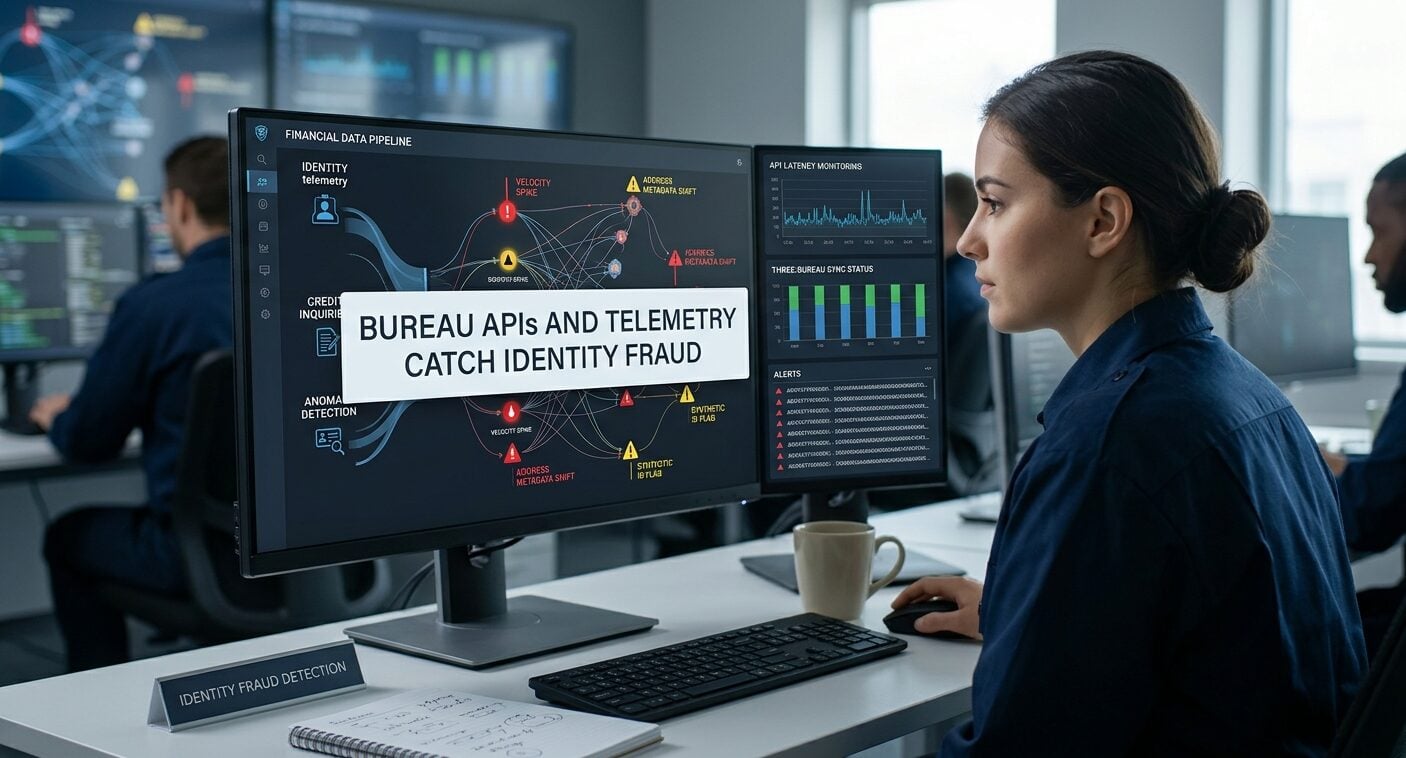
Data dumps stopped being about recycled Netflix logins years ago. When an unsecured database coughs up ten million lines of user data onto a Telegram channel, attackers don’t just test passwords on retail checkouts.
Fraud rings run those records through automated scripts to see which Social Security numbers have completely clean credit files tied to them.
Most people still check their score like a monthly bank balance. But in an ecosystem running on instant digital credit checks and algorithmic loan decisions, credit tracking is really a data pipeline problem.
The Latency Problem in Bureau Pipelines
The core credit bureaus: Experian, Equifax, and TransUnion run massive amounts of their baseline infrastructure on legacy mainframes.
When a bank opens a line of credit or a lender logs a hard inquiry, that record doesn’t always hit every external feed instantly.
Large chunks of the financial sector still lean on scheduled overnight batch jobs to push updates. That window is an attacker’s playground.
A simple bot can blast out twenty loan applications across different digital lenders in under an hour, well before the bureaus sync up their inquiry logs. If you wait for a monthly banking app notification to check your file, that debt is already hardcoded into the system.
What Monitoring Engines Actually Look For?
Basic score simulator widgets just run simple client-side math against your current balances. That does nothing against an active breach. Actual fraud detection relies on tools built to poll delta changes directly off bureau endpoints.
When comparing software vendors, security analysts judge the best credit monitoring company by raw sync latency and direct coverage of all three bureau APIs rather than shiny dashboard metrics. The backend software needs to spot raw behavioral anomalies as they happen:
- Inquiry velocity: Multiple hard credit pulls fired across different merchant codes inside a single afternoon.
- Address metadata shifts: Tiny modifications to user records, like an unfamiliar PO box added to divert physical replacement cards.
- Synthetic identity flags: A valid Social Security number suddenly linked to an unverified name and conflicting date of birth.
- Public record triggers: Immediate pings for courthouse filings or collections uploads before they ever hit the consumer report.
Why Synthetic Fraud Bypasses Standard Rules?
The messiest problem in credit security right now is synthetic identity theft. Scammers don’t even bother hacking an existing account.
They grab a valid SSN with very little credit history, usually from a student or a minor, and stitch it together with fake names and disposable phone numbers.
They open small retail credit cards, make on-time payments for months via ACH, and slowly train the scoring algorithms to trust the new profile. Once lenders hike the limits up to ten or twenty grand, the attacker maxes out the credit lines and abandons the profile entirely.
Because the applicant’s name on the application doesn’t match the actual owner, standard name-matching scripts let it slide right through.
Catching a synthetic profile early requires continuous cross-database checks that flag an SSN the minute it shows up under conflicting records.
Locking the Database at the Source
Even the best tracking setup is purely an intrusion detection system; it doesn’t work like an inbound firewall. A notification only tells you an entry was already committed to the database. It doesn’t drop the initial connection.
Real defense means pairing live monitoring with a hard freeze across the board. Locking files at Experian, Equifax, and TransUnion blocks their APIs from answering third-party credit check queries.
When an automated loan bot tries to ping the bureau, the endpoint throws an instant error code, killing the application before an account ever opens.
Conclusion
Online identity theft runs at machine speed, fueled by botnets and leaked database dumps. Waiting on a monthly PDF statement leaves your records wide open to automated exploits.
Staying safe comes down to cutting latency, pulling continuous telemetry across all three bureaus, keeping baseline records locked with a credit freeze, and treating a financial identity like any other critical database you want to protect.
