

Introduction to the Modern IoT Paradigm
The Convergence of Hardware and Cloud
The modern technological landscape is defined by an unprecedented convergence between physical hardware and cloud infrastructure. For decades, microcontrollers and embedded systems operated in relative isolation, executing local logic with minimal external communication.
Today, however, every sensor, actuator, and edge device is expected to be part of a vast, interconnected ecosystem. This evolution transforms passive hardware into active data-generating nodes that rely heavily on robust cloud backends for processing, storage, and remote management.
Within this domain, specialized solutions such as those delivered by https://indeema.com/industries/drones-and-uav demonstrate how seamlessly integrated software architecture can bridge the physical-digital divide to power complex autonomous machinery.
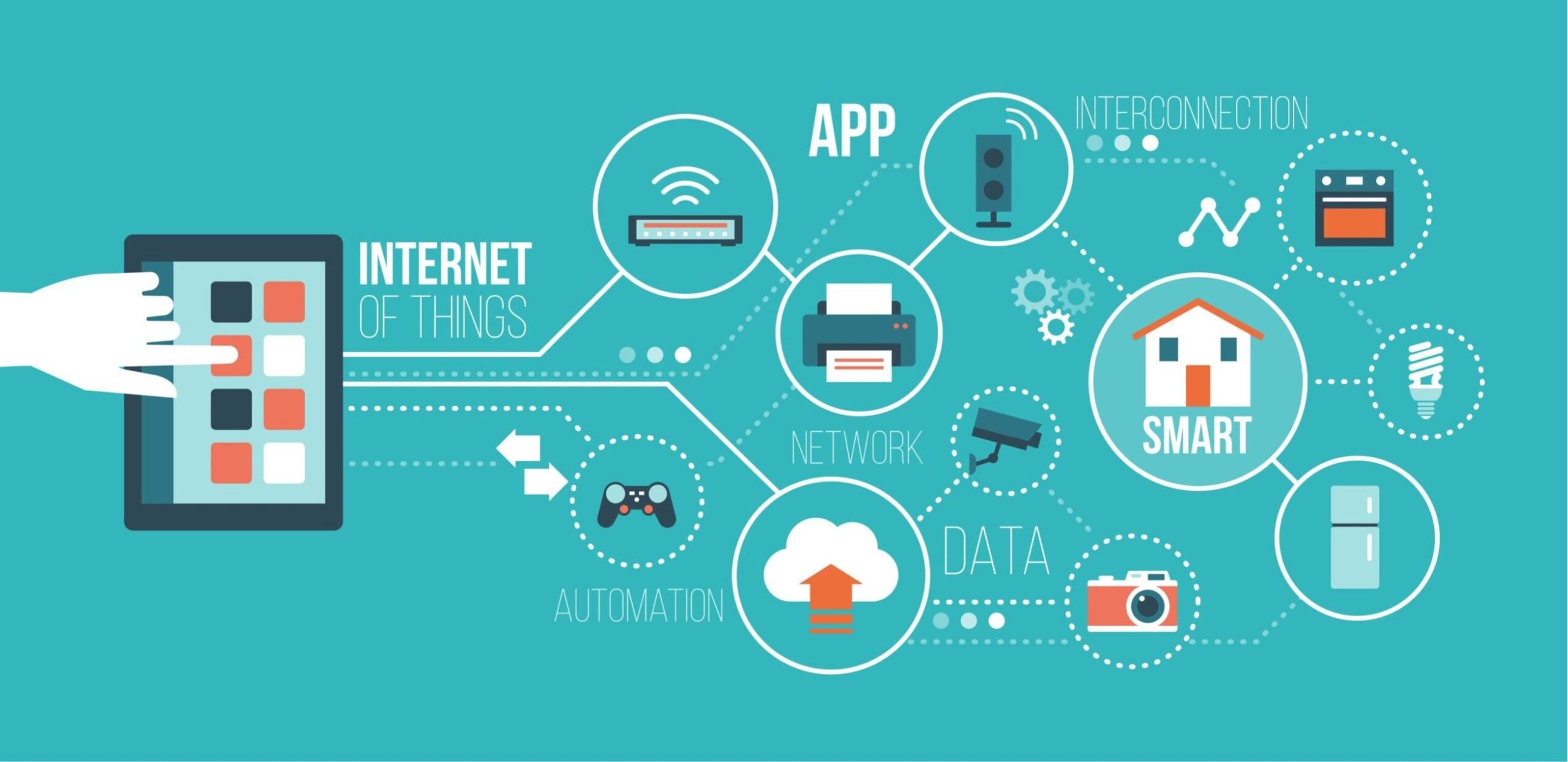
Why Architecture Matters?
Building an Internet of Things ecosystem is rarely a straightforward task; it requires balancing hardware constraints with massive cloud scalability. Poorly structured software leads to high latency, severe security vulnerabilities, and exorbitant cloud operational costs.
Conversely, a well-designed architecture ensures high availability, fault tolerance, and seamless data flow from the extreme edge to the central dashboard.
This guide explores the core layers, design patterns, and engineering strategies required to build scalable IoT software architectures that bridge smart hardware and the cloud effectively.
The Core Layers of IoT Software Architecture
The Edge and Perception Layer
At the very foundation of any IoT architecture lies the perception layer, consisting of physical sensors, microcontrollers, gateways, and actuators.
These components are responsible for capturing real-world environmental data such as temperature, motion, pressure, or telemetry and executing low-level operational commands.
Because edge devices often operate under strict power, memory, and processing constraints, the software running directly on them must be lightweight and optimized.
Real-time operating systems (RTOS) or stripped-down embedded Linux distributions are commonly deployed here to handle basic data filtering and immediate local responses before transmitting anything upstream.
The Connectivity and Communication Layer
Once data is gathered at the edge, it must be securely and efficiently transmitted to the cloud. This layer dictates how devices talk to backend servers, handling network fluctuations, intermittent connectivity, and bandwidth limitations. Lightweight messaging protocols dominate this space due to their minimal overhead.
- MQTT (Message Queuing Telemetry Transport): A publish-subscribe protocol ideal for low-bandwidth, high-latency, or unreliable networks.
- CoAP (Constrained Application Protocol): Designed for resource-constrained devices, mimicking HTTP over UDP.
- HTTP/HTTPS: Used primarily for configuration updates, bulk data transfers, or device provisioning where strict delivery confirmation is required.
The Cloud Processing and Analytics Layer
The cloud backend serves as the brain of the IoT ecosystem, ingesting millions of data streams simultaneously. This layer is responsible for stream processing, device management, long-term storage, and complex event processing (CEP).
Modern architectures leverage containerized microservices orchestrated via Kubernetes to handle elastic scaling. Here, incoming telemetry is parsed, validated, and stored in time-series databases, while machine learning models analyze trends to predict maintenance needs or anomalies in real time.
Comparison of Communication Protocols
Evaluating Network Options
Choosing the right communication protocol is critical for the performance, battery life, and responsiveness of an IoT system.
Developers must weigh factors such as message size, connection persistence, and security overhead. Below is a comparative overview of the primary protocols used in hardware-to-cloud communications.
| Protocol | Transport Layer | Overhead | Typical Use Case | Security Features |
| MQTT | TCP | Very Low | Telemetry, sensor data tracking, real-time messaging | TLS/SSL encryption, client authentication |
| CoAP | UDP | Extremely Low | Constrained microcontrollers, battery-powered sensors | DTLS (Datagram Transport Layer Security) |
| HTTP/2 | TCP | Moderate | Firmware updates, heavy data payloads, configuration | Standard TLS, OAuth tokens |
| WebSockets | TCP | Low-Moderate | Real-time web dashboards, bi-directional commands | Secure WebSockets (WSS) over TLS |
Protocol Selection Criteria
When designing the architecture, engineers must evaluate whether their hardware nodes require push-based updates or pull-based queries.
For instance, continuous telemetry from high-frequency sensors benefits greatly from MQTT’s lightweight publish-subscribe model, whereas intermittent diagnostic reporting can easily rely on standard HTTP REST endpoints without degrading system performance.
Data Management and Edge Computing Strategies
Balancing Cloud Storage and Edge Processing
As the number of connected hardware nodes grows exponentially, transmitting every raw data point to the cloud becomes economically and technically unfeasible. Streaming gigabytes of redundant sensor data wastes network bandwidth and strains cloud databases.
To mitigate this, modern architectures utilize Edge Computing, processing data locally on the device or local gateway and sending only aggregated insights or critical alerts to the cloud.

Implementing Data Pipelines
An efficient IoT data pipeline must handle high-throughput ingestion with minimal drop rates.
- Ingestion Brokers: High-performance message brokers (like Apache Kafka or AWS IoT Core) buffer incoming messages to prevent backend server crashes during traffic spikes.
- Stream Processing Engines: Frameworks like Apache Flink or Spark Streaming analyze data on-the-fly to trigger instant automated responses.
- Cold Storage Archives: Processed data is moved to cost-effective data lakes for historical auditing, compliance, and offline machine learning model training.
Security, Scalability, and Device Lifecycle Management
Securing the Hardware-to-Cloud Continuum
Because IoT systems bridge the digital and physical worlds, security breaches can have catastrophic physical consequences. Securing an IoT architecture requires a zero-trust approach across all layers:
- Device Identity & Authentication: Every hardware unit must possess a unique cryptographic identity (such as an X.509 certificate or hardware-backed secure element) to authenticate with the cloud.
- Encrypted Transmission: All data in transit must be encrypted using modern TLS or DTLS protocols.
- Over-the-Air (OTA) Updates: A robust, secure mechanism for pushing firmware patches and security updates remotely is mandatory to protect against newly discovered vulnerabilities throughout the hardware’s lifecycle.
Scalability and Provisioning
Managing thousands or millions of physical devices manually is impossible. Automated provisioning systems allow hardware to securely register itself with the cloud infrastructure upon first boot.
Combined with auto-scaling cloud microservices, this ensures that the backend architecture can effortlessly handle sudden surges in data volume without service degradation.
Conclusion and Future Outlook
Summary of Architectural Pillars
Designing an effective IoT software architecture requires a holistic approach that respects the physical limitations of smart hardware while harnessing the infinite scalability of cloud computing.
From choosing lightweight communication protocols like MQTT and CoAP to implementing edge computing strategies and zero-trust security frameworks, every component plays a vital role in ensuring system reliability, performance, and long-term viability.
Expanding Horizons
As technology continues to evolve, the integration between smart hardware and cloud infrastructure expands far beyond industrial automation and consumer electronics, transforming sectors such as smart agriculture, logistics, and environmental monitoring.
For organizations looking to leverage connected ecosystems in another top industry, exploring specialized digital solutions provides a clear pathway toward building resilient, future-proof, and highly efficient cloud-connected hardware operations.
