

Earlier procurement teams competed on three aspects including cost, quality, and delivery reliability. Now, there is a fourth aspect that is bringing about a transformation in the type of manufacturers who win contracts.
Green procurement has gone beyond being a compliance tick in the box to becoming a real source of margin and market, and companies that regard it as a strategy and not an obligation are gaining the lead.
What green procurement actually means on the factory floor?
Green procurement isn’t a mission statement. It’s a set of purchasing criteria you apply every time a material order goes out.
Check recycled content percentages, request supplier certifications, and track the carbon footprint of inputs, right along with your usual price and lead-time negotiations.
For a plastics-heavy manufacturer, this means asking whether a resin supplier can document recycled content, whether that documentation holds up under a supplier sustainability audit, and whether the material meets the same performance specification as the virgin equivalent it’s replacing. It’s a procedural shift, not a philosophical one.
Where the pressure is actually coming from?
Manufacturers are not engaging in green procurement as a goodwill gesture. They are facing inquiries from customers higher up the chain – especially the large OEMs that dominate many key markets – about sourcing before contracts are renewed.
They are seeking investment for new capacity and finding that ESG concerns are front-of-mind for the people holding the checkbooks and the regulators that approved their last project.
They’re getting requests for ESG data in areas that it never came up before, and finding that some of their existing suppliers are failing to meet the new benchmarks.
Procurement is where all three pressures land first. Sales teams make promises; production teams need materials that fit spec; procurement has to find inputs that satisfy the customer, the auditor, and the regulator at the same time.
That’s a harder job than it sounds, and it’s why procurement managers are increasingly the ones driving sustainability strategy rather than just executing it.
The regulatory math has changed
The UK’s Plastic Packaging Tax, effective since April 2022, slaps a levy of more than £200 per tonne (rising with CPI each year) on plastic packaging with less than 30% recycled content.
And it’s not a notional expense. It’s a line in the sand that appears on every invoice for virgin-heavy packaging, and has forced manufacturers to reengineer their material mix whether sustainability was ever a part of their brand story or not.
Parallel Extended Producer Responsibility schemes running across Europe are making end-of-life costs count towards the same balance sheet, and the true cost of virgin now includes liabilities that used to live outside procurement’s orbit.
When a tax penalty and an EPR liability both head in the same direction, it’s the spreadsheet that does the preaching. No values statement necessary.
Sourcing recycled pelletised materials without the guesswork
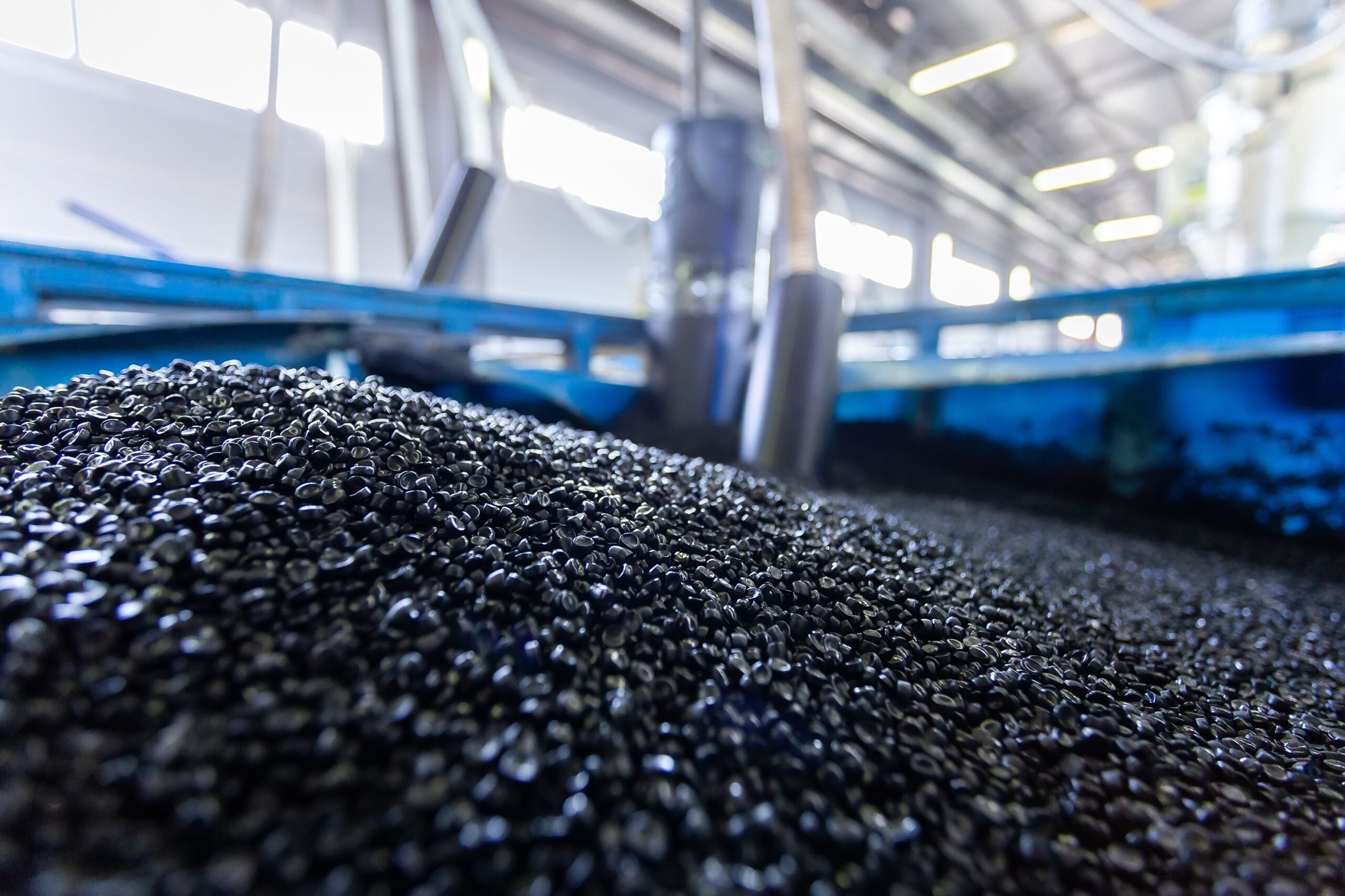
Buying recycled polymer isn’t a simple SKU substitution. Pelletised recycled polypropylene and similar materials vary by batch depending on the feedstock they came from, so quality specification and consistency checks matter more than they do with virgin resin.
Manufacturers need to verify third-party certifications, request traceability documentation showing where the material originated, and run their own incoming-goods testing before committing to volume.
Procurement teams that get this right treat supplier vetting as seriously as they’d treat a new virgin resin qualification process.
For teams looking at where to find pelletised materials that meet consistent specification and carry proper documentation, the sourcing route matters as much as the material itself. A supplier who can’t produce traceability paperwork on request is a liability dressed up as a discount.
Recycled materials as a hedge, not just a virtue
The price of virgin polymer is influenced by crude oil prices, which are highly volatile. If you have ever needed to explain why your commodity pricing for an engineering grade compound just increased by 20%, you have firsthand experience.
Raw materials procured from established reprocessing supply chains are far less volatile in price. The raw material suppliers exert no special monopoly control, they are volume rather than margin driven, and competition is also likely global. The end result is that, if you have a valid, enforceable contract, your price is your price.
This is the part of the business case that gets underplayed. Green procurement isn’t only about avoiding a tax or satisfying an auditor.
It’s about buying inputs whose price behaves more predictably over a multi-year contract, which matters enormously when you’re quoting fixed prices to customers eighteen months out.
Life cycle assessment as the evidence base
All of these efforts depend on having data to back them up. Life Cycle Assessment enables procurement teams to measure the effect of a material decision over its entire life: extraction, processing, use, and disposal.
And ISO 14001 standardizes the administration around those efforts so that supplier claims aren’t just based on taking their word for it but on a system of record.
This matters because greenwashing has a cost now too. A manufacturer that claims recycled content without evidence risks losing tender eligibility the moment a customer’s auditor asks for paperwork that doesn’t exist.
The competitive payoff
Manufacturers with clean, auditable procurement data get first pick on preferred-supplier lists. They score better on ESG ratings that investors and large customers actually check.
They qualify for public tenders that increasingly require documented sustainable sourcing as a precondition, not a bonus point.
None of that requires a values shift. It requires paperwork, verified suppliers, and a procurement function willing to treat recycled content as a commercial lever instead of a sustainability afterthought. The manufacturers doing that now are the ones setting the terms other suppliers will have to match.
