

If you’re evaluating the best ToF depth camera for robotics and spatial computing against a structured light alternative, you’re really choosing between two different ways of solving the same problem: how to get a dense, accurate depth map without relying on stereo triangulation.
Both are active depth-sensing technologies that project infrared light into a scene, but they measure completely different things, and that difference is what drives where each one wins.
This piece walks through the mechanism behind each, where the trade-offs actually show up in range, accuracy, and ambient light tolerance, and a decision framework you can apply directly to your own spec sheet.
How each technology actually works?
Indirect Time-of-Flight (iToF) measures depth by emitting modulated infrared light and calculating the phase shift between the emitted and returned signal across the whole sensor at once.
There’s no baseline to manage and no correspondence problem to solve between two views, because every pixel independently measures its own round-trip light delay.
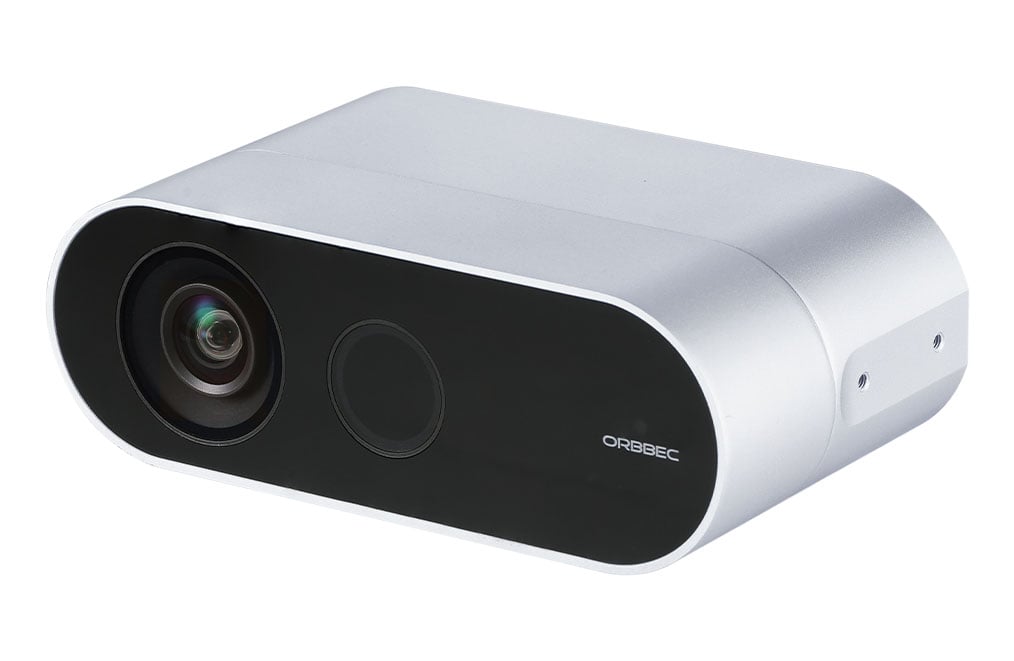
Orbbec’s Femto Bolt, built on Microsoft’s iToF technology and matching the Azure Kinect DK’s depth operating modes, uses a 1 megapixel ToF sensor to do exactly this, producing depth resolution up to 1024×1024 at 15fps in wide FOV mode or 640×576 at 30fps in narrow FOV mode.
Structured light takes a different approach. It projects a known infrared pattern onto the scene and calculates depth from how that pattern deforms across surfaces, essentially a single-camera stand-in for stereo triangulation where the projector plays the role of the second camera.
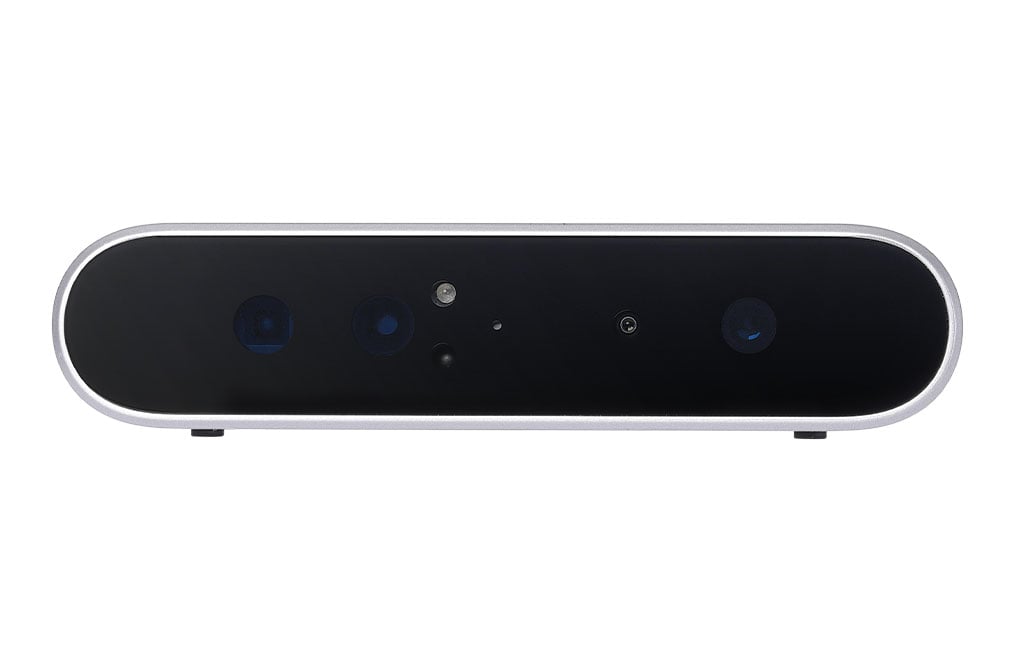
Orbbec’s Astra 2 runs this way, with a 75mm baseline between its IR projector and IR camera, processed through Orbbec’s custom MX6600 ASIC.
Because the depth calculation depends on resolving pattern deformation at the pixel level, structured light systems tend to deliver very high spatial precision within their optimal range, at the cost of needing a real baseline geometry the way stereo systems do.
Where iToF earns its place?
The single biggest advantage of iToF is that depth measurement doesn’t depend on baseline geometry, which is what lets Femto Bolt fit into a compact, single-unit form factor at 115mm x 40mm x 65mm while still delivering a wide 120° field of view in WFOV mode (75° x 65° in NFOV mode).
For applications like spatial computing, volumetric capture, and body tracking, where you need broad scene coverage from a single compact sensor rather than a wide stereo pair, that combination of small footprint and wide FOV is difficult to match with a baseline-dependent system.
iToF also holds up well at working distances where structured light degrades. Femto Bolt’s depth range runs from 0.25m to roughly 5.5m, with a typical systematic error under 11mm plus 0.1% of distance and a random error standard deviation of 17mm or less.
That accuracy profile stays comparatively consistent across the sensor’s field of view because every pixel is doing its own independent phase measurement, rather than depending on how well a projected pattern happens to land on a given surface at a given distance.
Where structured light earns its place?
Structured light’s advantage shows up at close-to-mid range, where the pattern deformation signal is strongest and the geometry is most favorable.
Astra 2’s depth range runs from 0.6m to 8m with an ideal range of 0.6m to 5m, and its typical spatial precision is 0.16% at 1m and 0.3% at 2m, tightening considerably compared to a ToF sensor’s flat error-versus-distance profile at those closer distances.
For 3D scanning, quality inspection, and body scanning applications where sub-percent accuracy at a defined working distance matters more than raw range or a compact housing, that precision advantage is the deciding factor.
Structured light also benefits from a genuinely dense depth resolution at close range, since Astra 2 outputs up to 1600×1200 depth at 30fps, useful for capturing fine surface detail on smaller objects or body-scale scans where per-pixel spatial resolution translates directly into scan fidelity.
The trade-offs that actually matter
Range is the first trade-off, and it’s not simply “ToF goes farther.” Femto Bolt’s practical range starts closer to the camera (0.25m minimum) than Astra 2’s (0.6m minimum), while Astra 2 extends farther on the far end (8m versus roughly 5.5m).
The real question isn’t which technology has a bigger number. It’s whether your actual working distance sits inside the sweet spot of one technology’s range or at the ragged edge of it.
Accuracy behaves differently across the two as well. iToF’s accuracy specification is typically expressed as a fixed error plus a distance-dependent term, meaning the error grows steadily and predictably as range increases.
Structured light’s accuracy is usually expressed as a percentage that changes more sharply between reference distances, meaning it can outperform ToF close in but degrade faster once you push past its ideal range.
Ambient light sensitivity affects both technologies, but not identically. Structured light depends on resolving a projected pattern against the scene, so strong ambient IR (direct sunlight is the classic case) can wash out the pattern and degrade depth quality faster than it degrades a modulated ToF signal, which is one reason structured light cameras like the Astra series are generally positioned for indoor or semi-outdoor use rather than full outdoor deployment.
iToF isn’t immune to ambient IR either, since background light adds noise to the phase measurement, but the modulation scheme generally tolerates moderate ambient light better than a pattern-matching approach does.
Neither technology is the right choice for a genuinely bright, direct-sunlight outdoor deployment. That’s a job for active stereo vision instead.
Multi-camera deployments raise a different consideration for each. Structured light systems risk pattern interference when multiple projectors illuminate overlapping fields of view, which is why Astra 2 supports multi-camera synchronization through its 8-pin sync port.
Femto Bolt handles the equivalent problem with a sync trigger system built for multi-sensor networks, letting you designate one unit as primary and coordinate timing across the rest. Both require you to plan sync topology deliberately if you’re running more than one unit in the same space, it isn’t a checkbox either technology gets to skip.
A simple decision framework
Run your application against these questions in order, and the first one that gives you a clear answer usually settles the choice:
- Is your primary working distance inside 0.25m to roughly 5m, and does your application need a compact, single-unit sensor with a wide field of view? That points toward iToF.
- Does your application need sub-percent depth accuracy at a specific close-to-mid range more than it needs raw range or a small footprint? That points toward structured light.
- Will the camera operate in bright ambient light or direct sunlight? Neither technology is the right fit. Look at active stereo vision instead.
- Are you running multiple cameras with overlapping fields of view? Confirm your chosen technology’s sync mechanism (8-pin sync for structured light, trigger-based sync for ToF) before you finalize the layout, not after.
- Are you migrating an existing Azure Kinect DK project? Femto Bolt matches the Azure Kinect’s depth operating modes and works with the K4A Wrapper in Orbbec SDK, so existing Kinect code generally runs with minimal changes rather than a full rewrite.
Questions engineers actually ask
Can I just use whichever camera is cheaper and adjust my algorithm?
Not reliably. The two technologies have fundamentally different accuracy-versus-distance curves and different failure modes under ambient light, so an algorithm tuned around one camera’s noise characteristics can behave unpredictably on the other. Match the technology to the application first, then optimize cost within that choice.
Does iToF need a baseline at all?
No, and that’s the core distinction from structured light and stereo vision. Every pixel on an iToF sensor independently measures its own time-of-flight, so there’s no fixed distance between two optical elements driving the depth calculation the way there is with a stereo pair or a structured light projector-camera pair.
Why does structured light lose accuracy outdoors faster than ToF?
Because the depth calculation depends on the camera actually resolving the projected IR pattern against the background scene. Strong ambient IR, direct sunlight especially, raises the noise floor the pattern has to compete against, and once the pattern is no longer clearly distinguishable from ambient light, the correspondence calculation breaks down. ToF’s phase measurement is affected by ambient light too, but it degrades more gradually because it isn’t dependent on resolving a specific visual pattern.
The technology choice comes down to where your application actually sits on the range and precision curve, not which spec sheet has the bigger number.
Match the working distance and accuracy requirement first, check ambient light conditions second, and the right camera for the job is usually obvious once those two constraints are on the table.
